
 English
 عربى
عربى Español
 русский
 中文简体
中文简体






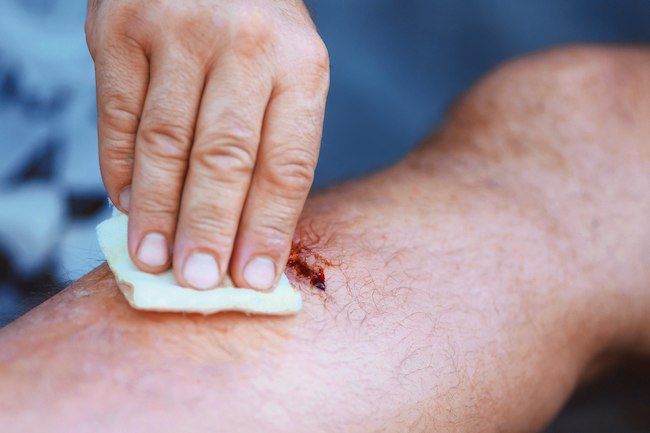
Keeping wounds clean is an important principle when caring for them, but this often leads to the misconception that the more frequently the wound is cleaned, the faster it will heal. Many patients and their families remove dressings multiple times a day and repeatedly rinse the wound with disinfectant, hoping to completely kill bacteria. However, in modern wound care, this practice can actually be counterproductive and become a common misconception that hinders healing.
How does frequent washing interfere with the natural wound healing process ?
Wound healing is a delicate biological process that requires a stable internal environment. Every wash, especially vigorous scrubbing, is a physical disturbance. It damages the fragile new tissue just forming on the wound surface, such as tiny capillaries and migrating epithelial cells. These new structures are like scaffolding in construction; repeated impacts cause the project to constantly stop and restart. More importantly, the wound exudate secreted by our bodies contains abundant growth factors, white blood cells, and nutrients, which are natural catalysts for healing. Overly frequent washing washes away these valuable substances, depriving the wound bed of the biochemical support needed for local repair. In addition, the adhesions and tearing caused by repeatedly removing dressings can also cause mechanical damage, leading to secondary trauma and bleeding, and prolonging the inflammatory phase.
Why does over-cleansing damage the skin barrier ?
The healthy skin around a wound is the first line of defense. Overly frequent washing, especially with strong disinfectants like alcohol or iodine tincture, can dissolve the skin's natural lipid barrier. This barrier locks in moisture and protects against bacterial invasion. Prolonged and repeated contact with cleaning solutions and disinfectants can lead to dry, flaky, and even cracked skin and eczema-like changes—a condition known as contact dermatitis. Once the skin barrier is damaged, it becomes fragile and sensitive, making it more susceptible to bacterial colonization and external irritants, thus increasing the risk of infection and making it more difficult to maintain the wound's integrity.
What risks can arise from improper use of disinfectants ?
Many people firmly believe that disinfectants can kill germs, so they insist on using them when cleaning. However, the problem is that many common disinfectants, such as alcohol, hydrogen peroxide, and undiluted iodine, are cytotoxic. This means that while they kill bacteria, they also indiscriminately damage our own healthy cells, including fibroblasts and epithelial cells responsible for wound repair. Directly rinsing an open wound bed with such liquids is tantamount to hindering your own repair efforts. Long-term use can also lead to bacterial resistance or alter the wound's microbial balance. True cleaning should focus on removing visible dirt and necrotic tissue, rather than pursuing absolute sterility, as a completely sterile environment is neither possible nor necessary in home conditions.
How often should wounds be cleaned ?
For most acute or chronic wounds, daily cleaning and dressing changes are sufficient under routine care. If the wound has excessive exudate and the dressing is completely saturated, the frequency of changes can be increased, but the key is to change the absorbent dressing, not to vigorously wash the wound bed itself each time. The correct cleaning method should be gentle. Use sterile saline or mild, fragrance-free soapy water to rinse or wash, preferably from the center of the wound outwards to protect the surrounding skin. After rinsing, gently pat the skin around the wound dry with sterile gauze, keeping the wound bed itself moderately moist. It is crucial to avoid rubbing and brushing. Afterwards, choose appropriate modern dressings based on the wound condition, such as foam dressings or hydrocolloid dressings, which can continuously provide a moist environment and manage exudate, thus reducing unnecessary disturbance.
How can I tell if I've over-cleaned ?
Several signs may indicate overly frequent or improper cleaning. First, the wound fails to shrink over a long period, the granulation tissue is dull in color, edematous, and prone to bleeding. Second, the surrounding skin shows significant redness, dryness, peeling, or itching, which is usually a sign of irritant dermatitis. Third, the patient experiences increased pain, making each dressing change an ordeal. If these conditions occur, the care plan needs to be reassessed. A well-healing wound should be quiet, with gradually decreasing exudate, healthy, rosy granulation tissue, and inward epithelial growth at the edges, and each dressing change should not cause severe pain.
For more information on Innomed® Silicone Foam Dressing Bordered , Refer to the Previous Articles. If you have customized needs, you are welcome to contact us; You Wholeheartedly. At longterm medical, we transform this data by Innovating and Developing Products that Make Life easier for those who need loving care.
Editor: kiki Jia


