
 English
 عربى
 Español
 русский
 中文简体






After washing my face at night, I applied a pimple patch. The next morning, when I lifted it off, there was a small white dot in the middle, and the pimple had noticeably shrunk. Some people online said it was "toxins" being drawn out, while others said it was pus. What is it really? The answer is: the white dot is mainly a gel formed after the pimple patch absorbs the exudate and pus from the pimple; it appears as a milky white mass from the outside. Calling it "toxins" is an exaggeration, but the process of it being "drawn out" is real.
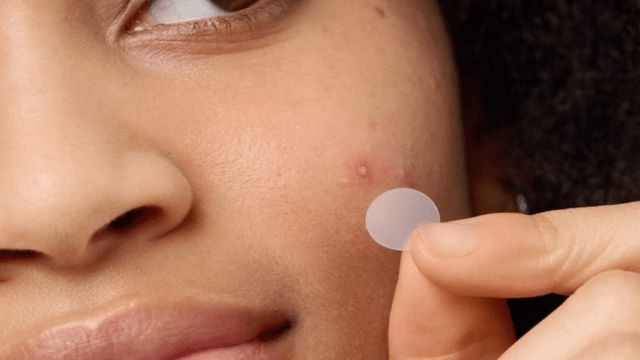
How exactly does it "absorb"?
Acne patches are essentially miniaturized hydrocolloid dressings. The inner layer consists of water-absorbing colloidal particles like sodium carboxymethyl cellulose, while the outer layer is a waterproof, semi-permeable membrane.
After being applied to the pimple, the dressing creates a relatively low-humidity space, slowly drawing the tissue fluid and pus from the pimple's surface into the dressing, where they combine with the gel particles to form a gel. The entire process relies on the material's absorbency, while the outer waterproof membrane isolates bacteria and your fingers—the latter being equally important, as many pimples are ruined by picking at them.
What does the speed at which white spots appear indicate?
If a large area of the pimple turns white overnight, it means that the pimple contains a lot of contents and is in the process of maturing and draining fluid. This is when applying the patch will be most effective.
If the pimple remains clear after two or three days, it's highly likely that the patch isn't the type that can be "absorbed"—closed comedones, subcutaneous nodules, or deep cysts don't contain anything that can be absorbed to the surface; it could also mean that the pimple is already subsiding and there's nothing left to absorb. The white dots are actually a direct indicator of whether the pimple and the patch are "compatible."
When should it be replaced?
It depends on the size and location of the white dot. If the white area spreads close to the edge of the dressing, or if the edge lifts up and can't stick anymore, it's time to change it. During a breakout, it's normal to change the dressing once a day, or even twice a day. Before changing it, take a look at the pimple: if it's flattened and has formed a small scab, it's in the protective phase; if it's still swollen, continue wearing it.
If you're reluctant to replace a patch even when the edges are turning white, it's already saturated with absorbent material. Not only will it be unable to absorb new seepage, but it might also trap dirt inside, making things worse.
Why do some people experience worsened acne after applying acne patches?
Here are some common reasons; check them against your own:
If you don't clean your face before applying the patch, oil and dirt will get trapped inside; if you apply it right after applying acids or serums, it won't stick properly and will irritate your skin; if you wear it while applying makeup or exercising and sweating, the patch will be used for three days without changing it—the enclosed space will accumulate saturated exudate and bacteria, turning the acne patch from a "band-aid" into a "petition dish".
The correct way to use it is: clean, dry, apply, and change on time; all four steps are essential.
Do one thing right before and after applying the sticker.
Before applying: Clean and dry the skin. Do not apply directly to skin that has just been treated with acid-based products or serums. After applying: Resist the urge to peel or pick at the skin. The appearance of white spots is a good thing. It doesn't mean you should peel it off every day to check the progress. Repeatedly peeling it off and reapplying it will greatly reduce the adhesion and suction, and may also break the newly stabilized wound.
Additionally, if you need to go out or wear makeup during the day, prioritize applying it at night: the eight hours at night are its prime working time, while makeup can cover it up during the day—each has its own function.
Why is it recommended to apply it for two more days after it deflates?
The pimple has shrunk, but that doesn't mean it's healed. The wound is still there, and this is where the biggest risks are infection and scarring. At this point, the role of the pimple patch shifts from "absorbing" to "protecting"—providing a moist healing environment for this tiny wound, preventing it from being touched by hands or irritated by cosmetics. The principle of moist healing applies here as well: it prevents hard scabs from forming, heals faster, and leaves fewer dark marks.
So next time you see white spots, don't be disgusted by them; that's proof that they're working. Seeing the white spots decrease day by day means your acne is getting better.
For more information on Innomed®Acne Plaster, Refer to the Previous Articles. If you have customized needs, you are welcome to contact us; You Wholeheartedly. At longterm medical, we transform this data by Innovating and Developing Products that Make Life easier for those who need loving care.
Editor: kiki Jia


