
 English
 عربى
عربى Español
 русский
 中文简体
中文简体






Many people only think about intervention when the scar becomes noticeably raised, red, and itchy, by which time the optimal window for intervention has already passed. The timing for intervention in hypertrophic scarring isn't calculated from the day the scar forms, but rather from the moment the wound has completely healed and the scab has naturally fallen off. Understanding the natural rhythm of scar growth is crucial to using the right methods at the most appropriate time, rather than struggling to remedy the situation after the scar has hardened and solidified.
Why is the first month after a wound heals called the golden intervention period?
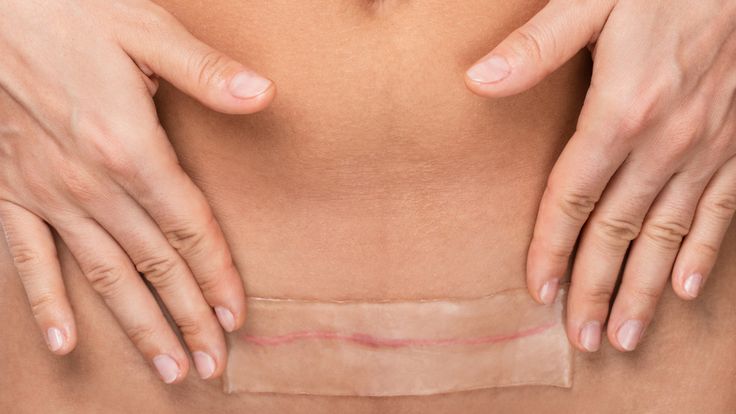
About one month post-surgery, the scar enters its active proliferative phase. Subcutaneous fibroblasts are highly activated, collagen fibers begin to deposit excessively, and new blood vessels dilate abnormally. The incision appears red, hard, and slightly raised. A key characteristic of this stage is that while collagen has begun to deposit excessively, it has not yet formed a stubborn fibrotic structure, and the abnormally dilated vascular network is not yet stable. Intervention at this stage is essentially proactive, inhibiting scar hyperplasia at its source by reducing collagen synthesis, sealing abnormal blood vessels, and lowering incision tension. If intervention is delayed until 3 to 6 months post-surgery, when the scar has become noticeably raised and hardened, the difficulty and time required for intervention increase exponentially.
What exactly is the timeline of the scar hyperplasia and maturation phases?
Scar growth follows a clear rhythm. After wound healing, the proliferative phase begins, typically around one month post-surgery and lasts 3 to 6 months. During this phase, the scar is bright red or purplish-red, hard, and protrudes above the skin surface, often accompanied by pain and itching. This is followed by the regression phase, generally starting 3 to 6 months post-surgery. The scar gradually turns dark red or purplish-brown, its protrusion decreases, its texture softens, and pain and itching lessen. The maturation phase usually occurs more than one year post-surgery; the scar ceases to proliferate, its color blends with the surrounding skin, its texture becomes soft, and discomfort disappears. Keloids differ from ordinary hypertrophic scars; they extend beyond the original injury area and do not spontaneously enter a regression phase, requiring more aggressive medical intervention.
How long after a wound has healed can I start using silicone products?
Silicone gels or patches should be used immediately after the wound has completely healed, with no breaks or oozing, not one or two weeks after suture removal, and certainly not until the scar has become raised. Silicone formulations work by forming a waterproof protective film on the scar surface, maintaining a moist environment, regulating growth factor activity, and inhibiting excessive fibroblast proliferation, thereby reducing collagen deposition and relieving itching. Gels are suitable for the face, joints, and uneven areas, while patches are suitable for larger scars on the trunk and limbs. Use for at least 12 hours daily for 3 to 6 months, while patches can be worn for 12 to 24 hours, with the edges extending at least 0.5 cm beyond the scar.
When should stress therapy and tension reduction measures be initiated?
Pressure therapy creates localized mild ischemia through continuous external pressure, inhibiting fibroblast proliferation and angiogenesis. It is suitable for large-area burn scars and extensive hypertrophic scars on the limbs. It should be initiated after the wound has completely healed, with pressure reaching 24 mmHg or higher, worn for 23 hours daily for 6 to 12 months. Tension-reducing measures begin earlier; tension-reducing tapes or devices are used immediately after suture removal to counteract the tension generated by skin movement, preventing repeated traction on the incision during the early healing stages and thus avoiding stimulation of collagen proliferation. For areas with high tension, such as joints, the neck, and the abdomen, tension reduction may need to be maintained for 3 to 6 months or even longer.
When is the window of opportunity for early laser intervention?
The timing of laser intervention has been significantly advanced in recent clinical studies. Traditionally, it was recommended to wait a year after injury for scar maturation before laser treatment. However, new evidence shows that starting laser treatment 3 to 6 months after burns leads to earlier symptom improvement, sparing patients from enduring up to a year of itching and pain. For postoperative linear scars, fractional laser intervention within the first month after surgery effectively improves scar appearance and reduces the risk of hyperplasia. The abnormally dilated capillary network in proliferative scars is an ideal target for vascular-targeted lasers; pulsed dye lasers can precisely close these vessels, cutting off the nutrient supply to the scar tissue. The core logic of this time window is that intervention before the blood vessels and collagen structure solidify yields the best therapeutic effect.
Who needs earlier intervention?
Individuals with a history or family history of keloids, those with darker skin tones, and those whose incisions are located in areas of high tension such as the chest, shoulders, back, or joints have a significantly higher risk of keloid formation than the general population. These individuals should begin tension-reducing and silicone-based care immediately after suture removal. If necessary, early superficial electron beam irradiation or pulsed dye laser intervention may be considered after a doctor's evaluation, rather than waiting until the scar begins to protrude. Special sites such as cesarean section incisions and midline sternal incisions require earlier and more intensive intervention programs due to the characteristics of incision tension and the healing environment.
Is there still room for improvement after missing the golden period?
Missing the window doesn't mean there's no hope, but the intervention strategy needs adjustment. The second golden period is 3 to 6 months post-surgery, when the scar is still remodeling, and silicone care and tension reduction remain effective, just requiring more consistent use. From 6 months to 1 year post-surgery, the scar enters a stable phase; the effects of home care slow down, but continued use of silicone products can still help soften and flatten it. For scars older than 1 year, the effects of home products are very limited, requiring medical interventions such as laser, injections, or surgery to improve appearance and function. The earlier the intervention, the fewer treatments and sessions are needed to achieve the desired results, but starting scientific intervention at any time is always better than no intervention at all. For more information on Innomed® Silicone Scar Dressing, refer to the Previous Articles. If you have customized needs, you are welcome to contact us; You Wholeheartedly. At longterm medical, we transform this data by innovating and developing products that make life easier for those who need loving care.
Editor: kiki Jia


