
 English
 عربى
عربى Español
 русский
 中文简体
中文简体






Redness around the stoma is a common problem for stoma patients. It's a patch of redness, intensely itchy, and doesn't improve even after trying different baseplates. Many people's first reaction is an allergy, assuming it's a problem with the baseplate or adhesive tape. However, the most common type of peristomal dermatitis in clinical practice is not an allergy, but maceration. Treating maceration as an allergy, using antihistamines or switching to a more expensive baseplate, often doesn't solve the problem and may even worsen it. Distinguishing between these two is the first step to proper treatment.
How does immersion occur?
Immersion is essentially damage to the stratum corneum caused by prolonged contact of the skin with water and digestive fluids. The feces and urine discharged from a stoma contain large amounts of digestive enzymes and bile salts, which are highly corrosive. The fluid from a small enterostomy is particularly corrosive; its trypsin and lipase are highly active in an alkaline environment and can directly break down keratin in the stratum corneum. When the skin is soaked in these substances for a long time, the keratinocytes absorb water and swell, the lipid barriers between cells are damaged, and the skin becomes white, soft, and wrinkled, eventually turning red, eroding, and oozing.
Redness caused by maceration has several typical characteristics. The area of redness usually corresponds to the size of the basement opening, circling the stoma root in a ring shape. The reddened skin surface is often moist, sometimes with whitish, macerated areas mixed together. The patient's main sensation is a burning or stinging sensation, with relatively mild itching. The most crucial clue is that when changing the basement, traces of excrement corrosion can be seen on the adhesive on the back of the basement, or the leak-proof ring has become rotten. This indicates that excrement has seeped under the basement, and the cause of the maceration has been identified.
How do allergies occur?
An allergy is a specific immune response to the baseboard material, adhesive, or cleaning products. The main materials of stoma baseboards are hydrocolloid or acrylic adhesives, which are generally low in allergens. However, some people are naturally sensitive to a particular component, or develop contact allergies after prolonged use. Another possibility is the use of irritating substances during cleaning, such as alcohol, iodine, soap, or preservatives and fragrances in wipes.
Allergic dermatitis differs from maceration. The redness is not limited to the area around the base opening; it often covers the entire area of the base, even extending beyond its edge. The erythema has clear borders, resembling a drawn circle. The skin surface is dry and rough, without maceration or whitening. In severe cases, dense papules or blisters may appear, sometimes oozing clear fluid. The main symptom is intense itching, so intense it keeps patients awake at night; burning and stinging sensations are less pronounced. When changing the base, the adhesive on the back is usually intact, without signs of excrement corrosion, but upon removing the base, small papules can be seen on the reddened skin.
The processing strategies are completely different
The core of impregnation treatment is preventing leakage. Since the cause is excrement seeping under the baseplate, the leak must be plugged. First, measure the stoma root for depressions or unevenness. If there are depressions, a leak-proof ring is more effective than leak-proof paste, as it can shape and fill the depression. If the stoma root is flat, consider using a convex baseplate. The convex surface applies outward pressure, pushing the stoma root slightly outward and reducing the risk of leakage. Before applying the baseplate, the surrounding skin must be completely dry; you can use a hairdryer on a cool setting to dry it. When applying the baseplate, press the center of the baseplate with your palm for at least one minute, using your body heat to soften and adhere the adhesive. The use of a skin protectant is also important. Spray it onto the surrounding skin to form a transparent protective film, isolating the excrement from the adhesive. After the film dries, apply the baseplate. When peeling it off, the protective film and baseplate will be removed together without damaging the skin.
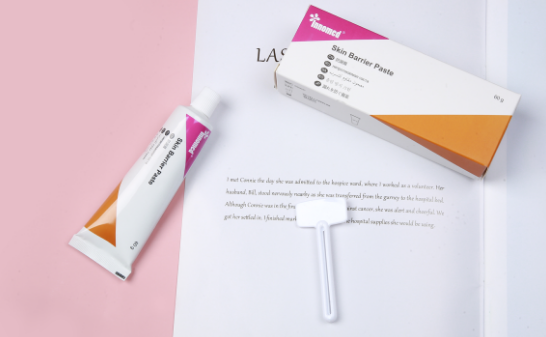
The core of allergy management is changing materials. First, discontinue all currently used products, including the base, leak guard, cleaning wipes, and skin protectant. Switch to a base from another manufacturer with a different formula. If you are allergic to all acrylic bases, you can try silicone bases, as silicone is much less sensitizing than acrylic. Simultaneously, use the simplest cleaning method: clean with warm water and gauze, without adding any detergent. If itching is severe, you can use topical steroid creams, such as hydrocortisone cream or mometasone furoate cream, under the guidance of a doctor for a short period. Apply the cream to the reddened skin and wait for it to be absorbed before applying the base. Note that you should not apply steroid ointments while the base is in place, as this will affect adhesion. For more information on Innomed®Skin Protective Paste, refer to the Previous Articles. If you have customized needs, you are welcome to contact us; You Wholeheartedly. At long-term medical, we transform this data by innovating and developing products that make life easier for those who need loving care.
Editor: kiki Jia


