
 English
 عربى
عربى Español
 русский
 中文简体
中文简体






What is calcium alginate dressing?
Calcium alginate dressings are wound dressings made from fibers extracted from natural seaweed. Their main component is alginate, which forms a soft gel through exchange with sodium ions in wound exudate. This type of dressing is particularly suitable for treating wounds with significant exudate due to its high absorbency. Upon contact with wound exudate, calcium alginate dressings create a moist gel environment that helps maintain the moisture balance of the wound bed, promotes autolytic debridement, and accelerates the shedding of necrotic tissue. Simultaneously, the gel structure conforms to the wound contour, reducing dead space formation and providing ample space for the growth of new granulation tissue.
What types of wounds are suitable for calcium alginate dressings?
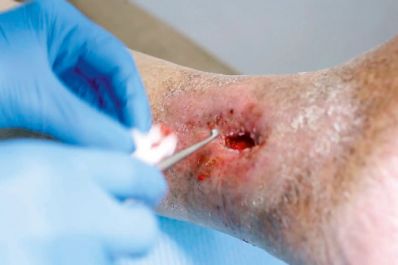
Calcium alginate dressings are best suited for wounds with moderate to severe exudation, including stage II to IV pressure ulcers, diabetic foot ulcers, venous ulcers, traumatic wounds, and postoperative infected incisions. For wounds with cavities, such as deep pressure ulcers or wounds after abscess incision, strip-shaped calcium alginate dressings can fill the cavities and absorb deep exudate. It can also be used for wounds with minor bleeding because calcium alginate has some hemostatic properties. However, it is not suitable for dry wounds, wounds covered with eschar, or wounds with very little exudate, as the dressing requires a certain amount of exudate to form a gel and function. For these types of dry wounds, using calcium alginate dressings may actually draw moisture from the wound, hindering healing.
How to use calcium alginate dressings correctly?
First, thoroughly clean the wound with saline solution to remove necrotic tissue and any remaining dressing. Select an appropriate size dressing based on the size and depth of the wound; the dressing should cover the entire wound and extend approximately 1-2 cm beyond the edges. Use sheet dressings for superficial wounds and packing strips for cavitary wounds. Place the dressing directly into the wound, without folding or overlapping, and avoid applying excessive pressure. A secondary dressing, such as a transparent film dressing or foam dressing, is needed to secure the calcium alginate dressing and prevent external contamination. The dressing change frequency depends on the amount of exudate, typically every 1-3 days, and should be considered when the exudate approaches the edges of the dressing.
What precautions should be taken when changing calcium alginate dressings?
Special care must be taken when changing calcium alginate dressings. If the dressing has gelled and adhered to the wound bed, do not forcibly remove it. First, moisten the dressing with saline solution, wait a few minutes to soften the gel, and then gently remove it. If some dressing remains on the wound, rinse it off with saline solution; do not forcibly scrape it off with instruments to avoid damaging newly formed granulation tissue. Observe the color and texture of the removed dressing. Under normal circumstances, the gel should be transparent or pale yellow. If it is green or gray, it may indicate a bacterial infection. Reassess the wound condition each time the dressing is changed, including the amount of exudate, wound color, and signs of infection, and adjust the subsequent treatment plan based on the assessment results.
What are the advantages and limitations of calcium alginate dressings?
The main advantages of calcium alginate dressings include high absorbency, capable of absorbing more than 20 times its own weight in liquid, making them suitable for treating wounds with significant exudation. The gel environment it forms keeps the wound moist, promotes autolytic debridement, and reduces pain and damage during dressing changes. Calcium alginate also boasts good biocompatibility, hemostatic effects, and reduces dead space formation. However, its limitations are also apparent: it is unsuitable for dry wounds, requires an outer dressing, its opaque nature prevents direct wound observation, and its cost is relatively higher than traditional dressings. For infected wounds, calcium alginate dressings alone may be insufficient, necessitating combination with other antibacterial dressings or systemic antibiotic treatment.
What problems might occur during use and how should they be handled?
Several common issues may arise when using calcium alginate dressings. If the dressing dries prematurely, it may indicate reduced exudate or that the dressing is too large. In this case, the exudate level should be assessed, and a dressing type suitable for low-exudate wounds should be considered. If the dressing leaks, it usually means the exudate exceeds the dressing's absorption capacity or the dressing is too small. Increased dressing frequency or the use of a larger dressing is necessary. Dressing residue on the wound is a common problem. It should be gently removed after thoroughly moistening the wound, and rinsed with saline solution if necessary. If the wound shows signs of infection, such as increased redness and swelling, increased discharge, and an unpleasant odor, seek medical attention promptly. Treatment may require silver-containing dressings or systemic antibiotics. Skin maceration around the dressing indicates a poor seal from the outer dressing or excessive exudate. Improving the occlusiveness of the outer dressing or increasing the frequency of dressing changes is necessary.
How can calcium alginate dressings be used in combination with other dressings?
Calcium alginate dressings typically require the use of other dressings to achieve optimal results. The most common combination is with a transparent film dressing, which secures the calcium alginate dressing while preventing external bacterial invasion and moisture evaporation. For wounds with particularly high exudate, a foam dressing can be applied over the calcium alginate dressing to increase absorption capacity. If the wound is at risk of infection, a silver-containing calcium alginate dressing can be used initially, or a small amount of silver ion powder can be sprinkled onto the calcium alginate dressing. For deep cavity wounds, first fill with a calcium alginate dressing, then cover with an appropriate secondary dressing. As wound exudate decreases, the dressing should be promptly replaced with one more suitable for a low-exudate environment, such as a hydrocolloid dressing or a film dressing, to prevent the wound from becoming excessively dry.

How long can calcium alginate dressings be used? When do they need to be changed?
The duration of use for calcium alginate dressings depends primarily on the amount of wound exudate. Generally, calcium alginate dressings need to be changed every 1-3 days, and should be replaced when the exudate is close to the edge of the dressing. Specific criteria for judgment include: external observation showing that the exudate has soaked into the outer layer of the dressing; the dressing being completely saturated and losing its absorbent capacity; leakage occurring; or following the doctor's prescribed replacement time. If the wound exudate is particularly large, it may need to be changed daily; if the exudate decreases, the replacement interval can be appropriately extended. The wound should be reassessed each time it is changed, and the subsequent treatment plan should be adjusted according to the changes in the wound. The frequency of replacement should not be determined solely by time, but should be flexibly adjusted according to the actual condition of the wound.
For more information on Innomed®Alginate Dressing, Refer to the Previous Articles. If you have customized needs, you are welcome to contact us; You Wholeheartedly. At longterm medical, we transform this data by Innovating and Developing Products that Make Life easier for those who need loving care.
Editor: kiki Jia


