
 English
 عربى
عربى Español
 русский
 中文简体
中文简体






Wearing slippers in summer completely exposes the toes and heels, leaving the skin of the feet directly exposed to various mechanical injuries and microbial invasions. Many people believe that slippers are cool and breathable, a summer treat for the feet. However, clinical observations of wound treatment show that foot injuries and secondary infections caused by wearing slippers in summer account for a significant proportion of cases seen in emergency wound cleaning and dressing rooms.
Why do injuries from wearing slippers seem minor, yet lead to numerous subsequent problems?
- In hot and humid environments, the moisture content of the stratum corneum on the feet increases, and the skin barrier strength itself decreases. If bumps, scratches, or friction damage occur at this time, bacteria multiply much faster around the wound than in other seasons. The proliferation cycle of Staphylococcus aureus and Streptococcus on moist surfaces at 35 to 37 degrees Celsius is shortened by about one-third, meaning the window of infection is significantly compressed. Many people find that after scraping their toes, they only rinse them with tap water or even leave them untreated, but redness, swelling, and throbbing pain may appear 6 to 12 hours later, which is a signal that infection has begun.
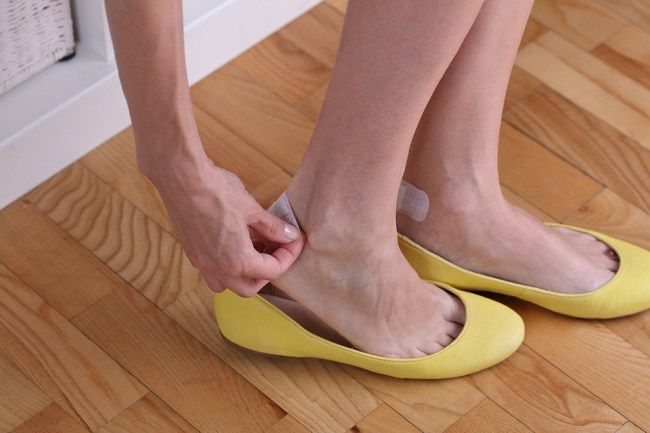
- Walking in flat sandals for extended periods in summer exposes the heel to direct contact with hard surfaces, generating greater shear force and pressure than when wearing heeled sneakers. This easily leads to dryness, cracking, or micro-abrasions on the back and inner side of the heel. Although these cracks are superficial, they are prone to infection due to the irritation from a mixture of sweat and dust. For protection of this area, hydrocolloid heel patches are clinically recommended. Hydrocolloid heel patches are backing dressings containing sodium carboxymethyl cellulose. They conform to the curved surface of the heel, creating a moist healing environment while absorbing a small amount of exudate. Their mechanism of action is that the hydrocolloid components form a gel-like covering upon contact with wound exudate, preventing pain and secondary tearing caused by dry scabs, and blocking the entry of external bacteria. For heels that are not yet broken but already show obvious friction or redness, applying heel patches in advance can effectively distribute local pressure and reduce the probability of breakage. For heels with small, superficial lesions, after disinfection and drying, apply a hydrocolloid heel patch to maintain the oxygen partial pressure and humidity required for moist wound healing and promote epithelial cell migration.
- The risk level of diabetic patients wearing slippers needs to be assessed individually. Diabetic peripheral neuropathy dulls the sense of pain and temperature in the feet, and patients often cannot detect abnormalities before visible damage appears. At the same time, hyperglycemia inhibits the phagocytic function of white blood cells, and once infection begins, it progresses much faster than in the general population. There are reports of patients who injured their soles with small stones on the road while wearing slippers, but felt no pain and continued to walk in slippers, and the wound developed into a deep ulcer three days later. Therefore, when choosing slippers in the summer, diabetic patients should prioritize medical pressure-relieving shoes with thick padding at the heel and toes and that do not expose the toes, rather than the commonly available flip-flops or thin-soled sandals. If calluses or cracks already exist on the feet, check the heels and between the toes every night before bed, remove dead skin, and apply moisturizing cream, but avoid between the toes. Before going out the next day, apply hydrocolloid heel pads to the vulnerable areas of the heels to form a physical cushioning layer.
How to properly treat foot injuries?
The first step is to rinse the wound with saline solution to remove surface dirt;
The second step is to disinfect the wound twice with an iodine swab, starting from the center and moving outwards, for at least 30 seconds each time.
The third step is to choose the dressing based on the location and size of the wound. For the toes and instep, it is recommended to use ordinary sterile gauze with breathable tape for fixation. However, for the heel area, where skin is frequently pulled during activity, ordinary bandages are prone to shifting and falling off. Hydrocolloid heel patches are more advantageous here due to their adhesion and elasticity. One patch can be used continuously for two to three days, and as long as there is no leakage or curling, frequent changes are unnecessary. This reduces repeated pulling damage to the newly formed epithelium during dressing changes. If the redness and swelling around the wound continues to worsen after application, or if purulent discharge appears, it indicates that there may be foreign objects remaining in the wound or necrotic tissue that has not been removed. In this case, the dressing should be removed and the patient should be examined by a doctor at the hospital; the heel patch should not be relied upon for further treatment.
Summer rains followed by flooded roads are another common but easily overlooked source of infection. The concentration of Gram-negative bacilli in urban floodwater increases significantly with rising temperatures. If there are cracks or minor abrasions on the heels, wading through water while wearing flip-flops is equivalent to directly immersing the wounds in a bacterial suspension, significantly increasing the risk of invasion by Pseudomonas aeruginosa and Enterobacter aerogenes, and significantly prolonging the healing period after infection. The heels have relatively poor blood supply, making infection control more difficult than on the instep. When wearing flip-flops, detour around flooded areas or change shoes. If unavoidable, immediately rinse your feet with running water upon returning home to dilute the bacteria on the skin surface. After drying, carefully check the sides and back of the heels for any new breaks or discoloration. Hydrocolloid heel patches are suitable for existing superficial abrasions, but they do not have antibacterial properties. Daily prevention should focus on reducing friction and maintaining the integrity of the heel skin; only by combining both can the risk of injury from wearing flip-flops be effectively controlled. For more information on Innomed® Hydrocolloid Blister Plaster, refer to the Previous Articles. If you have customized needs, you are welcome to contact us; You Wholeheartedly. At long-term medical, we transform this data by innovating and developing products that make life easier for those who need loving care.
Editor: kiki Jia


