
 English
 عربى
عربى Español
 русский
 中文简体
中文简体






Why does a wound that looks clean never heal?
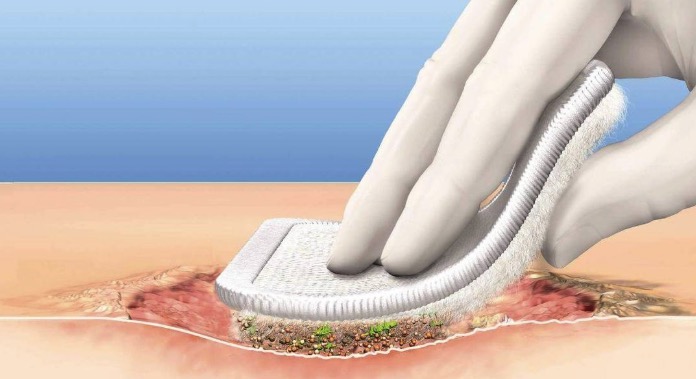
Some wounds appear red and healthy during dressing changes, with minimal exudate and no obvious pus, yet the area doesn't shrink for weeks or even months. Each dressing change follows standard procedures for cleaning, medication application, and dressing coverage, and bacterial cultures sometimes fail to identify any specific pathogens, but the wound remains stuck. In such cases, an often overlooked factor should be considered: biofilms. These are not membranes easily visible to the naked eye, but rather structured communities formed by bacteria accumulating on the wound surface and secreting extracellular polysaccharides and protein matrix, encasing themselves within them. Bacteria within biofilms are tens to thousands of times more resistant to antibiotics and disinfectants than free-floating bacteria, and immune cells also struggle to penetrate the matrix to reach the interior. Therefore, while the wound may appear to lack acute infection, the healing process is actually being continuously delayed.
What exactly is a biofilm?
Biofilms are neither necrotic tissue nor pus; they consist of bacterial communities, an extracellular polysaccharide matrix, proteins, nucleic acids, and a small amount of dead cell debris. The matrix acts as a sticky barrier, adhering bacteria to the wound surface and protecting them from external attack. Biofilms can begin to form within minutes and mature gradually over hours to days. The metabolic state and gene expression of bacteria within a mature biofilm are completely different from those of free-floating bacteria; some bacteria enter a low-metabolic or dormant state and are insensitive to antibiotics. Biofilms can also continuously release free-floating bacteria, causing recurrent infections. In chronic wounds, biofilms often adhere to the wound base, the inner walls of cavities, and the surface of necrotic tissue, and are unevenly distributed, making them difficult to completely remove with ordinary cotton swabs and irrigation.
Why do biofilms reduce the effectiveness of medication changes and antibiotics?
Flushing and dressing changes can remove loose bacteria and some of the matrix from the surface, but the biofilm is tightly bound to the wound, preventing the flushing solution from penetrating into the matrix. The silver ions or other components released by antibacterial dressings need to contact bacteria to be effective; the biofilm matrix consumes and blocks these antibacterial substances, resulting in insufficient effective concentrations reaching the bacteria. Systemic antibiotics, after reaching the wound via the bloodstream, are also blocked by the matrix, and most bacteria within the biofilm are in a low-metabolic state, making many antibiotics less effective against quiescent bacteria. This is why some wounds do not improve even after using sensitive antibiotics and changing to advanced dressings. Without disrupting the biofilm structure, subsequent treatments are unlikely to be effective.
How can you tell if there is a biofilm on a wound?
Biofilms are not directly visible to the naked eye, but there are some indirect clues. The wound fails to heal for a prolonged period, showing no significant shrinkage beyond four weeks. A slippery, thin film or gel-like covering repeatedly appears on the wound surface, quickly reappearing after irrigation. Exudate remains excessive, cloudy or mucous-like in appearance, with a recurring odor. The wound base is dark red or grayish-white, with edematous and shiny granulation tissue and arrested epithelialization. Infection symptoms fluctuate in severity, showing temporary improvement after antibiotic treatment followed by relapse. Bacterial culture may show mixed growth of multiple bacteria or be negative, but clinical signs of infection persist. When these clues are present in combination, biofilm involvement should be highly suspected.
What are the key steps in treating biofilms?
The first and most crucial step is thorough debridement. Using a scalpel, scissors, or curette, mechanically remove biofilm and necrotic tissue from the wound surface. Debridement should reach the viable tissue layer to induce rebleeding at the wound base. Mechanical debridement directly disrupts the biofilm structure, breaking up bacterial colonies. The second step is irrigation. Irrigate the wound with sufficient saline solution, using a pressure washer to flush away loose bacteria and matrix fragments. The third step is to select an appropriate antibacterial dressing, such as silver-containing dressings, honey dressings, or polyhexamethylene biguanide dressings, for short-term use after debridement to inhibit the reformation of biofilm by residual bacteria. The fourth step is to control exudate and maintain a moist healing environment, selecting foam, alginate, or hydrocolloid dressings based on the amount of exudate. The fifth step is to address systemic factors, controlling blood sugar, improving nutrition, correcting anemia and ischemia, and enhancing the body's ability to clear bacteria. Debridement often requires multiple sessions; the wound should be assessed after each dressing change, and debridement should be repeated if biofilm re-accumulation is observed.
Which wounds are most prone to biofilm formation?
Chronic wounds are high-risk areas for biofilm formation. Diabetic foot ulcers, lower extremity venous ulcers, pressure sores, postoperative chronic sinus tracts, and long-term non-healing traumatic wounds all present favorable conditions for biofilm formation. These wounds have high exudate levels, residual necrotic tissue, poor local blood supply, and insufficient immune cell arrival, making it easy for bacteria to adhere and gradually form mature biofilms. Biofilms on the surfaces of indwelling catheters, internal fixation devices, and artificial materials can also cause implant-related infections, requiring more complex management. When blood sugar is poorly controlled in diabetic patients, the high sugar content in the wound leads to faster bacterial proliferation and more rapid biofilm formation.For more information on Innomed® Hydrogel Dressing, refer to the Previous Articles. If you have customized needs, you are welcome to contact us; You Wholeheartedly. At longterm medical, we transform this data by innovating and developing products that make life easier for those who need loving care.
Editor: kiki Jia


