
 English
 عربى
عربى Español
 русский
 中文简体
中文简体






Facial abrasions in children are common in pediatric emergency rooms and primary care clinics. Children are highly active, and their self-protection awareness and motor coordination are not yet fully developed, making them significantly more likely to fall and land on their faces or be cut by sharp objects than adults. Facial skin has a rich blood supply, resulting in relatively fast healing. However, the face is also the area of greatest concern for appearance, and proper treatment directly affects the prominence of the scar. The actions parents take in the first few tens of minutes after a child's facial injury often have a decisive impact on the final outcome.
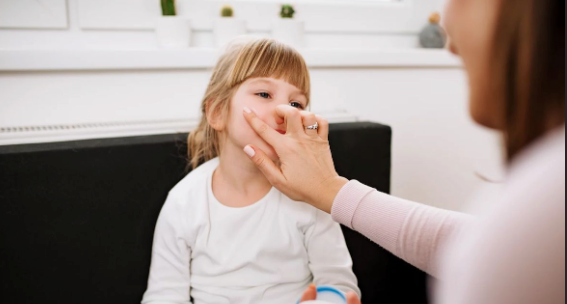
The first thing to determine is the depth and degree of contamination of the wound. Superficial abrasions involve only the outermost stratum corneum and stratum spinosum, with a flat surface and a small amount of pinpoint bleeding. Gently wiping with a clean, damp cloth reveals the intact dermal base. These superficial abrasions do not require sutures and will heal spontaneously within one to two weeks with proper disinfection and coverage. Wounds requiring sutures are characterized by full-thickness skin lacerations, separated edges, and visible yellow fatty tissue or red muscle tissue. The wound edges cannot be naturally closed when pressed. If the wound edges are uneven, have tissue defects, or a skin flap is lifted, it requires more professional treatment. Regarding the degree of contamination, wounds from outdoor falls involving contact with mud, sand, or pet scratches have a significantly higher bacterial load than clean wounds from scratches on paper or plastic edges at home. The latter have a lower risk of infection, while the former require more thorough cleaning during debridement.
What is the correct order for stopping bleeding and cleaning the wound?
Apply sterile gauze or a clean cotton towel directly to the wound for five to ten minutes. The face has a rich blood supply and dense capillaries, so the application time often needs to be slightly longer than for the limbs. After stopping the bleeding, do not leave tissue paper on the wound, as the tissue fibers will adhere to the wound surface, increasing the difficulty of cleaning. Use saline solution to rinse the wound during cleaning. If saline solution is unavailable, bottled purified water can be used temporarily. Rinse from the center of the wound outwards, using the water flow to wash away any attached foreign particles. After rinsing, check the wound for any remaining sand or glass fragments. Small foreign objects embedded in the dermis can leave pigmentation spots even after the wound heals; these need to be gently removed with tweezers under direct vision. For large pieces of dirt on the surface, gently roll them away from the center outwards with a cotton swab dipped in saline solution after rinsing.
Iodine solution is currently recognized as the least irritating and broad-spectrum wound disinfectant. It can be applied directly to open wounds, and children generally tolerate the stinging sensation. Alcohol and hydrogen peroxide, on the other hand, are not suitable for direct application to open facial wounds. Alcohol causes significant burning irritation to exposed dermis and subcutaneous tissue, and while hydrogen peroxide may appear to have a good cleaning effect by producing foam, the foam can damage fresh granulation tissue, and repeated use can delay healing. When applying iodine solution, use a cotton swab to make circular motions from the center of the wound outwards, covering the wound and about two centimeters of surrounding normal skin. Allow it to air dry for one minute.
Whether to suture or not depends on the depth, length, and location of the wound. Sutures are recommended for full-thickness skin lacerations exceeding five millimeters. Children's facial sutures typically use finer sutures than adults, and sutures are removed earlier, usually five to seven days later. The earlier the sutures are removed, the shallower the suture scar. Some medical adhesives can be used for short, clean-edged, and tension-free facial lacerations in children, requiring no anesthesia and being painless, making them suitable for uncooperative young children. However, medical adhesives only close the epidermis; they cannot close deeper tissues for deeper lacerations. If the wound depth exceeds the subcutaneous fat layer, layered suturing is still necessary.
The key to dressing changes and care is keeping the wound moist. Exposing the face to air easily leads to the formation of a thick scab on the wound surface. The epithelial cells beneath the scab migrate more slowly, and the scab is more likely to crack and form noticeable scars. After disinfection, apply a thin layer of silicone gel scar dressing and change it daily, observing the wound's color and odor each time. A small amount of bloody exudate is normal for the first three days; however, if the exudate turns yellow and purulent and increases significantly, it indicates infection. Do not pick at the dried scab; allow it to fall off naturally, a process that usually takes seven to fourteen days. The new skin after it falls off is pink and requires strict sun protection for at least three months. Ultraviolet radiation can cause abnormal activity of melanocytes in the new skin, leading to pigmentation that is difficult to fade. Regarding diet, children have a high demand for collagen synthesis; ensuring daily protein intake, such as eggs, milk, fish, and lean meat, is sufficient. There is no conclusive evidence that soy sauce or dark-colored foods affect scar color; these can be consumed normally without excessive restriction. If the wound occurs in a sensitive area such as the eyelid, nose, or lips, affecting the ability to open the eyes, breathe, or eat, or if there is persistent active bleeding that cannot be stopped by applying pressure for more than fifteen minutes, you should go directly to the emergency room after initial treatment and not delay observation at home. For more information on Innomed® Silicone Scar Dressing Tubular , refer to the Previous Articles. If you have customized needs, you are welcome to contact us; You Wholeheartedly. At long-term medical, we transform this data by innovating and developing products that make life easier for those who need loving care.
Editor: kiki Jia


