
 English
 عربى
عربى Español
 русский
 中文简体
中文简体






Many people have a question when they first encounter hydrocolloid dressings or foam dressings: Since these are applied tightly, won't the wound become suffocated and worsen? This concern seems reasonable, because we've been taught since childhood that wounds need to be kept dry and well-ventilated for them to heal quickly after scabbing. However, modern wound care research has concluded the opposite: occlusive dressings not only don't suffocate wounds, but they can actually promote faster healing. The key here is to distinguish between the concepts of breathability and occlusion.
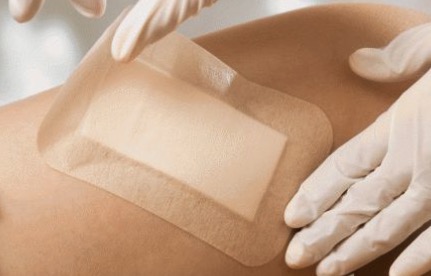
Are airtight dressings breathable?
Many people mistakenly believe that occlusive dressings are completely airtight, like plastic wrap. Medical-grade occlusive dressings, such as hydrocolloid dressings, polyurethane foam dressings, and transparent film dressings, are made of polymers with selective air permeability. Moisture can evaporate from the inside of the dressing, but external liquid water and bacteria cannot enter. This is called water vapor transmission rate. A qualified occlusive dressing has a water vapor transmission rate of 300 to 500 grams per square meter per day, meaning that moisture from the wound can continuously evaporate without accumulating as water droplets under the dressing. Simultaneously, oxygen can slowly permeate through the dressing edges and the microporous structure of the material itself. Experimental data shows that although the oxygen partial pressure under an occlusive dressing is slightly lower than that of an open wound, it is still sufficient to meet the needs of surface tissue repair. More importantly, the occlusive environment maintains a constant humidity level in the wound area, allowing epidermal cells to migrate almost twice as fast as in a dry environment.
Could occlusive dressings cause infection?
This is the core concern. Many people think that sealing a wound will only allow bacteria to multiply more easily. However, numerous clinical studies have concluded the opposite: the use of occlusive dressings does not increase the risk of wound infection; some studies have even shown a decrease in infection rates. There are several reasons for this. First, occlusive dressings form a physical barrier, completely blocking external bacteria, dust, and contaminants. Ordinary gauze dressings are open, allowing airborne bacteria and fibers from the patient's clothing to easily fall onto the wound. Second, the moist environment maintained by occlusive dressings is conducive to the phagocytic function of neutrophils and macrophages, as these immune cells are less active in a dry environment. Third, many modern occlusive dressings also contain antibacterial ingredients, such as silver ion-containing foam dressings, which continuously release silver ions to inhibit bacterial growth. Of course, there is a prerequisite: occlusive dressings should only be used on clean wounds or wounds where infection has been controlled. If a wound is clearly suppurating and has a lot of necrotic tissue, directly applying an occlusive dressing will indeed trap the pus and bacteria inside. In this case, it is necessary to clean and drain the wound first, and then use an occlusive dressing after the wound is clean.
Under what circumstances should occlusive dressings not be used?
Occlusive dressings are not a panacea; there are several situations where their use should be approached with caution or avoided altogether. Occlusive dressings are unsuitable for wounds with active bleeding or significant oozing, as blood accumulation under the dressing can form a hematoma, compressing tissue and hindering healing. In such cases, pressure should be applied with gauze to stop the bleeding first, and then an occlusive dressing can be considered after the bleeding has stopped. Patients with known allergies to dressing materials should not use them. For example, allergies to the adhesive components in hydrocolloid dressings can cause contact dermatitis, manifesting as erythema, blisters, and intense itching in the dressing-covered area. These patients can choose silicone dressings or use gauze instead. Deep burns or third-degree pressure ulcers with abundant black necrotic eschar should not be directly covered with occlusive dressings, as necrotic tissue needs to be kept open for drainage or surgical debridement. A closed environment allows toxins produced by the autolysis of necrotic tissue to be absorbed in large quantities, causing systemic reactions. Another type of wound is one infected with gas-producing bacteria, such as gas gangrene. These wounds absolutely cannot be closed; they require full exposure and incision for drainage.
How can you tell if there are any problems after using an occlusive dressing?
After applying an occlusive dressing, it's not necessary to remove it daily for inspection, but daily observation from the outside is required. After normal use of an occlusive dressing, a small amount of exudate may accumulate underneath, appearing as whitening or swelling in the central area. This is normal, indicating the dressing is absorbing the exudate. Over time, this whitening area will gradually expand, and it needs to be replaced when it approaches the edge of the dressing. Alarming signs include significant redness, swelling, heat, and pain around the dressing, and the area is expanding; purulent material oozing from the edge of the dressing; and the patient developing fever or chills. These signs indicate potential wound infection or a worsening of an existing infection, requiring immediate removal of the dressing for evaluation, and replacement with an open drainage dressing if necessary. In most cases, when the correct indication is chosen, occlusive dressings are safe and effective for clean, superficial wounds. They do not suffocate the wound; on the contrary, they provide an ideal healing environment. In cases where the wound has worsened after several days of application, the problem is often not with the occlusive dressing itself, but rather with the wound not being properly treated before application or the wrong type of wound being chosen.
For more information on Innomed® Silicone Foam Dressing, refer to the Previous Articles. If you have customized needs, you are welcome to contact us; You Wholeheartedly. At long-term medical, we transform this data by innovating and developing products that make life easier for those who need loving care.
Editor: kiki Jia


