
 English
 عربى
عربى Español
 русский
 中文简体
中文简体





Most family medicine cabinets keep a few rolls of bandages, but are you aware that different bandages can play vastly different roles in critical situations? Choosing the wrong bandage can not only render the treatment ineffective but may even worsen the injury. Understanding the fundamental differences between regular bandages and self-adhesive elastic bandages will allow you to make the most appropriate choice when needed.
Differences in materials :
Ordinary medical bandages are usually the gauze bandages we are familiar with, made of cotton gauze woven in a plain weave. Their advantages are softness, breathability, and good absorbency, but the material itself has no elasticity and no adhesive properties. You can think of it as a soft piece of cloth that relies entirely on external force (tape or knots) to hold it in place.
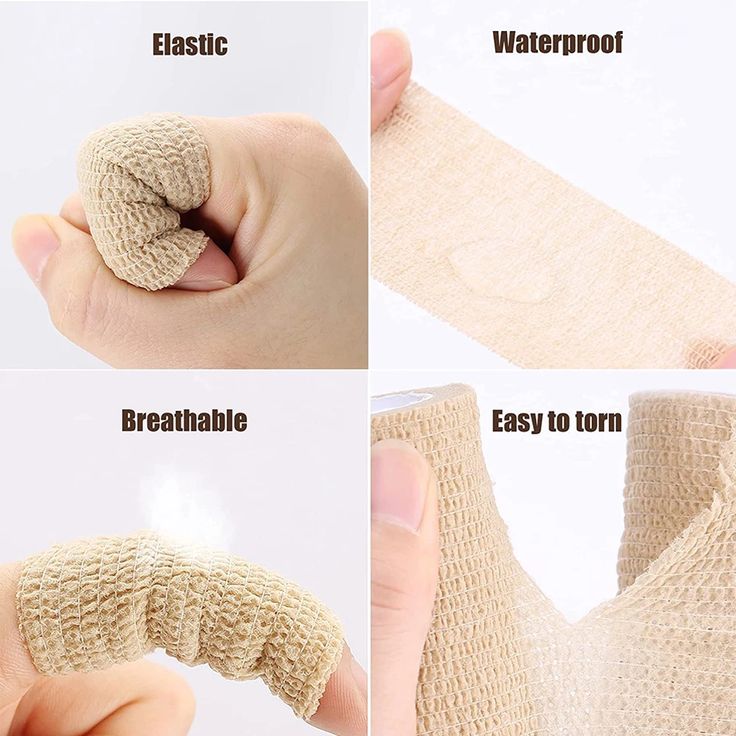
Self-adhesive elastic bandages are a type of composite material. They are typically woven from cotton, elastic fibers (such as spandex), and polyester fibers using a special process. This structure gives them two key properties: longitudinal elasticity, allowing them to stretch and retract; and self-adhesion, where the surface fibers can interlock to achieve self-fixation without the need for any glue.
Differences in fixing methods :
Using a regular bandage is a two-handed operation: one hand must hold the wrapped area steady, while the other hand must either tear the tape or try to tie a knot that won't come loose but isn't too tight. This process is especially troublesome when dealing with uncooperative injured persons or when bandaging oneself. More importantly, the tape can cause skin allergies, and the pain when tearing it off is a deterrent.
Self-adhesive elastic bandages enable "one-handed operation." When wrapping, the bandage conforms to the contours of the limb; simply press the end gently against the bandage layer for a secure hold. Removal is as simple as rolling it up smoothly and painlessly, following the direction of wrapping. This convenience is particularly advantageous in emergencies or when bandaging children or the elderly.
Functional focus:
The function of a standard bandage is to cover and isolate. It is suitable for treating simple abrasions, securing gauze pads covering wounds, or protecting newly healed wounds from friction. Because it does not provide pressure, it is not suitable for situations requiring pressure to stop bleeding.
The function of self-adhesive elastic bandages is to apply pressure, fixation, and support. Their elasticity provides continuous, even circumferential pressure, which is crucial for controlling swelling after a joint sprain, promoting venous return, or applying appropriate pressure to stop bleeding from a wound. Their elasticity allows them to perfectly conform to the joint area, providing stable support while allowing a certain range of motion and preventing slippage.
Now that we know the differences, how should we choose?
Have regular bandages on hand: used for treating minor everyday abrasions, securing larger gauze dressings, or as a base layer for other dressings. It's a reliable choice for basic home care.
Have self-adhesive elastic bandages on hand: They are indispensable when you need to treat ankle sprains, wrist strains, muscle wrapping and support after exercise, or provide daily pressure care for patients with varicose veins. They are also a more comfortable option for family members who need long-term immobilization and are concerned about tape allergies.
Friendly reminder: When using self-adhesive elastic bandages, be sure to control the tightness correctly. After bandaging, a finger should be able to be easily inserted. Excessive pressure will hinder blood circulation, leading to swelling and numbness in the limb. When bandaging, wrap from the distal end of the limb towards the proximal end to facilitate blood return.
For more information on Innomed® Super Absorbent Dressing , please refer to the previous articles. If you have customized needs, you are welcome to contact us; you wholeheartedly. At long-term medical, we transform this data by innovating and developing products that make life easier for those who need loving care.
Editor: kiki Jia


