
 English
 عربى
 Español
 русский
 中文简体







Walking into a pharmacy's dressing shelf, you'll find yourself facing several times more choices than ten years ago: hydrocolloids, foams, alginates, hydrogels, silver ions… You've heard of all the names, but when it comes to your own wound, you still don't know which box to pick. Actually, choosing a dressing boils down to answering two questions: What is the condition of the wound? How much exudate is there?
How to maintain appropriate moisture for wounds
The essence of modern dressings is to help maintain the appropriate level of moisture in wounds. The principle of moist wound healing has been explained many times—moist wound epithelial cells grow faster and better. But "moisture" must be just right: too much exudate will soak and damage the surrounding skin, while too little will cause dryness and scab formation.
Remember this correspondence, and you've already completed half of the selection process: for wounds with a lot of exudate, you need something that can absorb it—foam or alginate; for wounds with little exudate, you need something that can deliver water—hydrogel; for wounds with moderate exudate, moisturizing is enough—hydrocolloid.
Hydrocolloids:
Suitable for superficial wounds with minimal to moderate exudation: abrasions, stage I and II pressure sores, and wounds after blisters have ruptured. The advantages are convenience—change every 3 to 5 days, waterproof, and no special bandaging needed for bathing. The limitations are also clear: limited absorbency, unsuitable for wounds with heavy exudation; the sealed design makes it unsuitable for infected wounds.
Foam dressing:
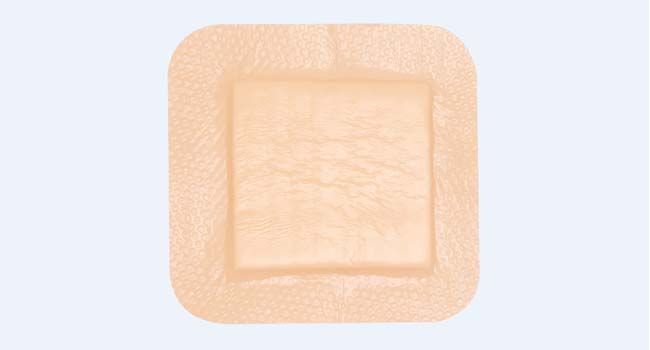
This is the primary choice for moderate to heavy exudation, commonly used for pressure sores and postoperative incisions with significant exudation. The core feature is a layer of absorbent foam that absorbs a large amount of fluid without sticking to the wound bed; models with a silicone gel contact layer are especially suitable for the elderly and those with sensitive skin. For exceptionally heavy exudation, choose the "high-absorbency" model.
Alginate:
Fiber dressings extracted from seaweed can absorb up to ten times their own weight in liquid, turning into a gel upon contact with exudate. They are suitable for wounds with significant exudate or those requiring filling cavities. When using these dressings, an additional secondary dressing is needed for secure application. Conversely, they should not be used on wounds with little exudate—they won't absorb water and will become sticky when dry.
Hydrogel:
Unlike the previous three products, its purpose is to hydrate. It's suitable for dry wounds, wounds with black eschar, and the dry, hardened edges of pressure sores in the elderly. Its gel texture softens necrotic tissue and aids in autolytic debridement. Using it on wounds with excessive exudate is like pouring water on a flooded area—it's the opposite of what you're doing.
Silver ion dressing:
For wounds showing signs of infection or at high risk of infection, silver can be used for short-term bacterial control. It's a special forces tactic, not a regular force; use it sparingly and stop once you see results, generally not exceeding two to four weeks of continuous use.
An often overlooked tip: dressings can be combined.
Dressings are not "one type at a time." For deep wounds with particularly heavy exudate, the common practice is to fill the wound with alginate and cover it with a foam dressing—the inner layer absorbs the fluid, while the outer layer locks in and secures it. For dry wounds, a hydrogel base can be applied, followed by a hydrocolloid dressing to keep it moisturized. Many cases where "one dressing is ineffective" are actually due to the lack of a complementary outer layer.
On the other hand, let me remind you: more layers don't necessarily mean better. Each layer should have a clear purpose; any layer without a purpose is superfluous.
A simple selection process
The first step is to observe the exudate and determine the absorbency level; the second step is to observe the depth: use patches for superficial areas and strips for cavities; the third step is to observe the surrounding skin: choose silicone gel for thin and fragile skin; the fourth step is to observe for 24 to 48 hours after changing the dressing: if the exudate is contained and the wound condition is stable, continue using the dressing; if there is no improvement or even worsening after two or three days, change your approach instead of stubbornly enduring it.
There is no best dressing, only the most suitable one. Wounds change, and so do our choices—regular reassessment is far more important than choosing a "miracle" dressing from the start. For more information on Innomed® Hydrocolloid Dressing, refer to the previous articles. If you have customized needs, you are welcome to contact us; you wholeheartedly. At long-term medical, we transform this data by innovating and developing products that make life easier for those who need loving care.
Editor: kiki Jia


