
 English
 عربى
عربى Español
 русский
 中文简体
中文简体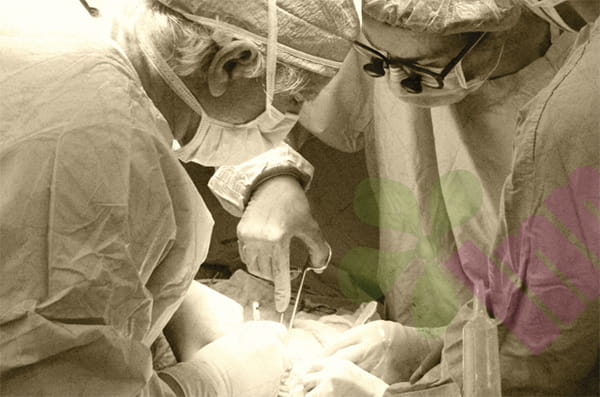






Skin flap surgery is a common repair technique in plastic surgery, orthopedics, and general surgery. Surgeons transfer a piece of tissue with its own blood supply from one part of the body to another to cover slow-healing wounds, repair defects, or restore function. This transferred tissue is the skin flap, which is nourished by one or more tiny blood vessels. The survival of the flap depends crucially on the patency of these blood vessels. The most dangerous thing after surgery is not infection or bleeding, but pressure. Even a few minutes of localized pressure can close the blood vessels supplying the flap, leading to ischemia and necrosis of the entire flap. Many patients and their families are unaware of this principle. Things that seem insignificant, such as pressing on the flap when turning over, wearing clothing that is too tight, or using excessively thick dressings, can be devastating to the flap.
What are the differences between a skin flap and a regular wound?
Ordinary wounds heal by granulation tissue growing slowly from the base of the wound. Even if there is some necrosis on the surface, the deeper tissues remain, and the body can gradually repair itself. Skin flaps are different. They are pieces of tissue that have been completely removed and reattached. Before a new blood circulation is established between the flap and the surrounding tissues, the survival of the entire flap depends entirely on the transplanted blood vessel. This vessel is very delicate, with thin walls, a small diameter, and slow blood flow, and it lacks the protection of surrounding fat and muscle. If external pressure exceeds the pressure inside the vessel, the vessel wall will collapse, and blood flow will be interrupted. If the flap is ischemic for five to ten minutes, irreversible cell damage begins. If ischemia exceeds six hours, the flap often cannot be saved. This is why the first principle of postoperative care for skin flaps is to avoid any form of pressure. Surgeons repeatedly instruct patients to maintain specific positions after surgery, such as not pressing on the surgical side after head flap surgery, elevating and immobilizing the affected limb after lower limb flap surgery, and not lying on one's side after breast reconstruction surgery. These requirements are not superfluous; they directly relate to the survival of the skin flap.
Which actions and situations are most likely to compress the skin flap?
During hospitalization, nurses supervise patients, so they are usually quite careful. However, post-hospital care is the real challenge. Unconscious turning over in sleep is the most common risk. A patient might remember not to press on the flap when awake, but when asleep, the brain is not under control, and it's not uncommon for them to turn over and press on the surgical side. To address this, a physical barrier can be created around the flap using soft pillows or rolled-up towels. For example, after a head flap surgery, place two soft pillows on a pillow, one on each side of the head and shoulder, creating a concave space that suspends the surgical side. Place a long pillow on the side of the body to block the movement, preventing complete rollover. Another easily overlooked issue is pressure from clothing and dressings. Some patients feel the surgical site needs protection after discharge and wear very tight underwear or wrap it tightly with elastic bandages. This is extremely dangerous for the flap. Post-operative protection for flaps is to avoid external impact, not pressure bandages. The surgical area should be covered with loose, pure cotton clothing without elastic bands or hard edges. If it is a skin flap of the limbs, do not use any circular compression objects, including elastic stockings, tourniquets, or clothing with tight cuffs.
How can you properly observe whether the skin flap is under pressure?
Monitoring the blood supply to the skin flap is a core aspect of postoperative care. A normal skin flap should be pink or light red, similar in color to or slightly lighter than the surrounding normal skin. Gently pressing the surface of the flap with your finger will cause the skin to turn white, quickly returning to pink within one to two seconds after releasing the pressure; this is called the capillary refill response, indicating good blood perfusion. If the flap turns pale and does not return to red after pressure, it suggests insufficient arterial blood supply, often due to pressure on the flap pedicle or vasospasm. If the flap turns dark purple or even black, does not change color after pressure, and blisters or tension bullae appear on the surface, it indicates obstructed venous return, with blood trapped within the flap. Both of these situations are emergency signals, requiring immediate contact with the surgeon. Another indicator is the temperature of the skin flap. The flap temperature should be similar to or slightly higher than the surrounding normal skin by 0.5 to 1 degree Celsius. If the flap feels noticeably cold to the touch, it indicates reduced blood flow. If the flap is hot to the touch and purplish, it indicates severe bruising. Family members can compare the temperature difference between the flap and the opposite normal skin by touching the back of their hand.
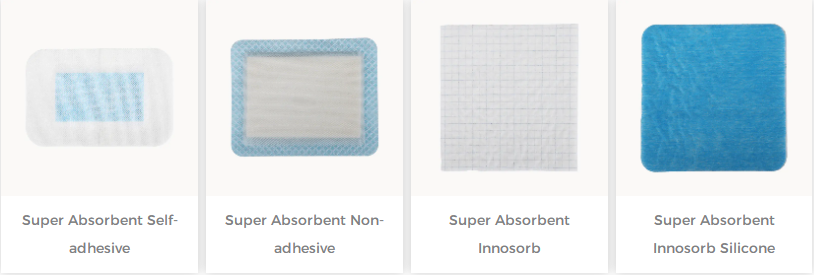
For more information on Innomed® Silicone Contact Layer, refer to the Previous Articles. If you have customized needs, you are welcome to contact us; You Wholeheartedly. At long-term medical, we transform this data by innovating and developing products that make life easier for those who need loving care.
Editor: kiki Jia


