
 English
 عربى
عربى Español
 русский
 中文简体
中文简体






Many people call pressure ulcers "bedsores," believing they are caused by lying down for too long. This understanding is only partially correct. The core mechanism of pressure injury is that prolonged pressure on local tissues leads to ischemia and hypoxia, but pressure alone is only one factor. Shear force, friction, moisture, malnutrition, decreased sensation, and limited mobility all work together to turn a seemingly ordinary pressure point into a wound that is difficult to heal. Simply attributing pressure ulcers to sleeping too long easily leads people to overlook the nursing care aspects that truly need to be changed.
Are pressure sores really just caused by sleeping?
A patient who is bedridden for a long period of time will have a significantly lower incidence of pressure ulcers if they are turned over every two hours, their skin is kept clean and dry, and their nutritional status is good. Conversely, a patient who can turn over on their own but whose sacrum and coccyx are constantly soaked in sweat and urine, and repeatedly rubbed by bed sheet folds, may also develop pressure ulcers. Pressure is the initiating factor, but shear force causes deep tissues to shift between the bony prominence and the bed surface, friction damages the stratum corneum, moisture softens the skin and makes it more susceptible to damage, and hypoproteinemia and anemia reduce the tissue's repair capacity. These factors combined lead to the formation of pressure ulcers. Therefore, preventing pressure ulcers is not simply about turning the patient over more often, but about managing all four sources: pressure, shear force, friction, and moisture.
How to distinguish between stage I and stage II pressure ulcers?
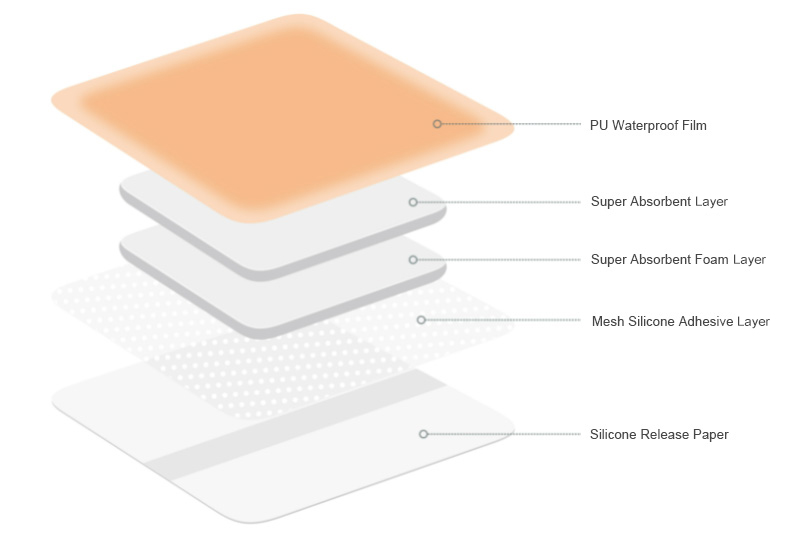
Stage I pressure injuries present as erythematous lesions that do not turn white upon pressure, with intact skin and no breaks in the skin, but the color differs from the surrounding skin, possibly being dark red, purplish-red, or bluish-purple. Diagnosis is difficult on dark skin; however, the temperature and firmness of adjacent skin can be compared. The affected area often has a higher or lower skin temperature and feels hard or swollen to the touch. Stage II involves partial loss of skin, presenting as superficial open ulcers or intact blisters. The wound base is pink or red, without necrotic tissue. Stage I injuries are reversible; timely relief of pressure can restore normal function. Stage II injuries require wound protection to prevent infection, usually covered with foam dressings or hydrocolloid dressings. Progression between stages I and II can be rapid, with erythema turning into blisters within hours; therefore, immediate intervention is necessary upon noticing stage I symptoms.
What are the differences in the key nursing care points between Phase III and Phase IV?
Stage III involves the loss of the entire thickness of skin, with subcutaneous fat visible, but bones, tendons, and muscles are not exposed. Stage IV involves the loss of the entire thickness of tissue, with bones, tendons, or muscles directly exposed within the wound. The focus of care for Stage III is debridement, infection control, and promoting granulation tissue filling. Stage IV is often complicated by deep infections or even osteomyelitis, making care more challenging and potentially requiring surgical debridement, negative pressure therapy, and long-term anti-infection treatment. Dressing changes for Stage IV pressure ulcers cannot be limited to changing the surface dressing; assessment of deep cavities and undermining is necessary, and packing and drainage must be adequate. Simultaneously, systemic nutritional support and infection control must be maintained. The healing period for Stage IV pressure ulcers is measured in months or even years, and some patients require surgical repair.
Why is stress reduction more important than changing medication?
Changing dressings addresses local infection and exudation, but the root cause of pressure ulcers is the failure to relieve pressure. If bony prominences remain under pressure, the capillaries in the wound area remain blocked, preventing oxygen and nutrients from reaching the affected area and metabolic waste from being removed. Even the best dressings and medications cannot promote tissue repair. Pressure relief methods include regular turning, using pressure-reducing mattresses, keeping the heels off the ground, and using foam dressings to cushion bony prominences. The turning interval depends on the patient's skin tolerance and the support surface used, generally every two hours, but this can be extended when using a high-efficiency pressure-reducing mattress. Each turning should avoid dragging; lift the patient before moving them to reduce shearing forces. Wheelchair-bound patients need to change their center of gravity every 15 to 30 minutes and should not maintain the same sitting posture for extended periods.
How to treat unstageable and deep tissue injuries?
Unstageable pressure ulcers are often covered by necrotic tissue or eschar, making it impossible to determine their actual depth. Stable eschars on the heel, if dry, intact, and without signs of infection, do not require debridement; simply keep them dry. Eschars in other areas, if accompanied by fluctuation, oozing, or an odor, indicate infection beneath the eschar and require debridement. Deep tissue injuries manifest as persistent, dark purple or maroon areas on intact skin, or bloody blisters, indicating damage to deeper tissues. These injuries progress rapidly, potentially becoming full-thickness defects within days. The treatment principle is immediate and complete decompression, avoiding any friction or cutting, close observation of the wound, and avoiding heat application or massage.
What practices are incorrect in pressure ulcer care?
Massaging reddened areas does not prevent pressure sores; in fact, it may worsen deeper tissue damage. Using air rings or circular pads can create new pressure points around the affected area and is no longer recommended. Heat lamps dry and crust the skin, masking deeper damage. Excessive rubbing of the skin damages the stratum corneum. Focusing only on the wound without addressing overall nutrition and underlying diseases is also problematic. The core of pressure sore care is the simultaneous implementation of five key elements: pressure reduction, cleansing, moisturizing, nutrition, and infection control. The absence of any one of these will hinder healing. Pressure sores are not caused by sleeping, nor can they be cured simply by changing dressings; it is a clinical problem requiring systematic management. For more information on Innomed® Silicone Foam Dressing, refer to the Previous Articles. If you have customized needs, you are welcome to contact us; You Wholeheartedly. At longterm medical, we transform this data by innovating and developing products that make life easier for those who need loving care.
Editor: kiki Jia


