
 English
 عربى
عربى Español
 русский
 中文简体
中文简体






Redness, swelling, itching, and even ulceration of the skin around the stoma are the most common problems encountered by people with stomas in their daily care. Faced with patchy redness in the area covered by the stoma baseplate, many people's first assumption is an allergic reaction, and they immediately switch to different brands of stoma baseplates, only to find the problem persisting even after trying three or four different models. In reality, the incidence of true allergic reactions caused by stoma baseplates is quite low. International surveys show that over 70% of skin problems around the stoma are caused by irritant contact dermatitis due to leakage of excrement, while actual allergies to the baseplate material account for less than 10%. Clearly distinguishing between these two causes directly determines the subsequent treatment approach. If leakage irritation is mistaken for an allergy, repeatedly changing product types without addressing the root cause of the leakage will only lead to a continued worsening of the skin damage.
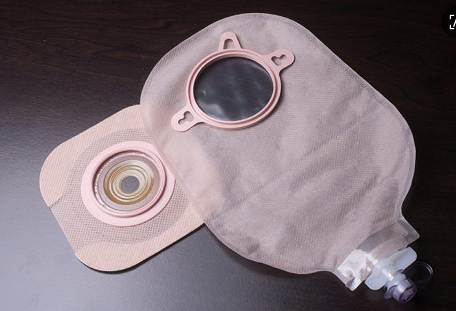
How can we make a preliminary judgment on the cause based on the appearance and distribution range?
Irritant dermatitis and allergic dermatitis have distinct clinical features that can be distinguished. Skin lesions caused by excrement leakage are usually irregularly defined, appearing map-like along the direction of the leakage. The transition between the reddened area and normal skin is gradual, without a clear boundary. The skin surface is often moist or even macerated and whitish, and feels wet to the touch. Sometimes, erosions are visible after the epidermis has peeled off. Contact dermatitis caused by chassis allergies, on the other hand, has clearly defined lesions. The shape of the lesions closely matches the outline of the chassis's rubber surface. The skin on the outer edge of the chassis is largely unaffected, while the abdominal skin outside the rubber surface remains normal. The skin texture within the erythematous area is clear but generally dry rather than macerated. Itching is significant, but pain is relatively mild. Another easily overlooked distinguishing feature is the timing of onset. Irritant dermatitis usually appears gradually within hours to a day after chassis replacement, coinciding with the start of excrement leakage. Allergic reactions often occur rapidly within tens of minutes to several hours after switching to a new batch of products or a new brand chassis, and they will recur every time the same product is used. The symptoms subside quickly after discontinuing use.
What are the specific causes of leakage irritation?
Excretory leakage is the root cause of irritant dermatitis, and leakage itself is caused by improper care in multiple aspects. Cutting the base plate opening too large is the most common operational problem. A gap of more than one to two millimeters between the inner diameter of the base plate and the stoma root is sufficient for liquid excrement to seep in. When cutting, the diameter of the stoma root must be repeatedly measured with a ruler. The cut inner diameter should maintain a gap of less than one millimeter between the inner diameter and the stoma root. Gaps smaller than one millimeter can be filled with anti-leak paste or anti-leak rings. Moist skin or wrinkles during base plate application can also cause poor adhesion. Before application, the skin around the stoma should be cleaned with water and gently patted dry with a non-woven cloth. If necessary, use a hairdryer on a cool setting to dry deep skin folds. After application, press the base plate firmly with your palm for three to five minutes to help soften and adhere the adhesive surface using body heat. The shape of the stoma is also an important factor. Flat or recessed stomas have an outlet flush with or even recessed into the skin surface, causing waste to directly impact the edge of the base plate. These types of stomas require a slightly convex base plate to increase the stoma's height, allowing waste to fall directly into the ostomy bag rather than seeping laterally into the base plate. Liquid waste, especially intestinal fluid from ileostomies, contains a large amount of digestive enzymes and is highly corrosive; therefore, a leak-proof ring needs to be added to the inner edge of the base plate to create both physical and chemical barriers.
If you really suspect it's an allergy, how do you confirm and treat it?
If the rash's morphology and borders closely match the contour of the stoma baseplate, and it recurs with every use of a specific brand and series of products, and the rash significantly subsides within 48 hours after discontinuation, the likelihood of an allergic reaction is relatively high. Potential allergens in stoma baseplates mainly include rosin resin, tackifiers, antioxidants in the adhesive, and latex in the backing material. The formulations vary greatly between different brands and series; an allergy to one product does not mean an allergy to all products. Identifying the allergen requires a patch test. A dermatologist applies small pieces of baseplate material from different manufacturers to the skin on the upper back and observes for any local allergic reactions after 48 hours. Based on the results, a safe alternative product is selected. While awaiting confirmation, a stoma skin protectant film can be used between the baseplate and the skin to form a protective layer. This protective film, composed of silicone or acrylate copolymers, effectively isolates the adhesive from direct contact with the skin without affecting the baseplate's adhesion. If itching affects sleep and daily activities, a low-potency topical corticosteroid ointment can be applied to the reddened area for a short period under the guidance of a doctor. However, the ointment should be allowed to be fully absorbed and dried before attaching the base plate to avoid the oily components affecting the adhesion. It is important to emphasize that topical corticosteroids should not be used continuously for a long period of time. Medication should be discontinued once symptoms are relieved, and the choice and course of treatment must be determined under the guidance of a doctor. Do not purchase and use them on your own.
How can we build a protective skin barrier to prevent recurrence during daily skincare?
The core logic of prevention is to create a dry, intact skin surface that is effectively isolated from excrement. Each time the ostomy bag is changed, first wash the skin with warm water or saline solution, avoiding soap and shower gel, as alkaline detergents can damage the acidic protective film on the skin surface, further impairing the barrier function. After washing, pat dry with a non-woven fabric, without rubbing, ensuring that the skin folds and the area around the stoma root are completely dry. Fill the gaps around the stoma root with a leak-proof ring and press firmly, ensuring the ring fits snugly against the stoma root mucosa without excessive pressure that could cause mucosal ischemia. Spray or apply a large area of stoma skin protective film to the skin area outside the leak-proof ring, extending at least one centimeter beyond the outer edge of the baseplate to form a complete, transparent protective film. After the protective film dries, attach the baseplate. The baseplate dimensions must be remeasured each time, as the stoma size will continue to shrink within six months after surgery, and using the same old template each time will lead to increasingly larger gaps. Regarding the frequency of changes, leakage shouldn't be left unaddressed until it reaches the edges. Once fluid is observed seeping from the inner edge of the transparent lining of the ostomy bag into the rubber surface beneath the base, it should be changed as soon as possible, even if it hasn't yet leaked onto clothing. This early warning sign is the last window to prevent chemical burns to the skin. Through this standardized daily care routine, most periostomy skin problems can be effectively managed at home. For more information on Innomed® Ostomy Pouch, refer to the Previous Articles. If you have customized needs, you are welcome to contact us; You Wholeheartedly. At long-term medical, we transform this data by innovating and developing products that make life easier for those who need loving care.
Editor: kiki Jia


