
 English
 عربى
عربى Español
 русский
 中文简体
中文简体






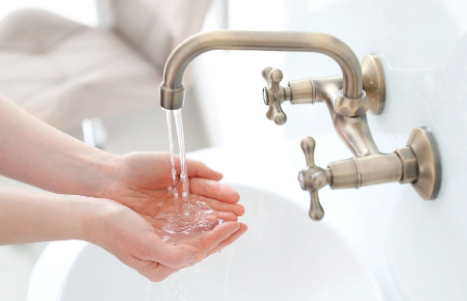
Rinsing an injury with water is almost an instinctive reaction, but there are conflicting opinions about whether tap water can be used to rinse a wound. Some people believe that tap water contains bacteria and rinsing will cause infection, so they would rather let the wound dry than rinse it. Others believe that if the wound isn't thoroughly rinsed, it won't be disinfected, so they repeatedly rinse the wound with a showerhead. Both of these approaches are extreme. Based on the basic principles of wound care, rinsing with tap water is not only permissible, but it is also currently recommended by international guidelines as the initial cleaning method for acute wounds. The key is how to rinse, how long to rinse, and under what circumstances rinsing should be avoided.
Doesn't tap water contain bacteria? Why can it be used to rinse wounds?
Tap water is indeed not sterile. National drinking water standards allow for a total bacterial count of no more than one hundred colony-forming units per milliliter of water, and the presence of fecal contamination indicator bacteria such as E. coli is not permitted. These trace amounts of environmental bacteria do not pose a threat to intact skin and mucous membranes. For open wounds, when there are already a large amount of contaminants, sediment, and foreign bacteria within the wound, the mechanical flushing effect of continuously flowing tap water provides a far greater debridement benefit than the increased infection risk that trace bacteria in the water might bring. The determining factor for wound infection is not whether the wound has been exposed to tap water, but rather whether residual necrotic tissue and foreign objects have been thoroughly removed, and the integrity of the body's immune function. Clinically, when treating large-area soft tissue contusions and open fractures, the initial irrigation often involves directly irrigating with several liters or even tens of liters of tap water or saline solution. The core logic is to use sufficient water volume and flow rate to dilute and flush out contaminants. In a household setting, tap water is perfectly adequate for this initial rinsing task.
What flushing pressure and how long should it be?
These are the two variables most prone to error in actual operation. Too low a pressure won't clean effectively, while too high a pressure will push contaminants deeper into the tissue. The recommended flushing pressure is four to fifteen pounds per square inch. For home use without measuring equipment, a simple standard to judge is to turn the tap to a medium flow. The water should flow over the wound surface without creating significant splashing or disturbing the tissue; this flow rate is generally safe. The flushing time should not be arbitrarily reduced to two seconds. It is generally recommended to flush continuously for five to ten minutes. If the wound is contaminated with a large amount of mud, glass shards, or organic debris, the flushing time should be extended to fifteen to twenty minutes. During flushing, keep the water flow at an angle to the wound surface, allowing the water to enter from one side and carry away contaminants from the other. Do not spray vertically into the deep part of the wound, as this will push surface contaminants deeper. For deep puncture wounds, extra caution is needed. The contaminants in puncture wounds are often trapped in the narrow, deep channels. Surface rinsing may only replace the fluid in the superficial layer and cannot effectively reach the deep wounds. These types of wounds require deep irrigation and exploration by medical institutions. Rinsing with tap water at home can only be used as a preliminary treatment before transport.
What do I need to do after rinsing?
Rinsing with tap water is only the first step in wound treatment, not the whole process. After rinsing, the wound needs to be carefully examined. If there are any visible foreign objects such as gravel, wood chips, or glass shards that cannot be removed by rinsing, you can try to gently remove them with sterile forceps. However, do not forcibly remove foreign objects deeply embedded in the tissue; this should be handled by medical personnel. Removing foreign objects may cause significant bleeding or push the fragments deeper. After rinsing, the skin around the wound should be patted dry with clean gauze. Do not rub it back and forth with a towel, as this will introduce bacteria from the surrounding skin into the wound. Then, determine the covering method according to the wound type. Superficial abrasions and clean incisions can be protected with petroleum jelly gauze or hydrocolloid dressings. For heavily contaminated wounds, it is best to leave them open for drainage for a period of time after rinsing, without sealing and bandaging them, and go to the hospital as soon as possible to assess whether further surgical debridement and tetanus vaccination are needed. One easily overlooked detail is that if the water used for rinsing is from an outdoor faucet that has not been used for a long time or from an old-fashioned water storage container, there may be a large amount of biofilm accumulated in the pipe. For this type of water source, you should let the water run for a few minutes before using it for rinsing the wound. You should give priority to using commonly used indoor cleaning faucets.
Under what circumstances should you absolutely not rinse directly with tap water?
Several types of wounds require different treatment. For wounds with exposed major blood vessels, nerves, or tendons, do not directly apply water to the exposed structures. Instead, gently cover and protect the wound with saline-moistened gauze and immediately seek medical attention. For open wounds in the chest or abdomen that connect the thoracic or abdominal cavity to the outside, irrigation fluid may enter the body cavity through the opening, causing severe cavity infection and hypothermia. In such cases, cover the wound with sterile, moist gauze and do not rinse or soak it. When rinsing wounds around the eyes, ensure that water does not enter the eyes to protect them and prevent tear backflow from contaminating the wound. Irrigation for chemical burns follows a different logic: rinsing with plenty of running water is the highest priority first aid measure, and the rinsing time should be significantly extended to twenty to thirty minutes or even longer, completely different from the required rinsing time for ordinary external injuries. Another misconception that needs clarification is using boiled water that has been left to stand for a long time instead of tap water. Boiled water can be re-contaminated by bacteria in the environment during the cooling process and is not sterile. Boiled water that has been left to stand for more than four hours should not be used for wound irrigation. For minor scrapes and cuts, simply rinse the wound under running tap water for five to ten minutes, pat dry the surrounding skin, and then apply a suitable dressing. This is a scientific and entirely feasible home wound care procedure. For more information on Innomed® Silver Ion Dressing Textile Fiber, please refer to the Previous Articles. If you have customized needs, you are welcome to contact us wholeheartedly. At long-term medical, we transform this data by innovating and developing products that make life easier for those who need loving care.
Editor: kiki Jia


