
 English
 عربى
عربى Español
 русский
 中文简体
中文简体






Patients on long-term glucocorticoid use, those who are elderly, malnourished, or have chronic edema often exhibit a special condition known as skin fragility. In this type of skin, the epidermis is thinner, the connection between the dermis and epidermis deteriorates, subcutaneous fat and collagen support are reduced, resulting in a translucent appearance with visible subcutaneous blood vessels. Even a light touch with a fingertip can cause wrinkles or even slippage. Applying dressings to this skin presents several conflicting requirements: ensuring the dressing is securely fixed without falling off, avoiding strong adhesives that could tear the skin upon removal, maintaining a closed, moist healing environment without allowing fluid to soak the already thin epidermis within the enclosed space. Resolving these contradictions requires adjustments to both the type of dressing chosen and the application technique; conventional dressing methods are not suitable for this type of skin.
Why can't regular adhesive tape be applied to this type of skin?
Ordinary medical adhesive tapes and acrylic adhesives have a peel strength far exceeding the tensile strength of fragile skin. While they may feel securely fixed during application, removal often tears off the stratum corneum and even part of the epidermis. For elderly patients, skin avulsion is the most common dressing-related adverse event, often resulting in a larger wound area than the original wound, with healing times measured in weeks. Another characteristic of fragile skin is intolerance to rosin and tackifiers in adhesives, easily leading to irritant contact dermatitis, manifesting as redness and rashes outside the dressing edges—reactions that may not occur in individuals with normal skin barrier function. For this type of skin, the dressing application philosophy must shift from pursuing strong adhesion to prioritizing painless removal. Silicone adhesive dressings should be prioritized. Silicone adhesives adhere to the skin through intermolecular forces rather than penetrating the stratum corneum to form a mechanical lock, resulting in much less tension on the epidermis during removal and allowing for repeated application and repositioning.
What preparations should be made to the skin before applying the patch?
Cleansing delicate skin requires a balance between removing oil and minimizing irritation. Gently wipe the area to be covered with the dressing using a non-woven cloth dampened with warm water. Avoid using alcohol and iodine solution, as alcohol dissolves the protective lipid film on the skin's surface and dehydrates the stratum corneum, while iodine in iodine solution is chemically irritating to the thin epidermis. After wiping, wait for the skin to dry completely. Delicate skin's stratum corneum becomes even more fragile after hydration, and the risk of tearing the dressing when applied in a damp state is much higher than in a dry state. A layer of alcohol-free skin protectant can be sprayed onto the dry skin surface. This liquid protectant forms a transparent film after drying, adding an intermediate surface for adhesion and reducing the direct contact area between the adhesive and the epidermis. This layer detaches with the dressing without taking away skin cells. For extremely delicate skin, a thin layer of skin protectant cream or petroleum jelly can be applied under the protectant before covering the dressing with a tension-free method. This allows part of the dressing's adhesive surface to contact the protectant and part to float on the surface of the ointment. The fixation strength will be reduced accordingly, but improved safety is the priority.
How exactly should dressings be secured to prevent tearing of the skin?
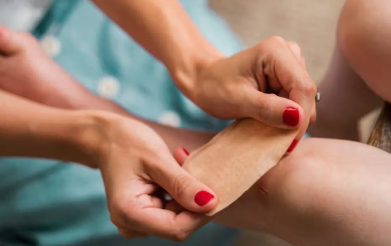
The core principle of dressing fixation is tension-free application. After removing the release paper, gently place the center of the dressing directly above the wound, allowing it to contact the skin under its own weight, without stretching the edges with your fingers. Then, use your fingertips to smooth the dressing outward from the center of the wound in a single direction, using gentle pressure rather than rubbing back and forth. Pay particular attention to the edges of the dressing and avoid pulling them to the sides. If you are concerned about the edges lifting, you can use silicone tape or non-woven tape to create a bridge around the outer edge of the dressing, ensuring the tape adheres to normal skin rather than delicate skin. For delicate skin around joints, extra preparation is needed. First, apply the dressing with the joint extended, then gently press the edges firmly with your fingers in the flexed position, allowing the dressing to pre-adapt to the stretching caused by movement. When changing the dressing, do not tear it off directly. First, moisten the interface between the dressing edge and the skin with saline solution, allowing the moisture to penetrate the interface between the adhesive and the stratum corneum. Wait for about ten seconds, then slowly peel it off parallel to the skin. If you encounter resistance, continue moistening the dressing instead of tearing it off quickly in one go.
Which types of dressings are suitable for which specific sensitive skin scenarios?
The choice of dressing strategy varies depending on the amount of exudate from the wound and the specific condition of the delicate skin. For superficial wounds with little exudate, the gentle adhesive surface of hydrocolloid dressings is well tolerated on delicate skin, but the large adhesion area of hydrocolloid dressings means they still need to be sufficiently moistened before removal. For wounds with moderate exudate, silicone foam dressings are the first choice, as the silicone surface does not damage delicate skin, and the foam layer absorbs exudate to prevent maceration. For wounds with large exudate and extremely delicate surrounding skin, an absorbent dressing pad can be placed on the wound first, and then wrapped and secured with a tubular elastic mesh or tension-free elastic bandage, completely avoiding contact between the adhesive and the skin. For wounds requiring frequent observation and dressing changes, the repeated application and removal can be harmful to delicate skin. A window dressing with a silicone border can be used; only the window portion is removed during each observation, leaving the border in place until the entire dressing needs to be replaced. The combined use of skin protective films and dressing adhesives is worth promoting. First, spray the protective film, then apply the hypoallergenic adhesive. The adhesive should only be applied to the edges where increased adhesion is needed, not the entire dressing contact surface. This ensures effective fixation while minimizing damage during removal. There is no single, universally applicable fixation method for dressing management of delicate skin. Each dressing change requires a reassessment of the dressing type and application method based on the skin's tolerance at that time. Preventing damage should be the top priority, followed by secure fixation; this order cannot be reversed in the care of delicate skin . For more information on Innomed® Super Absorbent Dressing, refer to the Previous Articles. If you have customized needs, you are welcome to contact us; You Wholeheartedly. At long-term medical, we transform this data by innovating and developing products that make life easier for those who need loving care.
Editor: kiki Jia


