
 English
 عربى
عربى Español
 русский
 中文简体
中文简体






Dry, flaky skin is often attributed to dry environments, aging, or excessive cleansing, with few considering the autonomic nervous system. However, the skin's secretory function and microcirculation regulation are actually both controlled by the autonomic nervous system. Changes in autonomic nervous system function alter the skin's moisturizing ability and barrier function. Certain diseases characterized by autonomic nervous system dysfunction, such as diabetic peripheral neuropathy, Parkinson's disease, and spinal cord injury, show a significantly higher incidence of dry, flaky skin compared to the general population, suggesting the crucial role of the autonomic nervous system in maintaining skin hydration. However, dry, flaky skin is a multifactorial condition, with the autonomic nervous system being only one regulatory link. Understanding the relationship between these factors helps explain some unexplained cases of dry skin.
How does the autonomic nervous system participate in skin hydration regulation?
The lipid membrane and sweat on the skin's surface together constitute the hydrolipid barrier, while sebaceous gland secretion and sweat gland secretion are regulated by different neural and humoral signals. The sympathetic nervous system regulates sebum synthesis and secretion by releasing norepinephrine, which acts on adrenergic receptors on the surface of sebaceous gland cells. The parasympathetic nervous system, on the other hand, acts on sweat glands and vascular endothelial cells through acetylcholine. When autonomic nerve function is impaired, sebum secretion decreases, skin surface lipids decrease, transepidermal water loss increases, and the stratum corneum moisture content decreases, resulting in visible dryness and fine flaking. The sympathetic nervous system also controls the vasomotor tension of skin microvessels. The state of microcirculation affects the efficiency of water and nutrient delivery from the dermis to the epidermis. Excessive vasoconstriction or disordered vasomotor rhythm can reduce the water supply to the epidermis. This type of skin dryness caused by abnormal neural regulation differs from dryness caused by simple environmental factors; simply applying moisturizer often only provides temporary relief and is difficult to maintain.
Which autonomic nerve disorders are most likely to cause dry skin?
Diabetic peripheral neuropathy is a prime example. In diabetic patients with poorly controlled blood sugar over a long period, axonal degeneration occurs in the distal sympathetic nerve fibers, leading to reduced or even complete anhidrosis of the skin on the feet and lower legs. Sebum secretion decreases simultaneously, resulting in widespread dry, flaky skin, with cracking common on the heels and anterior shins. This dry skin lacks a complete barrier function, and tiny fissures become channels for bacteria and fungi to enter. Combined with the pre-existing microvascular complications and weakened immune function in diabetic patients, this forms a crucial skin basis for diabetic foot ulcers. Dry skin in Parkinson's disease patients is also related to autonomic dysfunction. Abnormal sweating and sebum secretion are common non-motor symptoms of Parkinson's disease. Some patients exhibit excessive facial sebum secretion while the trunk and limbs are dry; this segmental difference is related to the distribution of autonomic nerve damage. Below the level of spinal cord injury, the skin loses central sympathetic innervation, severely impairing sweat gland function. The skin remains in a state of low humidity and low lipids, making dryness and flaking almost universal. Simultaneously, due to sensory loss, patients have reduced perception of the tightness and itching caused by dry skin, making it easy to overlook in care. This type of neurogenic dry skin is characterized by a stronger dependence on environmental humidity. The skin condition deteriorates rapidly when the environmental humidity drops slightly, and the distribution of dry areas is basically consistent with the range of nerve innervation.
What direct impact does reduced sweating have on the skin barrier?
The moisturizing effect of sweat on the skin is not limited to replenishing moisture. Urea and lactic acid in sweat are components of natural moisturizing factors, which help the stratum corneum maintain its hydration. Reduced sweating decreases the source of natural moisturizing factors on the skin surface. The lipid bilayer between the outermost keratinocytes of the stratum corneum loses sufficient moisture support, its structure becomes loose, and flaking increases. When the water content of the stratum corneum drops below 10%, the activity of hydrolytic enzymes involved in keratinocyte shedding decreases. Aged keratinocytes cannot separate and shed normally, instead adhering to the skin surface in flakes, forming visible scales. Simultaneously, antimicrobial peptides in sweat, such as dermcidin, are secreted insufficiently in an environment with reduced sweating. The balance of the skin's surface flora is disrupted, increasing the colonization probability of Staphylococcus aureus and fungi. The metabolic products of these microorganisms further irritate the skin, causing inflammation and flaking. The autonomic nervous system-related mechanisms of dry, flaky skin also have a direct connection in wound care. Dry, flaky skin around the wound can cause dressings to not adhere properly. The flaked scales form a gap between the skin and the adhesive surface of the dressing, preventing the adhesive from making sufficient contact with the stratum corneum. This increases the risk of dressing edges lifting and leakage, which is a real operational challenge for patients with chronic wounds who require continuous dressing management.
How can I effectively care for dry skin related to the autonomic nervous system?
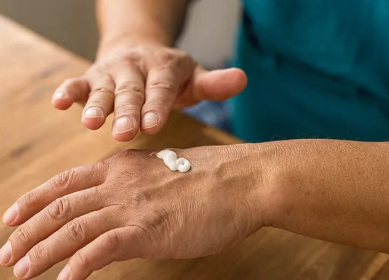
For dry skin caused by impaired autonomic nervous system function, the core of skincare is not simply moisturizing, but rebuilding and maintaining the skin's natural hydrolipid film. During cleansing, use a gentle, soap-free cleanser, and keep the water temperature below 37 degrees Celsius to avoid further dissolving the already scarce sebum. Within three minutes of cleansing, apply a moisturizer containing urea, ceramides, or petrolatum. Urea at a concentration of 5% to 10% provides both moisturizing and mild keratolytic effects, helping to soften existing scales. Ceramides can repair the lipid barrier of the stratum corneum. Apply the product in the direction of hair growth, using a unidirectional motion rather than rubbing back and forth to minimize mechanical damage to the already weakened stratum corneum. Maintaining indoor humidity between 40% and 60% effectively reduces transepidermal water loss. In winter, while using a humidifier, ensure good ventilation to prevent mold growth. Patients with diabetes and Parkinson's disease need to actively manage their primary disease and improve microcirculation. While neurological damage itself is difficult to reverse, improving tissue perfusion and supplementing with sufficient essential fatty acids and vitamin A can, to some extent, compensate for the dry skin caused by impaired neuroregulation. Before applying a dressing to a wound, apply a skin protectant to the dry skin around the wound and allow it to absorb before applying the dressing. This improves the smoothness of the adhesion surface without affecting the adhesive's fixation function. The relationship between dry, flaky skin and the autonomic nervous system suggests that for some dry skin problems that do not respond well to conventional moisturizing treatments, it is necessary to consider whether there are underlying neurological regulatory disorders controlling skin function—an area often completely overlooked in daily skin care. For more information on Innomed® Super Absorbent Dressing, refer to the Previous Articles. If you have customized needs, you are welcome to contact us; You Wholeheartedly. At long-term medical, we transform this data by innovating and developing products that make life easier for those who need loving care.
Editor: kiki Jia


