
 English
 عربى
عربى Español
 русский
 中文简体
中文简体






Cases of diabetic foot patients suffering burns while washing or soaking their feet are not uncommon in clinical practice, and these burns are often much more severe than those in healthy individuals. Diabetic peripheral neuropathy reduces or even eliminates the foot's ability to sense temperature. Many patients feel the water temperature is just right when they test it with their hands, but are unaware that their feet are already being subjected to excessively high temperatures. Under continuous heat contact, the skin on the foot can progress from redness to blisters and eventually full-thickness necrosis, all without any pain. Therefore, diabetic foot patients cannot determine the water temperature for washing their feet by feel; a precise numerical range must be established, and measuring tools should be used.
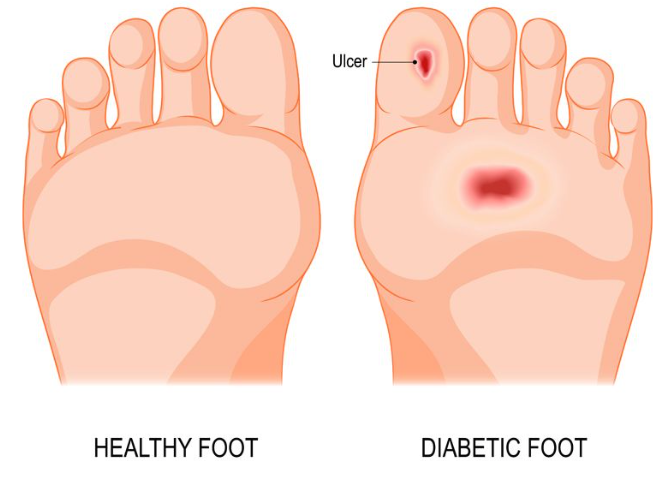
Why is testing water temperature by hand completely unreliable for diabetic patients?
The temperature sensitivity threshold of the hands is not entirely the same as that of the feet. Under normal circumstances, the hands are more sensitive to temperature differences. In diabetic patients, peripheral neuropathy first appears and is most severe in the distal extremities, with the temperature and pain sensory fibers in the feet being damaged earliest, while sensory functions in the hands are often relatively preserved. Using your own hands to test water temperature may reveal that the water temperature your hands can tolerate far exceeds the safe limit for your feet. Clinically, the recommended water temperature range is 37 to 40 degrees Celsius, close to normal body temperature. Your hands will only feel warm or even slightly cool when immersed in this water. However, many people habitually soak their feet in water above 40 degrees Celsius, finding this comforting sensation itself a dangerous sign. Some patients use family members to test the water temperature instead of themselves. Family members have normal foot sensations and different temperature tolerance standards than diabetic patients, so this cannot be used as a reliable indicator of safety. A water thermometer is an essential measuring tool; no professional medical equipment is needed, just a regular bath thermometer. Always measure the water temperature before each use to ensure it is within the safe range before washing your feet.
What are the temperature and time thresholds for burns?
The degree of thermal damage to the skin is determined by both temperature and duration of contact. Six hours of continuous contact with 44°C hot water can cause full-thickness skin necrosis; two hours at 45°C can lead to separation of the epidermis and dermis, forming blisters; and just a few minutes at 50°C is enough to cause deep burns. Diabetic patients, due to long-term hyperglycemia, already have microvascular complications and thickened basement membranes, resulting in lower heat dissipation and repair capabilities than normal skin, making them more susceptible to severe damage under the same temperature and duration conditions. Even if the foot bath water temperature is only two to three degrees above the safe range, soaking for 15 to 20 minutes can create wounds on diabetic feet that take weeks or even months to heal. One particularly dangerous situation is using hot water bottles or electric blankets to warm the feet in winter. The local temperature of these devices often exceeds 50°C. Prolonged contact with these devices, especially in diabetic patients with reduced sensation in their feet, almost always results in deep second-degree burns or deeper, often leading to amputation.
What are the specific requirements for the foot washing procedure?
Before washing your feet, measure the water temperature with a thermometer to ensure it is between 37 and 40 degrees Celsius. The water level should not exceed your ankles, and the soaking time should be limited to five to ten minutes; prolonged soaking is not recommended. Avoid vigorous rubbing of the skin during the wash. Gently wash with a soft towel or sponge, and gently clean the skin between the toes with your fingers or cotton swabs. The skin between the toes is most prone to maceration and fungal infections; after washing, gently pat dry with a towel, avoiding rubbing back and forth. Use cotton swabs to absorb excess water between the toes. After washing, apply moisturizer to the skin, avoiding the area between the toes. Keeping the area between the toes dry is key to preventing fungal infections. Diabetic foot patients with existing wounds, blisters, calluses, or redness and broken skin should not soak their feet. Instead, use a damp towel to wipe the healthy side of the foot, and have a professional change the dressing around any wounds. Any abnormal coloring, blisters, or broken skin on the feet should be addressed by seeking medical attention within 24 hours, rather than trying to observe the condition by soaking the feet first. The issue of foot bath water temperature is repeatedly emphasized in diabetes education, yet it still frequently leads to accidents. This is because diminished senses prevent patients from relying on their own perception to avoid danger, necessitating the use of an external tool like a thermometer and standardized operating procedures to replace the loss of sensory warnings. For more information on Innomed® Super Absorbent Dressing, refer to the Previous Articles. If you have customized needs, you are welcome to contact us; You Wholeheartedly. At long-term medical, we transform this data by innovating and developing products that make life easier for those who need loving care.
Editor: kiki Jia


