
 English
 عربى
عربى Español
 русский
 中文简体
中文简体






The idea that over-cleaning a wound can actually hinder healing might sound counterintuitive. Many people believe that wound treatment should involve thoroughly cleaning away all dirt and necrotic tissue, the cleaner the better. However, it is true that in clinical practice, we sometimes encounter situations where a wound is cleaned thoroughly, with a red base and no necrotic tissue, but after two weeks, granulation tissue fails to grow, and the wound does not heal.
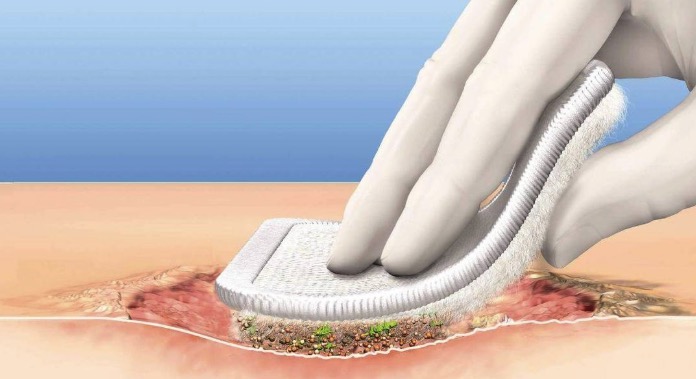
Why does overly thorough wound cleaning cause problems?
The key here is that wound healing requires stimulation from certain biological signals. Necrotic tissue fragments, residual extracellular matrix, and even small amounts of bacteria all signal to surrounding tissue cells that there is damage that needs repair. Macrophages are attracted by these signals, releasing various growth factors and initiating angiogenesis and fibroblast proliferation. If all of these things are completely removed, the wound base becomes an overly clean and inert surface, and the cells become less responsive. It's like an excessively quiet room; if no one knocks on the door or the phone rings, the inhabitants won't come out. Some studies have observed that moderately retaining some of the fibrin clot produced by autolytic debridement can serve as a scaffold for granulation tissue ingrowth, providing a mesh for new blood vessels to attach to. In a completely bare wound, capillaries don't know which direction to grow in.
Where is the proper measure for wound cleaning?
The purpose of debridement is to remove completely devitalized, non-blood-supplyed, and visibly contaminated tissue, not to scrape away all visible attachments to the wound surface. The primary factor in determining whether tissue should be removed is blood supply. Fresh granulation tissue is bright red or pink; gentle contact with a cotton swab will produce a few pinpoint bleedings. This type of tissue should be preserved. Yellowish-white, tough fibrous fascia, if not significantly necrotic, can also be preserved, as it provides support for epithelial growth. Black, grayish-brown, inelastic tissue that does not bleed when picked up with forceps is what must be removed. The choice of debridement tools is also important. Surgical scissors and blades are suitable for removing large areas of necrotic tissue en bloc, but for deep fibrous membranes and purulent coatings, gentle scraping with a curette is cleaner and less damaging to deeper healthy tissue than cutting with scissors. Another option is biological debridement, where medical maggots can precisely consume necrotic tissue while preserving healthy tissue. This has been used in Europe for many years and is gradually being promoted in China.
Comparison of different debridement methods
There are four commonly used debridement methods in clinical practice, each suitable for different situations. Sharp debridement involves directly removing necrotic tissue with a scalpel or scissors; it is the most efficient but requires an experienced surgeon and carries the greatest risk of over-removal. Mechanical debridement uses moist gauze or high-pressure irrigation with saline solution; it is gentler but less effective on firmly attached necrotic tissue. Autolytic debridement involves covering the wound with hydrogel or hydrocolloid dressings, allowing the wound's own enzymes to slowly dissolve the necrotic tissue; it is slow but the safest, without damaging healthy tissue, and suitable for outpatient or home care. Enzymatic debridement uses exogenous proteolytic enzymes applied to the wound to break down necrotic tissue; its effectiveness lies between autolytic and sharp debridement, but some patients are allergic to enzyme preparations. For the same wound, these methods are often used in combination. For example, sharp debridement can be used to remove large pieces of black eschar, followed by enzymatic or autolytic debridement to treat any remaining thin fibrous membrane, and finally, the wound can be rinsed clean with saline solution.
How to use functional dressings after wound cleaning
The choice of wound dressing after debridement directly affects the quality of subsequent healing. If the wound is relatively clean after debridement but has a lot of exudate, foam dressings or alginate dressings can be used to absorb the exudate. If a small amount of yellowish-white fibrous membrane remains after debridement, do not attempt to remove it all at once. Instead, apply hydrocolloid dressings or hydrogel dressings, allowing the remaining fibrous membrane to soften and dissolve on its own within two to three days, utilizing the principle of autolytic debridement. If there is significant bleeding during debridement, alginate dressings or chitosan dressings can be used, as they have hemostatic properties. Dressings containing silver ions are generally used for wounds with a high risk of infection or those already infected. They should not be routinely used after debridement because silver ions have slight toxicity to fibroblasts and may delay subsequent granulation tissue growth. A rule of thumb is that if the wound base is bright red after debridement, with minimal exudate and no obvious redness or swelling around it, a drug-free foam dressing or hydrocolloid dressing is sufficient; there is no need to add additional silver or iodine. Providing the healing process with an undisturbed, moist environment is often more effective than repeated interventions.
Clinical experience and lessons learned
An experienced wound therapist often worries when they see a wound that has been cleaned too thoroughly, leaving it shiny white. Because there are no residual necrotic tissue signals, macrophages are not fully activated, growth factors are not released sufficiently, and healing is slow to begin. In such cases, it is sometimes necessary to artificially create minor trauma to reactivate the healing process, such as making a few shallow scratches on the base of the wound with a sterile needle, or applying a small amount of platelet gel prepared from autologous blood. This may sound extreme, but it is indeed an effective strategy for chronic wounds that show no improvement after three to four weeks of standard treatment. Ultimately, debridement is an art of balance. Insufficient debridement allows necrotic tissue and bacteria to hinder healing. Over-debridement deprives cells of the stimulating signals to initiate healing. Good debridement removes what needs to be removed and retains what needs to be retained, rather than striving for a spotless wound. This sense of balance requires repeated practice and refinement to master. For more information on Innomed® Silicone Foam Dressing, refer to the Previous Articles. If you have customized needs, you are welcome to contact us; You Wholeheartedly. At long-term medical, we transform this data by innovating and developing products that make life easier for those who need loving care.
Editor: kiki Jia


