
 English
 عربى
عربى Español
 русский
 中文简体
中文简体






Hypertrophic scars, medically known as keloids or hypertrophic scars, are the result of collagen deposition exceeding normal needs during wound healing. These raised, flesh-colored or dark red lines feel firm to the touch and are sometimes accompanied by itching or stinging. Many people see these bumps after the scab has fallen off and their first question is: will this extra tissue disappear on its own? The answer depends on the specific area where the hyperplasia occurred and the duration of the hyperplasia.
Hypertrophic scars and keloids are two distinct pathological conditions, a distinction that needs to be clearly defined. Hypertrophic scars are strictly confined to the original wound boundary, with a raised area typically within a few millimeters. They usually peak within three months of injury, followed by a slow regression period. Keloids, on the other hand, extend significantly beyond the original wound boundary, infiltrating the surrounding normal skin in a crab-like pattern. They do not stop spontaneously and have a very high recurrence rate after excision. Clinical statistics show that keloids are relatively more common in people with darker skin tones, frequently appearing on the chest, shoulders, and earlobes. If the hypertrophic area does not extend beyond the wound boundary, the raised area will shrink in size and lighten in color to varying degrees within six months to a year. However, complete restoration to the smoothness and color of the surrounding normal skin is, in most cases, impossible.
Why can't the raised tissue completely disappear?
This involves the balance mechanism of collagen metabolism. In normal skin, the ratio of type I collagen to type III collagen is approximately 4:1, with collagen fiber bundles arranged in a basket-like pattern, exhibiting a certain degree of elasticity. However, in hypertrophic scars, the proportion of type III collagen increases, and the collagen fiber bundles are arranged in a nodular or whorled pattern, forming more cross-links. The degradation rate of this structure is much lower than the synthesis rate. Fibroblasts maintain high collagen secretion activity under continuous stimulation by transforming growth factor-β, while the degradation of collagen by matrix metalloproteinases is inhibited. The difference between these two factors determines the net volume of the raised tissue. About six months after injury, the concentration of transforming growth factor-β gradually decreases, and the collagen synthesis rate begins to fall below the degradation rate. Only then will the raised area show a visible reduction in size, but this reduction process is extremely slow, with a thickness change of less than one millimeter per month.
What factors can worsen or delay the regression of hypertrophic scars?
Skin tension is the most important mechanical factor. When the long axis of the wound is perpendicular to the skin's natural tension line, fibroblasts receive a stronger traction signal, leading to a higher rate of collagen synthesis. This is why wounds on the chest, shoulders, and joints are more likely to form noticeable bumps. Repeated friction stimulation can also activate fibroblasts through mechanotransmission pathways, such as the continuous contact of a collar with a neck scar or the pressure of a shoe on a foot scar. Ultraviolet radiation induces the activation of melanocytes in scar tissue, darkening the color of the bump. This darkening often makes the bump appear more pronounced to the patient, but it does not affect the actual change in volume. In terms of age, children and adolescents have higher fibroblast proliferative activity, and the bumps fade more slowly than in older adults, but the final degree of fading is not significantly different.
For existing hyperplastic protrusions, what interventions can accelerate their regression process?
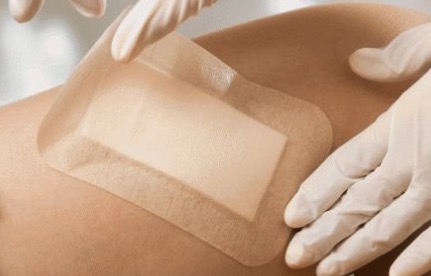
Pressure therapy is currently a first-line physical therapy method with a high level of evidence. It involves applying continuous and uniform pressure to the scar area using elastic garments or sleeves, with a pressure value of 20 to 40 mmHg. This pressure range reduces local blood flow and oxygen partial pressure, slowing down the rate of collagen synthesis by fibroblasts. Pressure therapy requires wearing the garment for at least 23 hours daily for three to six months to observe significant effects; premature discontinuation can lead to rebound in scar volume. Silicone preparations are another commonly used method. Silicone gels or patches form a occlusive film on the scar surface, reducing moisture evaporation and increasing stratum corneum hydration. This physical effect can feedback-inhibit excessive fibroblast activity. Silicone patches need to be applied for at least 12 hours daily for more than two months, and are more effective in preventing new scars than in improving old scars.
In what situations should we abandon waiting and take proactive measures?
If the bump continues to increase in size within six months of the injury, or if the growth extends into the surrounding normal skin, or if the itching and pain severely interfere with sleep and daily work, any of these three situations indicate that the probability of spontaneous healing through passive waiting is low, and active intervention by consulting a plastic surgeon or dermatologist is necessary. It is important to note that the goal of all treatments is to flatten the bump and stabilize its color, not to make it disappear completely. Even with proper treatment, the texture, color, and skin grain of the affected area cannot be restored to their pre-injury state; this must be objectively anticipated before treatment begins. For more information on Innomed® Wound Skin Closure, refer to the Previous Articles. If you have customized needs, you are welcome to contact us; You Wholeheartedly. At long-term medical, we transform this data by innovating and developing products that make life easier for those who need loving care.
Editor: kiki Jia


