
 English
 عربى
 Español
 русский
 中文简体






I changed the chassis size three times and tried two different brands, but I still woke up in the middle of the night feeling "wet." This seemingly minor issue of stoma leakage not only takes a toll on the chassis and sleep, but also on the skin—exudative dermatitis will follow, the more the skin breaks, the more it leaks, and the more it leaks, the more it breaks. The problem often lies in that small incision hole, but it's not just in the incision hole.
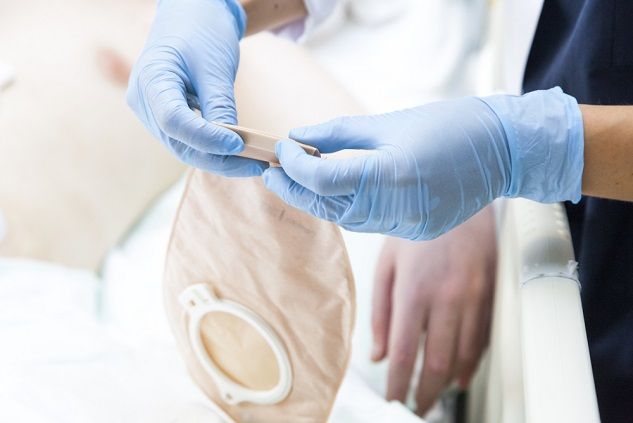
If you cut it too big, it will leak; if you cut it too small, it will also leak.
If the orifice is larger than the stoma: Excrement seeps into the skin through the gap between the stoma and the baseplate, which is the most direct leakage. If the orifice is smaller than the stoma: The edge of the baseplate presses against the stoma mucosa, and uneven pressure can lift the baseplate, causing the seal to fail and potentially leading to mucosal bleeding due to friction.
The appropriate standard is that the aperture should be about 1 to 2 millimeters larger than the stoma diameter, and no more than 2 millimeters. This small gap is to allow for thermal expansion and contraction and fluctuations in movement; anything more would be considered a passageway.
Did you measure your stoma correctly?
The size of the stoma is not fixed for life. In the early postoperative period, during the edema phase, the stoma tends to be larger; it then gradually shrinks, generally stabilizing within 6 to 8 weeks. Significant changes in weight can also alter the shape of the stoma and surrounding skin.
Many patients with leakage still use the measurements taught during their post-operative hospitalization. The correct approach is to measure regularly with a stoma measuring tape, once a month for the first few months after surgery, and even after the condition stabilizes, don't rely on guesswork. Measurements are the foundation of all procedures; if the foundation is flawed, even the best techniques are useless.
Besides size, these reasons are more common.
Apply the patch before the skin is completely dry. After showering or cleansing, the skin still has moisture, and the base won't stick properly, causing it to start peeling off after two or three hours. The skin must be completely dry before applying the patch.
Unevenness around the stoma. Skin folds, scars, and depressions can all prevent the baseplate from set properly. This situation cannot be solved by simply "fitting it tight." A convex baseplate is needed, or leak-proof rings or sealant can be used to fill in the depressions and create a level surface for the baseplate.
The skin wasn't properly cleaned. The remaining skin flakes and oil after removing the base are like a layer of powder between the adhesive and the skin.
The replacement cycle is unreasonable. It is usually replaced every 3 to 5 days. If it leaks once, it is replaced; if it gets itchy after three days, it is replaced. The rhythm is disrupted, and the condition of the chassis is also disrupted.
I didn't empty the bag before bed. The weight of the bag itself puts tension on the bottom, and sleeping with the bag full increases the chances of it leaking in the middle of the night.
If you experience a leak in the middle of the night, you can try these methods.
Don't eat dinner too late, and empty your ostomy bag within two hours before bedtime; keep a portable colostomy bag by your bedside and empty it once during the night—it's much better than having a puddle at the bottom after sleeping for eight hours; choose a larger capacity overnight colostomy bag; avoid prolonged pressure on the stoma side when sleeping. If you still leak in the same spot after adjusting these measures, you should suspect stoma retraction or parahernia. This is not a matter of technique and requires an in-person examination by an ostomy therapist.
What should be done about the skin after it has been exposed?
Wash with warm water, pat dry with a soft tissue, sprinkle a layer of skincare powder, sweep away any loose powder, spray with an alcohol-free protective film, and wait for it to dry completely before applying the base. This process adds a protective layer to the skin. Do not use alcohol swabs to wipe directly—it will hurt, and it will damage the skin barrier.
Leaks are not terrible; what's terrible is not fixing them. Every night of leakage tells you the answer: the size of the hole, the method of application, the timing of emptying—the answers are hidden in these details.
For more information on Innomed®Ostomy Pouch, Refer to the Previous Articles. If you have customized needs, you are welcome to contact us; You Wholeheartedly. At longterm medical, we transform this data by Innovating and Developing Products that Make Life easier for those who need loving care.
Editor: kiki Jia


