
 English
 عربى
عربى Español
 русский
 中文简体
中文简体






A pimple, medically known as pustular acne, is a localized purulent lesion formed when sebum, keratin debris, and bacteria are encapsulated by neutrophils after inflammation of the hair follicle and sebaceous gland. Faced with this raised bump topped with a yellowish-white pustule, most people's instinctive reaction is to squeeze it immediately, hoping that the pimple will quickly subside after the contents are drained. However, from a wound care perspective, the risks and potential complications of squeezing the pustules far outweigh the satisfaction of short-term visual improvement.
Why is it not recommended to squeeze pustules directly with your hands?
The surface of the fingers carries far more types of bacteria than the normal flora on the face. When squeezed, these exogenous bacteria can enter deep into the hair follicle through the break in the skin, turning simple inflammation into a mixed infection, worsening redness, swelling, and pain. The pressure applied by squeezing cannot be precisely controlled, and pus may not drain from the epidermis as expected; instead, it may spread along the subcutaneous tissue spaces, expanding the area of inflammation. Squeezing pustules in the danger triangle of the face should be especially avoided. This area extends from the root of the nose to the corners of the mouth, and its subcutaneous veins directly connect to the cavernous sinus in the brain. Lacking venous valves to prevent backflow, bacteria can travel retrogradely into the brain with the bloodstream during squeezing, causing serious complications such as cavernous sinus thrombosis. Experts from the Department of Dermatology at Peking Union Medical College Hospital have clearly pointed out that if infections in the danger triangle of the face are not treated properly, bacteria can travel back to the brain through subcutaneous veins, leading to cerebral edema or intracranial infection, which can be life-threatening in severe cases. In addition, physical damage caused by squeezing can lead to the rupture of capillaries, forming red or purplish-red acne marks. If the force is too great and damages the tissue around the hair follicle, abnormal collagen proliferation will form hypertrophic scars, or tissue loss will form pitted acne scars. Once these changes are formed, the skin's own repair is difficult to eliminate them.
So, does that mean all boils should be avoided?
There is a limited operational boundary. When the pustules are mature, characterized by a noticeably softened surface, a protruding white or pale yellow pustule, and the surrounding redness and swelling no longer expanding, drainage can be performed under strict sterilization. The procedure recommended by dermatologists at the First Affiliated Hospital of Sun Yat-sen University is as follows: First, clean the affected area with a gentle cleanser. Then, strictly disinfect the skin around the pimple with iodine solution. Gently puncture the thinnest part of the pustules with a sterilized comedone extractor, and gently press the surrounding tissue with a sterile cotton swab to drain the pus. Do not squeeze forcefully. Apply antibiotic ointment immediately after drainage to prevent infection. If there is still significant bleeding after drainage or if contents still ooze out when pressed, it indicates that the pus cavity has not been completely cleaned. In this case, it is not advisable to close the wound; continued observation or medical treatment is necessary.
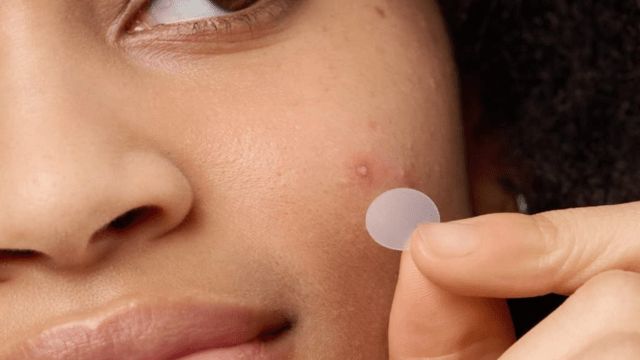
For most patients who don't want to risk scarring or worsening infection, using acne patches is a safer approach than squeezing. The core ingredient in acne patches is a hydrophilic colloid, which works based on several well-defined physical mechanisms: absorbing pus and tissue fluid, allowing the pus-filled pustules to drain passively without external pressure; creating a sealed environment on the wound surface, isolating it from external bacteria and contaminants; maintaining a moist healing environment, promoting epidermal cell migration, and reducing scab formation and scarring. Before use, clean your hands and the affected area thoroughly and dry the skin completely. Choose a patch slightly larger than the pus-filled pustules to ensure complete coverage of the edges. The patch will turn white and bulge, indicating that it has absorbed secretions. It should typically be changed every 6 to 8 hours, and no longer than 12 hours. It's important to note that acne patches are suitable for pimples that have broken open or have a pustule. They have limited effectiveness for immature, red, swollen papules or deep cystic pimples, and should not be used on wounds that have already bled significantly or have increased redness and swelling. For more information on Innomed®Acne Plaster, refer to the Previous Articles. If you have customized needs, you are welcome to contact us; You Wholeheartedly. At long-term medical, we transform this data b y innovating and developing products that make life easier for those who need loving care.
Editor: kiki Jia


