
 English
 عربى
عربى Español
 русский
 中文简体
中文简体






Finally, it's time to be discharged from the hospital. Many people feel relieved when the stitches are removed, but the opposite is true—post-discharge wound care is the crucial stage that determines the appearance of the scar and the smoothness of healing. While in the hospital, nurses change dressings and supervise daily, but at home you're entirely on your own, and many problems arise during this time.
Today I've compiled a practical checklist for postoperative incision care, covering the most frequently asked questions and the areas where patients are most likely to make mistakes.
Is it safe for the incision to get wet?
This is the most frequently asked question, and the answer is clear: the incision must not get wet for 48-72 hours after the stitches are removed.
Many people believe that the incision is healed once the stitches are removed, but epidermal healing and deep healing are two different things. Removing the stitches only means that the sutures have fulfilled their purpose, but the tiny needle holes on the skin's surface still need two to three days to completely close. Before that, if the skin gets wet, bacteria can enter through the needle holes and cause infection.
Therefore, the safest approach is to wait three days after the stitches are removed before showering. If you really can't bear to shower, you can use a waterproof dressing, but remove it immediately after showering and gently pat the surrounding area dry with a sterile cotton swab. As for tub baths, swimming, and hot springs, wait at least two weeks.
Is redness around the incision a sign of infection?
During the wound healing process, redness, slight swelling, and occasional stinging are all normal, but how do you distinguish between normal redness and signs of infection?
Here's a simple method: look at the scope, the trend, and the seepage.
Normal situation: The redness is limited to the edge of the incision, fades day by day, there is no pus, only a small amount of clear exudate.
Warning signs: If the redness and swelling are getting bigger, the skin temperature is noticeably higher to the touch, it is very painful when pressed, or there is oozing of yellow-green pus, or even fever, go to the hospital immediately. Do not try to treat it yourself by applying ointment.
Also, pay attention to any reactions to the suture ends. Some people use non-absorbable sutures, and if some suture ends aren't completely removed after suture removal, the body may reject them, causing a small red spot to appear on the incision, which may gradually swell into a small pus-filled spot, from which a small suture end will be squeezed out. If this happens, don't panic; just have a doctor remove it. Don't try to pick it out yourself with a needle.
When should I start using scar removal products?
Once the incision has completely healed, with no scabs or oozing, you can start considering scar removal. This usually happens about a week after the stitches are removed.
Many patients ask: Is there a difference between scar removal creams that cost hundreds of dollars and those that cost tens of dollars? Frankly speaking, consistency is more important than any product. The core principle of scar removal products is to moisturize and apply pressure to prevent scar tissue from growing uncontrollably. Even the most basic silicone gel, if applied consistently every day, will be more effective than applying it sporadically.
Sun protection is another crucial part of scar removal. Newly formed scar tissue is particularly vulnerable to ultraviolet rays; once the skin is exposed to the sun, the color darkens and is very difficult to fade. Within three months of the incision healing, it's best to cover the scar with a breathable dressing or medical tape when going out.
How exactly should the dressing be changed?
When you are discharged from the hospital, the doctor will usually give you instructions on changing your dressings. Here are a few details that are easily overlooked:
Washing your hands before changing dressings is not just a polite formality. Many people touch the incision directly after removing the dressing, and there are far more bacteria on your hands than in the air.
Observing exudate is key to dressing changes. Each day when changing the dressing, check the amount of exudate on the gauze: decreasing exudate indicates improvement; a sudden increase or an abnormal color is a warning sign.
Do not apply iodine solution upside down. The correct way is to use a sterile cotton swab dipped in iodine solution to make circular motions from the center of the incision outwards. After applying one coat, use a new cotton swab. Do not rub back and forth, as this will transfer bacteria from the surrounding area to the incision.
How to choose dressings?
Many people don't pay much attention to the dressings they take home from the hospital, thinking that any gauze will do. However, there are specific considerations at different stages:
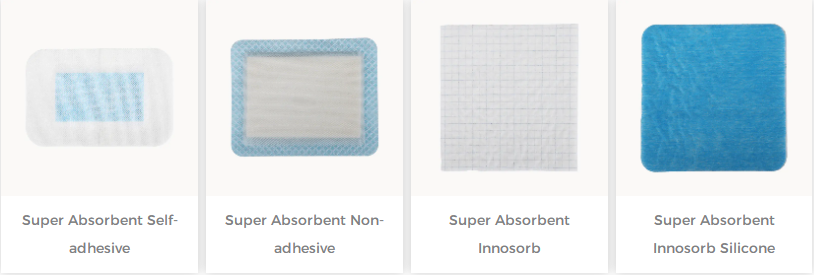
In the first few days after the stitches are removed, there is still a small amount of oozing from the incision. Ordinary sterile gauze is fine, as it is breathable and can absorb the oozing. However, gauze has a problem—it tends to stick to the wound, and when you pull it off during the next dressing change, the newly healed skin is torn again.
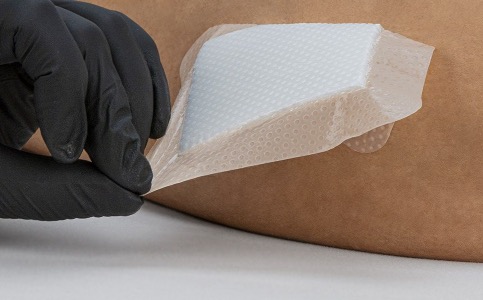
If you find the gauze is always sticking too tightly, or if the patient has sensitive skin, you can consider switching to silicone gel foam dressing**. Its advantages include a non-sticky contact layer, painless removal during dressing changes, and being particularly gentle on newly forming granulation tissue. For incisions near joints, such as the knee or elbow, this dressing also fits better and won't shift after a few movements.
If the incision is completely dry and there is no oozing, it's actually fine to leave it uncovered, which is more conducive to keeping it dry. However, some people feel uncomfortable from clothing friction or worry about getting dirt on it. In this case, you can apply a layer of silicone gel tape, which can protect the incision and prevent redness and rashes on the surrounding skin due to tape allergies.
What are the dietary restrictions?
The folk belief about "trigger foods" isn't actually that mystical. Modern medicine believes that as long as you don't have an allergic reaction or experience diarrhea, you can eat them. There are really two things you should avoid:
First, avoid alcohol. Alcohol dilates blood vessels and may worsen redness and swelling around the incision. Try to avoid it for a month after surgery.
Secondly, excessive consumption of oily and sweet foods can hinder collagen synthesis, which in turn affects muscle growth. For healthy wound healing, high-quality protein is essential – eggs, fish, and lean meat are all good sources; ensure you consume at least one of these daily.
As for whether soy sauce will darken scars, the answer is: no. Scar color is mainly related to melanin deposition, not soy sauce, so you can eat it without worry.
Under what circumstances is it necessary to return to the hospital?
Finally, here's the important point: in the following situations, don't hesitate, go to the hospital immediately:
- The incision suddenly split open
- Increased purulent discharge with a foul odor
- The area of redness and swelling has significantly expanded.
- Fever exceeding 38.5℃
- The pain suddenly intensified and the painkillers couldn't suppress it.
Postoperative wound care doesn't require any advanced techniques; it's simply about cleanliness and patience. Just spend a few minutes checking on it and changing the dressing each day. Pay extra attention for the first two weeks, and it will be much easier afterward.
Wishing all my friends who are about to be discharged from the hospital a smooth incision and a good healing process.
For more information on Innomed®Silicone Foam Dressing, Refer to the Previous Articles. If you have customized needs, you are welcome to contact us; You Wholeheartedly. At longterm medical, we transform this data by Innovating and Developing Products that Make Life easier for those who need loving care.
Editor: kiki Jia


