
 English
 عربى
عربى Español
 русский
 中文简体
中文简体






A few days ago, my neighbor knocked on the door to borrow something. I found out he had cut his finger while chopping vegetables, and blood was dripping from between his fingers. I took out my first-aid kit and treated him. He stared at my drawer full of dressings and exclaimed, "Your kit is more complete than a community clinic's!"
It's not that I had all the equipment, it's that I learned a lot from my mistakes. I used to go everywhere with just one roll of gauze, but then I discovered that different wounds really do require different materials.
Today, let's talk about what types of wound dressings a typical family first-aid kit should have. This isn't about bringing the entire pharmacy home, but rather about being able to grab the right one from a drawer in case of a minor injury.
What to do if a band-aid can't fix an injury?
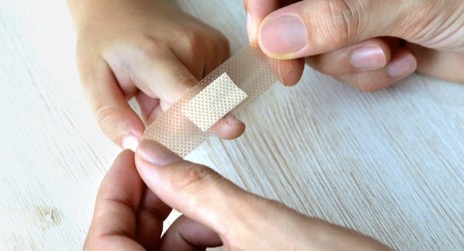
Let's start with the most common scenario: minor scratches and cuts, but not enough bandages .
For example, if you have a large scrape on your knee, or a big blister on your heel from your shoes, a regular bandage either won't cover it properly, or it will fall off as soon as you move.
In this situation, hydrocolloid dressings are a good choice. They are larger than band-aids, thin, and almost unnoticeable once applied. Most importantly, they form a gel-like pad upon contact with wound exudate, creating a moist healing environment for the wound, and they don't stick together when changed.
A kid fell off his scooter and hurt his knee, so I put this on him. The oozing was completely absorbed on the first day, and when I peeled it off on the third day, the new skin had healed. The kid told me: "It doesn't hurt when I use this."
The hydrocolloid material is waterproof, so you can shower while wearing it. It's suitable for active areas like knees and elbows where you want to protect them. Keep a few in different sizes at home; they can handle most minor injuries.
What should I prepare if I have elderly people at home?
The situation is different if there are elderly people living with you. The skin of the elderly is thin, like paper; even a slight bump can cause it to break, and healing is slow. For those who are bedridden for extended periods, there's also the risk of pressure sores.
At this time, gentleness is the most important thing.
My suggestion is to keep some silicone gel foam dressings on hand. The name sounds complicated, but the characteristics are actually very clear: the layer that touches the skin is silicone gel, which sticks well but won't tear; the middle layer is foam, which can absorb exudate; and the outer layer is waterproof, so it won't get dirty.
For a while, my dad's legs were swollen, and his skin would break at the slightest touch. I used regular tape to hold the gauze in place, but when I peeled it off, a small piece of skin would come off with it, and I was so heartbroken that I never dared to use it again. Later, I switched to silicone gel tape, and it didn't tear the skin at all when I peeled it off. Finally, my dad stopped avoiding me.
For existing pressure sores or chronic wounds, silicone gel foam dressings can be worn for several days without needing to be changed, reducing the hassle and the risk of infection. These two items are worth keeping on hand for families with elderly members.
The wound is red; could it be infected?
This is what many people worry about most: the area around the wound is red, is it infected?
Not necessarily. It's normal for a wound to be a little red during the healing process, but if the redness spreads, the skin temperature rises, it hurts when pressed, or the oozing turns yellow or green, then you should be wary
This is where silver ion dressings come in handy. They combine the antibacterial properties of silver ions with the protective properties of dressings, providing an extra layer of defense for wounds at risk of infection.
A friend of mine has diabetes. He had a small wound on his foot that wouldn't heal for a long time and became a bit red. I told him to go to the hospital for treatment and, while I did, I covered it with a silver ion dressing and followed the doctor's instructions. Later, it gradually got under control. He told me, "If I had known about this earlier, I probably wouldn't have had to go through all this trouble."
However, a word of caution: silver ion dressings are for specific conditions, not a routine choice. They are not necessary for ordinary, clean, small wounds. They are suitable for diabetic foot ulcers, pressure sores, and mildly infected wounds, and are best used under the guidance of a doctor or other professional.
Is the gauze still useful?
Having discussed so many functional dressings, some people might ask: Does that mean traditional gauze is obsolete?
Of course not. Gauze still has its place.
For example, gauze is suitable for freshly stitched incisions that need ventilation and observation. It's also the most economical option for large wounds that require significant exudate absorption. Furthermore, gauze and cotton swabs are essential for changing dressings, applying iodine solution, and wiping away exudate.
The problem with gauze is that it tends to stick to the wound. If you find that the gauze is always sticking tightly, you can switch to a non-sticky dressing for a few days until the new skin has healed and strengthened before using gauze again.
Therefore, gauze should still be kept in the first-aid kit, but don't just keep gauze.
How much should we prepare?
Finally, let's talk about quantity. My experience is: not much, but complete.
- Hydrocolloid dressings: Prepare several medium and small sizes; enough for abrasions and chafing.
- Silicone gel foam dressing: Keep two or three large sizes on hand in case of chronic wounds or pressure sores.
- Silicone gel tape: Keep a roll handy; it can be used to secure dressings and protect delicate skin.
- Silver ion dressing: Keep one or two on hand for future use. It won't be used frequently, but it should be readily available when needed.
- Sterile gauze and tape: standard equipment, don't forget them.
With the addition of iodine swabs, saline solution, scissors, and tweezers, a family first-aid kit is basically complete.
I'm not writing this to make you anxious, but to say that it's much better to prepare for wound care in advance than to cram at the last minute.
If a child falls in the middle of the night, cuts their hand while cooking, or an elderly person scrapes their skin, there's no need to rush outside in a panic, nor to dig out a roll of expired gauze to make do. Open the drawer, glance at the wound, choose the right piece, apply it, go to sleep, and the next day you can go about your business as usual.
This sense of reassurance makes spending a few dollars on dressings worthwhile. For more information on Innomed® Silicone Foam Dressing, refer to the previous articles. If you have customized needs, you are welcome to contact us; You Wholeheartedly. At long-term medical, we transform this data by innovating and developing products that make life easier for those who need loving care.
Editor: kiki Jia


