
 English
 عربى
عربى Español
 русский
 中文简体
中文简体






Hands are the most constantly moving part of the body. Typing on a keyboard, washing vegetables, unscrewing bottle caps, reaching into pockets—hands do hundreds of things a day. Yet, hands are also the most prone to injury. A cut while chopping vegetables, a scratch while opening a package, a blister from doing chores—these are all common occurrences.
The wound was put on a dressing, which was supposed to be for protection, but I found that it made things more inconvenient. Either the edges of the dressing would curl up and get caught on my clothes, or it would soak up water when I washed my hands, or it would feel tight and uncomfortable when I bent my fingers.
Today we'll talk about how to apply dressings to small hand wounds so that they can protect the wound without interfering with your work.
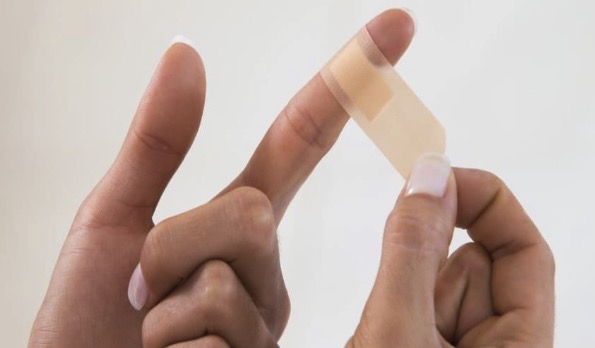
How to apply a plaster to an injured finger for the best fit?
Fingers are a common target. Cutting fingertips while chopping vegetables or chafing the fingertips while peeling things are common occurrences.
A problem with fingertip injuries is that dressings don't stay in place. If you apply a horizontal dressing, it doesn't cover the fingertip; if you apply a vertical dressing, it wrinkles when you bend the finger. Here's a cutting method a nurse taught me.
Take a hydrocolloid dressing and cut it into a cross shape or a butterfly shape depending on the size of the wound. For a cross shape, align the center with the fingertip and wrap the two wings around the sides of the finger. This way, the dressing will move with the finger and won't easily shift. A butterfly shape is suitable for wounds on the fingertip; the wider center covers the wound, and the narrower ends wrap around the sides of the finger, making it look like small wings.
When applying the adhesive, keep your fingers in a naturally slightly bent position; don't apply it with your fingers straight. If you apply it with your fingers straight, it will become taut when you bend it, and the edges will easily lift.
The advantage of hydrocolloid dressings is that they are thin, so finger movement is not affected after application, and they are waterproof, so washing hands or dishes for a short time is no problem. I cut my finger while chopping vegetables, applied a hydrocolloid dressing, put on disposable gloves, and continued chopping and washing vegetables without any delay.
What can I do if the joint area keeps lifting up ?
The knuckles, back of the hands, and wrists wrinkle easily with any movement, and the wrinkles curl up at the edges, which is very annoying.
There are two solutions. One is the notch method. Before applying the dressing, cut a small notch on each side of the dressing at the joint location. When the joint bends after application, the dressing will spread out along the notches and will not bunch up or wrinkle. This method is especially useful for silicone gel foam dressings, which have a certain thickness and fit better after the notches are cut.
Another method is reinforcement. If the main dressing has been applied but the edges are still prone to peeling, you can use silicone gel tape to press around the edges. This tape is sticky enough but doesn't tear when peeled off, making it especially suitable for frequently used areas like the hands. It's also thin, so you can barely feel it on your fingers and it won't interfere with typing or writing.
For large, frequently used areas like the back of the hand, silicone gel foam dressings are soft and conform to the skin's texture, making them much easier to use than rigid dressings. I got blisters on the back of my hand from playing basketball, applied this, and it stayed on even when I played the next day.
What should I do if I need to wash my hands frequently?
Hands are the part of the body that is washed most frequently. We wash them before cooking, after using the toilet, and after touching anything—it's no exaggeration to say we wash them more than ten times a day. Ordinary dressings swell up after two washes, the edges turn white, the adhesiveness decreases, and they eventually fall off.
Solve:
First, ensure your skin is completely dry before applying the dressing. After washing your hands or disinfecting, wait a minute or two to allow the moisture to evaporate completely. The dressing prefers dry skin and doesn't like it wet.
Second, choose a waterproof dressing. Hydrocolloid dressings and silicone gel foam dressings have waterproof backings and can be rinsed briefly without problems. However, avoid soaking them in water or rinsing them with hot water for too long, as hot water will temporarily reduce the adhesive's strength.
Third, treat it immediately after washing. Gently pat dry the area around the dressing with a dry towel. Do not rub back and forth, as this may lift the edges. After patting dry, press along the edges again with your palm to use the warmth of your palm to help the adhesive re-adhere.
If you need to be in contact with water for extended periods, such as when washing dishes or vegetables, it's best to wear rubber gloves. The gloves shouldn't be too tight, as this can cause the dressing to shift. You can wear a thin cotton glove underneath to absorb sweat, and then put on the rubber glove on top. This will keep the dressing dry and allow it to stay on longer.
What should I do if I feel tense when typing or working ?
Some people find their finger movement restricted after applying the dressing, making it difficult to type or twist bottle caps. This is usually because the dressing is applied too tightly or in the wrong position.
The principle of applying dressings is to fix the wound but not restrict movement. Apply the dressing slightly loosely, don't pull it too tight. Especially on the sides of the fingers, if the dressing is too tight, blood circulation will be affected.
Another possibility is that the dressing is too thick. Hands are frequently used, and thick dressings can be cumbersome. In this case, you can choose a thinner type. Hydrocolloid dressings are available in thin versions, which are almost undetectable after application. Silicone gel foam dressings also come in different thicknesses; a thin version is sufficient for hands.
If the wound is on a frequently stressed area like the fingertip, you can apply the pad slightly larger to distribute the pressure across the surrounding skin instead of concentrating it on the wound. However, don't make it too big, as the edges may be rubbed off by clothing.
Should I change my sleeping clothes at night?
During the day, when you're busy with chores, the dressing should be as convenient as possible. At night, when you're less active, it's actually a good time for the wound to heal.
If the dressing you used during the day is a little dirty or the edges are peeling, you can change it to a clean one before sleeping at night. If the dressing you used during the day is still in good condition, you can continue to use it without changing it frequently.
When applying the dressing at night, you can make it slightly larger and wrap it tightly to prevent it from rubbing against the skin while sleeping. This is especially important for children, as they often roll over in their sleep and grab at things, making the dressing easily fall off.
For people with sweaty hands, you can use a dry gauze to gently dry between your fingers and palms before applying the dressing at night. Dry skin will allow the dressing to adhere better and last until the next morning.
Hands are the busiest part of the body, and they can't rest even when injured. Applying a dressing isn't to make them rest, but to make them suffer less when working with an injury.
Cutting a cross, choosing the right material, reinforcing the edges, and pressing it after washing your hands—these small steps only take a few minutes, but they can extend the dressing's life by a day, help the wound heal faster, and make things go more smoothly.
Next time you cut your hand, don't just slap on a band-aid and call it a day. Think about what I've said today, give it a try, and your hand will thank you.
For more information on Innomed®Silicone Foam Dressing, refer to the Previous Articles. If you have customized needs, you are welcome to contact us; You Wholeheartedly. At longterm medical, we transform this data by Innovating and Developing Products that Make Life easier for those who need loving care.
Editor: kiki Jia


