
 English
 عربى
عربى Español
 русский
 中文简体
中文简体





Walking too much can cause shoes to rub against your feet, resulting in a blister on your heel. Burning yourself while cooking can cause a clear bump to form on your finger. Almost everyone has experienced these things.
The blister isn't big, but it's quite annoying—if I don't touch it, it gets in the way when I walk or do things; but I'm unsure whether I should pop it or not. I asked the older people in my family, some said popping it would make it heal faster, while others said never to pop it, as it would cause an infection. Whom should I listen to?
Today, I'll clarify everything about blisters. I'll explain when to keep them, when to remove them, and what to apply after they've burst. I'll explain it all in one article.
Why it's best not to pick at small blisters
Let's start with the case where we don't pick and choose.
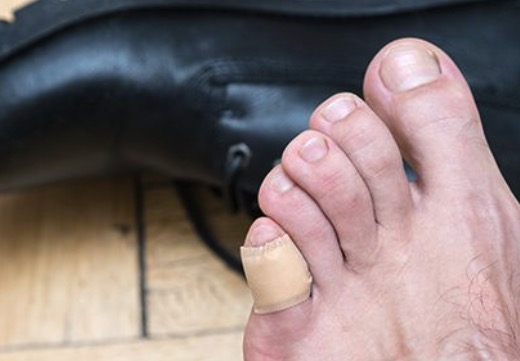
If it's a small blister, about the size of a grain of millet, that doesn't significantly affect movement, or if it's only been there for the first day or two after it appears, the safest approach is to leave it alone and let it heal on its own.
The fluid inside the blister is actually blood plasma exudate, not pus. Its function is to provide a sterile, moist protective layer for the new skin underneath, essentially a natural dressing created by the body itself. As long as this layer of skin remains intact, bacteria cannot get in, and new skin grows quietly inside.
Once the blister has healed, the fluid inside will be gradually absorbed, and the dry skin on top will peel off on its own. The whole process is painless and itch-free, making it very hassle-free.
So, if it's a small blister that doesn't hurt or itch and is in an inconvenient location, don't poke it. Just put something on it to protect it and prevent it from breaking.
In what situations is it necessary to choose?
But some blisters, if left untreated, can actually be a nuisance.
One type is the large blister. These are over a centimeter in diameter, filled with fluid, making walking, wearing shoes, and working uncomfortable. These blisters have too much surface tension; even if you don't address them, they might burst on their own during some activity. Rather than letting them burst passively, it's better to actively address them.
Another type of blister is one in a bad location. For example, blisters on the soles of the feet, palms of the hands, or in areas where joints are bent, where they will rub against the skin whenever there is movement. These blisters will not stay in place and will burst sooner or later.
Another possibility is that the blister has become dirty. For example, it may have been contaminated with mud or dirty water, or the liquid inside may have become cloudy and is no longer clear and transparent. This indicates that bacteria may have entered and it needs to be treated.
In these situations, we need to consider confronting the issue directly.
How to choose a safe one?
Removing a blister isn't as simple as just poking it with a needle. If you use the wrong method, you can make something that was fine become problematic.
Preparation: First, wash your hands thoroughly with soap and water, then soak the surrounding skin in iodine solution. Find a sterile needle—preferably a disposable sterile needle if available; otherwise, heat a sewing needle until it's red-hot over a flame, let it cool, and then use it.
Location for puncturing: Don't poke the blister in the exact center; instead, make a small hole near the edge of the blister, close to the skin. Make one or two small holes to allow the fluid to drain slowly. Try to preserve the top layer of skin; don't tear it off.
After the fluid has drained, gently press with a sterile cotton swab to absorb any remaining fluid. Then, gently disinfect the area around the wound with iodine solution, being careful not to push anything inside.
The most important step: Do not tear that layer of skin. Even though it's broken, it's still covering the skin and is the best barrier to protect the new skin underneath. Leaving it on is more effective than any dressing.
What kind of dressing should be applied after puncturing the wound?
Once a blister is punctured, it changes from a closed, sterile state to an open, wounded state. At this point, a dressing is needed.
The first requirement is: no sticking. The new skin underneath is as tender as tofu; if anything sticks to it, it will be completely ruined if you pull it off.
The second requirement: moisturize. Don't let the wound dry out; the faster it dries, the more likely it is to scab and leave a scar.
The third requirement: absorb the seepage. After puncturing, a little more liquid may seep out, which needs to be absorbed, but don't absorb it too dry.
In summary, hydrocolloid dressings are the first choice for treating punctured blisters. They are thin and virtually undetectable once applied. Upon contact with exudate, they form a gel-like protective layer, providing a moist healing environment for the wound. Most importantly, they don't stick to the wound when changing; they peel off easily without disturbing the underlying new skin.
My feet got big blisters from the new shoes, and after popping them, I used hydrogel patches. The pain stopped the same day, and walking was no longer a problem. Three days later, when I peeled them off, the new skin had healed completely, smooth and without leaving a trace.
For areas like the soles of the feet that experience high pressure or significant fluid leakage, silicone gel foam dressings can also be considered. They are thicker than hydrocolloid dressings, providing better cushioning and absorbing more fluid. The contact layer is also made of silicone gel, so it's completely non-adhesive. While they are slightly thicker than hydrocolloid dressings and may not be as invisible when applied to the feet, they offer more robust protection.
The remaining skin is covered on top, and then a dressing is applied on the outside, providing double protection. It's usually worn for two or three days, then changed, and the inside is mostly healed.
How to protect blisters that haven't been punctured?
If you don't plan to pick at it and just want it to disappear on its own, you still need to protect it a bit.
The purpose is to prevent it from being accidentally scratched. You can apply a **hydrocolloid dressing** or a regular band-aid. Hydrocolloid is better because it cushions friction and won't stick to the skin even after several days.
When applying, be careful not to press too tightly or make the blisters bulge further. Just gently cover them and press the edges firmly to secure them.
If the dressing is waterproof, you don't need to change it when you shower each day. If it's not waterproof, gently pat the area dry after showering and check if the blisters have changed. As long as they haven't broken, turned red, or swelled, continue wearing the dressing and wait for it to heal on its own.
Blisters aren't a big deal, but they're not insignificant either. If treated correctly, they'll disappear in a few days without leaving a scar. If treated incorrectly, they can cause pain for several days and may even leave a scar.
Remember these key points: Don't touch small blisters, carefully remove large blisters, and don't peel off the skin after removing them; apply a hydrocolloid patch. Check on it daily to detect any changes early.
Next time you get blisters on your feet, you'll know what to do.
For more information on Innomed®Hydrocolloid Blister Plaster, Refer to the Previous Articles. If you have customized needs, you are welcome to contact us; You Wholeheartedly. At longterm medical, we transform this data by Innovating and Developing Products that Make Life easier for those who need loving care.
Editor: kiki Jia


