
 English
 عربى
عربى Español
 русский
 中文简体
中文简体






Wound dehiscence is a worrying situation during postoperative or traumatic recovery, especially when patients see previously closed incisions or wounds reopening, often causing anxiety and helplessness. Proper management of wound dehiscence hinges on accurately assessing the extent and cause of the dehiscence and implementing appropriate interventions. Among these measures, the rational use of tension-reducing wound dressings is a crucial technique in modern nursing care.
What causes a wound to reopen?
Partial dehiscence involves only superficial separation of the skin and subcutaneous tissue, while the deeper tissues remain closed. Full-thickness dehiscence means that all layers of tissue in the wound are completely separated, and sometimes even deeper tissues or organs may be visible. Common causes of dehiscence include excessive local tension, infection, poor blood circulation, malnutrition, and improper physical exertion such as premature strenuous activity.
How to treat a cracked wound?
If a wound reopens, remain calm. Do not attempt to push exposed tissue back in or apply any powders or ointments. The correct initial treatment is to gently cover the exposed wound with sterile gauze moistened with sterile saline solution, and immediately contact a doctor or go to a medical facility for evaluation. The doctor will assess the depth of the reopening, check for signs of infection, and determine the appropriate treatment plan.
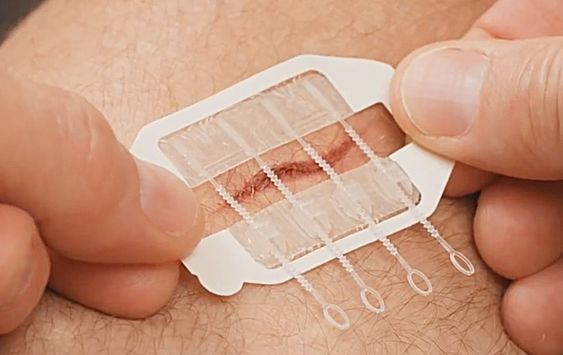
For clean, uninfected partial dehiscence, a key principle of modern wound management is to create conditions for the wound to heal naturally from the bottom up and from the inside out, a process known as secondary healing, while controlling infection and exudate. In this case, managing exudate and protecting newly formed granulation tissue are crucial. Highly absorbent functional dressings, such as foam dressings or alginate dressings, can be used to absorb exudate and maintain a suitable moist environment. Special attention must be paid to addressing a key mechanical factor that leads to dehiscence—tension around the wound. Tension-reducing dressings are special medical tapes with high elasticity and strong adhesion. Their design principle is not simply to forcibly pull the edges of the dehiscence closed, as excessive direct tension can cause local ischemia or skin damage. Instead, they effectively reduce or "unload" the direct pulling force acting on the wound edges by distributing the tension on both sides to a wider area of healthy skin away from the wound. When using them, the tension-reducing dressing is usually applied perpendicular or parallel to the wound direction with specific tension to the intact skin on both sides of the wound, providing a low-tension mechanical environment for wound healing and reducing the risk of re-dehiscence.
How to use this type of dressing?
Throughout the treatment of a laceration, a combination of dressings is required. For example, a layer of granulation-promoting dressing, such as a hydrophilic fiber dressing, can be placed on the clean laceration, followed by a layer of foam dressing to absorb exudate and cushion external forces. Finally, a tension-reducing dressing is properly applied to the surrounding skin to provide long-lasting mechanical protection. This combined application promotes healing from multiple levels, including moisture management, infection control, and mechanical support.
In addition to local care, managing systemic factors is crucial. Ensure adequate protein and vitamin C intake to support tissue repair, control blood sugar levels, avoid smoking, and plan activities appropriately under the guidance of a doctor, avoiding any actions that could suddenly increase tension in the wound area, such as violent coughing, sudden bending over, or lifting heavy objects.
When a wound reopens, proper treatment is a systematic process. It involves a professional assessment of the wound condition, selection of appropriate modern functional dressings for local management, and, in particular, the use of tension-reducing dressings to create a favorable biomechanical environment for healing, while also providing comprehensive systemic support. For any reopened wound, the first step is always to seek diagnosis and guidance from a professional medical professional; never attempt to treat it yourself. For more information on Innomed® Wound Skin Closure , please refer to the previous articles. If you have customized needs, you are welcome to contact us; you wholeheartedly. At long-term medical, we transform this data by innovating and developing products that make life easier for those who need loving care.
Editor: kiki Jia


