
 English
 عربى
عربى Español
 русский
 中文简体
中文简体





Many people develop leg ulcers, changing dressings for months or even a year or two, but they just don't heal. The wounds aren't large, but they keep recurring; they look a little better one day, then ooze fluid the next. The problem might not actually be with the wound itself, but with the blood vessels in the leg. This type of ulcer is called a venous ulcer, and its root cause is varicose veins. Unless the vascular problem is properly addressed, the wound will be difficult to heal completely.
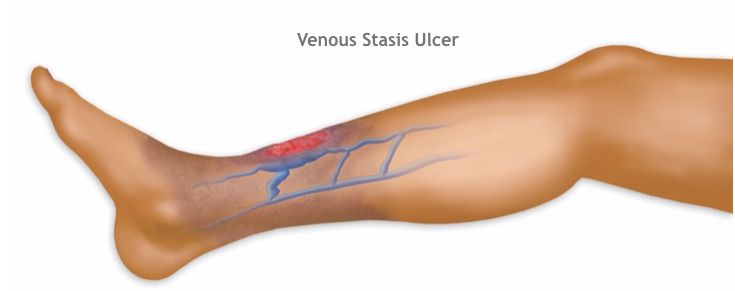 Why do varicose veins cause ulcers on the legs?
Normally, the veins in the legs have one-way valves that ensure blood flows only towards the heart. When veins become varicose, the valves fail to close properly, causing blood to flow backward and pool in the legs. Increased venous pressure forces water and protein from the blood vessels into the interstitial spaces, causing swelling in the legs. The skin, constantly exposed to this high-pressure, oxygen-deficient environment, gradually thins, hardens, and darkens, eventually breaking easily with the slightest touch and failing to heal properly. This is how venous ulcers develop.
Why do my wounds never heal?
The root cause is that the venous pressure hasn't decreased. You painstakingly change the dressing, and granulation tissue is growing in the wound, but as soon as you put your leg down, the blood pools back in, and the pressure forces the tissue fluid out. The newly grown cells are soaked in water, so how can they possibly heal properly? This is the fundamental reason why many people's wounds remain untreated even after six months of dressing changes. Changing the dressing only treats the surface wound; it doesn't address the underlying high pressure problem.
The skin surrounding the ulcer can also develop problems. Long-term bruising leads to malnutrition of the skin, causing it to become thin, brittle, and pigmented. When changing dressings, tearing off the tape may remove a piece of skin, creating new damage. Moreover, bacteria can easily multiply in this environment, leading to repeated wound infections and making healing even more difficult.
So how should it be treated to get better?
The first step is to reduce venous pressure. Compression stockings are a fundamental treatment and must be worn during the day. They apply decreasing pressure from the ankle to the thigh to help venous blood return. The pressure is generally between 30 and 40 mmHg. Before putting them on, elevate your legs and rest for a while until the swelling subsides. If compression stockings are insufficient, you can also use elastic bandages to wrap from the ankle towards the knee.
The second step is to treat the wound. The ulcer surface usually has yellowish-white necrotic tissue, which needs to be removed. Rinse with saline solution. If the necrotic tissue is thick, it can be softened with a hydrogel dressing before cleaning. After cleaning the wound, cover it with a suitable dressing.
Here's an important detail: the skin around venous ulcers is very fragile. When removing ordinary tape or adhesive dressings, it's easy to tear off the thin skin around the wound. Therefore, silicone gel contact dressings are clinically recommended. They are applied directly to the wound without adhering to the surface, and won't tear newly formed tissue during dressing changes. An absorbent foam dressing is then placed on top and secured with an elastic bandage. Another advantage of silicone gel contact dressings is that they can be worn continuously for several days without needing to be changed, reducing repeated irritation to the delicate skin.
The third step is to elevate the affected limb. When resting, elevate the leg so that the ankle is higher than the knee, and the knee is higher than the hip. Use gravity to help venous return and reduce swelling. Do not cross your legs when sitting, as this will compress blood vessels.
Can surgery solve the root problem?
For patients with severe varicose veins, doctors may recommend surgery, such as laser ablation, radiofrequency ablation, or vein stripping. The purpose of surgery is to remove the refluxed veins and reduce venous pressure at the source. However, compression stockings are still necessary after surgery because surgery cannot solve all venous problems. Generally, with proper wound care after surgery, the healing speed of ulcers will be significantly accelerated.
What should we pay attention to in our daily lives?
Avoid standing or sitting still for long periods. Get up and move around every hour; the contraction of your calf muscles helps pump venous blood back to the heart. Control your weight; obesity increases abdominal pressure and affects venous return in the lower limbs. Don't soak your feet in very hot water, as heat dilates blood vessels and worsens blood pooling. Keep your skin moisturized; apply moisturizer when it's dry and itchy, but don't apply it to wounds.
Can venous ulcers heal completely?
It can heal, but it requires patience and cooperation. Simply changing the dressing without addressing the venous hypertension will hinder wound healing. Wearing compression stockings, elevating the affected limb, treating the wound, and surgery if necessary, all need to be done together. Even after the ulcer has healed, the compression stockings must continue to be worn; otherwise, the risk of recurrence is high. Venous ulcers don't develop overnight, and healing them requires time and systematic management. If you haven't seen significant improvement after three months of home dressing changes, it's recommended to see a vascular surgeon to assess whether surgical intervention is needed. For more information on Innomed® Silver Ion Dressing Foam, refer to the Previous Articles. If you have customized needs, you are welcome to contact us; You Wholeheartedly. At long-term medical, we transform this data by innovating and developing products that make life easier for those who need loving care.
Editor: kiki Jia


