
 English
 عربى
عربى Español
 русский
 中文简体
中文简体






Epidermolysis bullosa is a group of genetic disorders that make the skin extremely fragile. Patients develop blisters from even slight friction or impact, and in severe cases, dressing, eating, and walking become difficult. Because their skin is as fragile as butterfly wings, they are also known as "butterfly babies." Based on which layer of skin the blisters occur in, this group of diseases is medically classified into four main types.
Simple type:
This is the most common type, accounting for about 80% of all cases. The blisters form on the outermost layer of the skin, the epidermis. Because the injury is relatively superficial, it generally doesn't leave scars after healing. However, the process of blistering itself is painful; the skin becomes red and swollen, then blisters appear, which rupture to reveal eroded surfaces.
Simple bullous epidermolysis can range from mild to severe. Mild cases may only involve blisters on the palms and soles, which may appear after walking long distances or prolonged rubbing, but daily life is generally unaffected. Severe cases are more troublesome, with blisters appearing on the trunk, arms, neck, and armpits—areas prone to friction from clothing. Symptoms worsen in summer when sweating is excessive. This type is usually inherited in an autosomal dominant pattern, meaning that if one parent has the disease, there is a 50% chance the child will inherit it. The main pathogenic genes are keratin 5 and keratin 14, two proteins that are important components of the epidermal cell skeleton. Mutations in these genes make the epidermal cells fragile and prone to breakage.
Boundary type:
This type is less common than the simple type, but the condition is much more severe. The blisters occur deeper, in the basement membrane zone between the epidermis and dermis. The basement membrane zone is a key structure connecting the epidermis and dermis, acting like a layer of glue that holds the two layers of tissue together. Blisters occurring in this area indicate that the glue itself is malfunctioning.
Patients with borderline epidermolysis bullosa are born with extensive bullae and erosions, leaving almost no intact skin. The mouth, throat, esophagus, and respiratory tract can all be affected, causing pain when drinking and eating, and hoarseness. Nails often fail to grow out or fall out immediately after growth. Severe cases of borderline bullosa often result in death before the age of two due to infection, malnutrition, or respiratory problems. However, milder cases can exist, with patients surviving into adulthood, albeit with a very poor quality of life. The disease is inherited in an autosomal recessive manner, with the primary pathogenic genes being laminin 332 and type XVII collagen, key structural proteins of the basement membrane zone.
Malnutrition type:
This type of vesicle is located the deepest layer, in the superficial dermis beneath the basement membrane. Because it damages the dermis, it leaves noticeable atrophic scars after healing, hence the name "dystrophic type." It has two inheritance patterns: dominant and recessive.
Overt malnutrition is relatively milder. Patients may only experience recurrent blisters in easily injured areas such as the hands, feet, knees, and elbows, leaving thin, white scars after healing. Nails may become deformed, thickened, and fall out, and teeth may also be underdeveloped.
The latent malnutrition type is a very serious condition. Patients experience repeated blisters, ulcerations, healing, and re-blistering all over their skin, with layers of scarring that cause fingers and toes to fuse together, forming a glove-like deformity medically known as pseudosyndactyly. The esophagus also narrows due to scarring, making eating difficult and requiring regular esophageal dilation. These patients also have a significantly higher risk of developing squamous cell carcinoma of the skin than the general population. The pathogenic gene is COL7A1, which encodes type VII collagen, a major component of anchoring fibers responsible for firmly anchoring the epidermis to the dermis.
Kindle syndrome:
This type is the rarest and differs from the previous three. In Kindle syndrome, the blisters can be intradermal or subdermal, and their location is unpredictable. Besides blistering, another prominent characteristic is photosensitivity; sun exposure easily causes skin problems, resulting in erythema and blisters.
As patients age, they gradually develop poikiloderma, a condition characterized by a combination of skin atrophy, hyperpigmentation, and telangiectasia, resulting in a mottled appearance. The fingers and toes may also gradually fuse, leading to syndactyly, a condition resembling recessive dysplasia. Kindler syndrome is inherited in an autosomal recessive manner, with the causative gene being FERMT1, which encodes the kindlin-1 protein, a protein that plays a crucial role in cell adhesion and signal transduction.
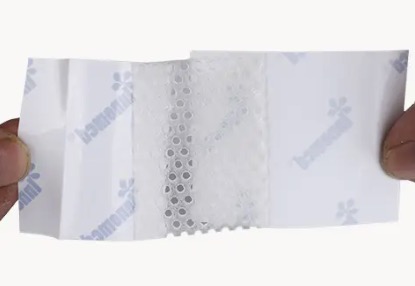
Silicone gel contact layer
Although these four types present differently, they are all essentially caused by problems with certain key proteins in the skin. These proteins act like glue, holding the different layers of the skin together. Genetic mutations cause this glue to fail, making the skin as fragile as butterfly wings. Currently, there is no cure; the core of skincare is protecting the skin, preventing infection, and managing pain.
For wound care, these patients require special attention: their skin is extremely fragile, and removing ordinary tape or adhesive dressings can tear off a layer of skin. Therefore, clinically, silicone gel contact layer dressings are recommended. These dressings do not stick to the wound and do not cause secondary damage during dressing changes. An outer layer of absorbent foam dressing further provides a relatively safe healing environment for the delicate skin. For babies, every dressing change is a challenge, and choosing the right dressing can significantly reduce their suffering. For more information on Innomed® Silicone Contact Layer, refer to the Previous Articles. If you have customized needs, you are welcome to contact us; You Wholeheartedly. At long-term medical, we transform this data by innovating and developing products that make life easier for those who need loving care.
Editor: kiki Jia


