
 English
 عربى
عربى Español
 русский
 中文简体
中文简体






When changing dressings, you uncover the dressing and find a puddle of liquid underneath—everyone has experienced this.
Some people, upon seeing fluid buildup, immediately panic, thinking the wound has become infected, and quickly wipe it off and replace it with a new one. Others think the dressing is still usable, wipe it clean, and continue using it. Which approach is correct?
Let's clarify this issue today. When is fluid accumulation under the dressing normal, when is it a warning sign, when should it be changed, and when can we wait?
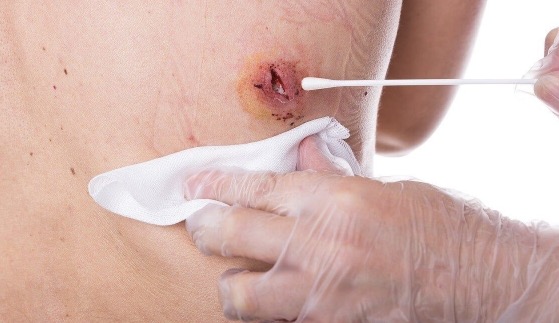
Where does the fluid come from?
First, let's talk about what effusion is. During the healing process, a wound will ooze fluid, medically known as exudate. This fluid is not pus; it is something that seeps out from the blood plasma and contains nutrients, immune cells, and growth factors—it's the body's way of "replenishing" the wound.
Normal exudate is clear or pale yellow and has little to no odor. The amount depends on the size of the wound and the stage of healing—there is more exudate when the wound is just beginning to heal or when there is an infection, and it gradually decreases as granulation tissue grows.
So, a little liquid under the dressing isn't necessarily a bad thing. It means the wound is reacting normally and the dressing is working properly.
When is fluid accumulation considered normal?
Not all fluid buildup is a cause for concern. If the fluid is clear, pale yellow, and not much, only in a small area in the center of the dressing and has not spread to the edges, has no odor, and the wound itself looks clean with rosy granulation tissue and no redness or swelling around the wound—this type of fluid buildup is a normal healing phenomenon.
Some functional dressings, such as hydrocolloid dressings, form a gel-like substance upon contact with exudate, resembling yellow jelly or bubbles. Many people are alarmed at first sight, thinking it indicates suppuration, but the dressing is simply functioning normally. This gel traps the exudate, creating a moist environment for the wound and preventing it from sticking together when changing dressings.
The same applies to silicone gel foam dressings. The foam layer absorbs the exudate, and the surface may feel a little damp, but the exudate is locked inside the dressing and will not seep back into the wound.
Don't panic about this fluid buildup. As long as it doesn't leak, has no odor, and the wound doesn't change, you can continue wearing the patch and change it at the normal frequency.
When should you be wary of fluid accumulation?
However, some fluid buildup is a warning sign. The color changes: clear becomes cloudy, pale yellow turns yellowish-green, or there's a sudden increase in bloody exudate.
The smell has changed. A rotten, egg-like odor indicates that bacteria may be multiplying.
The extent has changed. The fluid has spread from the center to the edges of the dressing, and even seeped outwards, indicating that the amount of exudate is too large and the dressing is saturated.
The wound has changed. Upon closer inspection, the area around the wound is red and swollen, or the wound itself has darkened in color and developed yellowish-white necrotic tissue.
The patient's symptoms have changed. The pain has worsened, or they have a fever and chills.
In these situations, fluid accumulation is not normal; it's a sign of infection or worsening of the wound. In these cases, you can't wait; you need to change the dressing.
The fluid has reached the edge; should I change it immediately?
This is the most common dilemma: the dressing has absorbed most of the fluid, and the accumulated fluid is almost flowing to the side, but it hasn't completely seeped out yet. Should I change it or not
The answer is: you can change it, but there's no need to rush.
If the fluid is almost reaching the edges, it means the dressing is nearly saturated. Continuing to leave it on could cause the exudate to leak out from the edges, staining clothes and sheets, and increasing the risk of infection. Furthermore, prolonged soaking of the skin around the wound with exudate can cause maceration and whitening, affecting the skin barrier.
However, it's not like you can't wait even a second. If it's inconvenient to change your dressing temporarily, such as when you're outside, in the middle of the night, or without a dressing on hand, you can endure it for a few more hours without much problem. As long as there's no leakage at the edges and no signs of infection in the wound, your body won't suffer any major problems because of these few hours.
Change it as soon as it's convenient. When changing, rinse the wound with saline solution, dry the surrounding skin, and then apply a new dressing.
There's too much seepage; could it be that the dressing wasn't chosen correctly?
If the fluid accumulates almost to the edge every time, and the dressing is saturated every time it's changed, it might be that the wrong dressing was chosen.
Different dressings have different absorption capacities. Ordinary gauze doesn't absorb much, hydrocolloid dressings are suitable for low to medium exudate, and silicone gel foam dressings have strong absorption capacity, making them suitable for wounds with a lot of exudate. If there is a lot of exudate, alginate dressings can also be considered. They can absorb more than ten times their own weight in liquid, forming a gel to lock in the exudate, and then a layer of foam dressing can be added on top for fixation.
Choosing the right dressing can reduce the frequency of dressing changes and create a more stable wound environment.
Another possibility is a sudden increase in exudate, significantly more than before. This could indicate a change in the wound, such as a worsening infection or the emergence of new problems. In this case, simply changing the dressing is insufficient; it's necessary to assess the wound itself.
When changing the fluid, how should we handle any accumulated fluid?
When changing the dressing, don't rush to wipe away any fluid. Use a sterile cotton swab or a saline-soaked cotton ball to gently absorb the fluid; do not rub vigorously. Observe the color, consistency, and smell of the fluid. Then observe the wound itself for any changes, new necrotic tissue, and whether the granulation tissue color is correct.
If the wound is clean and there is only excessive oozing, simply changing the dressing will suffice. However, if there are changes in the wound, such as the appearance of yellowish-white necrotic tissue or increased redness and swelling around the wound, then simply changing the dressing will not solve the problem. You may need to go to the hospital for debridement or the use of antibacterial dressings.
This is where silver ion dressings can come in handy. If there is a lot of exudate and signs of infection, covering the wound with a silver ion dressing can control the bacterial load and buy time for the wound to heal. However, it is only an aid; you still need to go to the hospital.
If you see fluid buildup next time you change the dressing, don't panic, but don't ignore it either. Take a look, smell it, and observe the wound to determine whether to wait or change the dressing immediately.
For more information on Innomed®Medical Silicone Tape, refer to the Previous Articles. If you have customized needs, you are welcome to contact us; You Wholeheartedly. At longterm medical, we transform this data by Innovating and Developing Products that Make Life easier for those who need loving care.
Editor: kiki Jia


