
 English
 عربى
عربى Español
 русский
 中文简体
中文简体






When changing dressings, you often see a ring of white, soft, and wrinkled skin around the wound, resembling a finger that has been soaked in water for a long time; this is called maceration. Sometimes you can also see a hard, white edge around the wound, like a thin shell adhering to the wound edge; this is called a white border or epithelial curl. Both phenomena contain the word "white," but their natures are completely different. Maceration indicates a problem with the surrounding normal skin, while a white border is a stage in the wound healing process. Determining which is more dangerous directly determines whether the next step should be to keep the wound dry or keep it moist.
What is immersion, and where are the dangers?
Bleaching is essentially caused by excessive hydration of the stratum corneum. When wound exudate soaks the surrounding normal skin for an extended period, keratinocytes absorb water and swell, disrupting the lipid barrier between cells. The skin becomes white, wrinkled, and soft, and may peel easily with gentle rubbing. Bleaching itself is not an infection, but it opens the door to infection. The stratum corneum is the outermost physical barrier of the skin; once damaged, bacteria and fungi can easily penetrate. The most common secondary infection in blister-affected areas is Candida infection, manifesting as bright red patches with satellite pustules at the edges, accompanied by significant itching. In severe cases, bacterial cellulitis can develop, with rapidly expanding redness and swelling, increased skin temperature, and pain upon pressure. The danger of blistering lies in its silent destruction of the skin's defenses; by the time it's noticed, infection may have already begun. Furthermore, blistering indicates a deeper problem: inadequate exudate management. Whether the dressing is not absorbed quickly enough or changed too infrequently, the exudate is not being removed in time, indicating that the current wound care regimen needs adjustment.
What is the white border, and where does the danger lie?
A white border is a slightly raised, hardened, white ring around the edge of a wound, closely adhering to the boundary between the wound and normal skin. It is essentially over-proliferated keratinized epithelium. In the later stages of wound healing, epithelial cells migrate from the wound edge towards the center, normally forming a thin, pink, translucent membrane. However, if the wound base is uneven, exudate repeatedly soaks the edges, or dressings are changed too frequently, the epithelial cells are mechanically stimulated during migration, prematurely activating the keratinization process and forming a thick, whitish, hardened keratinized layer. This white border acts like a low wall, blocking the path of subsequent epithelial cells. New epithelium finds it difficult to penetrate under the white border; more often, it is blocked at the edge and stagnates. The danger of a white border is that it is painless and non-itchy, leading many to believe that if the wound is not red or swollen, it's fine. However, it actually halts the healing process. A small wound might stagnate at the edge for two or three months without healing even a millimeter due to the white border.
The essential differences and comparison of the levels of danger between the two
maceration is a problem with the surrounding normal skin, while white borders are a problem with the epithelium at the wound edge. Maceration damages the wound barrier, increasing the risk of infection; the danger is acute and external. White borders hinder tissue growth, prolonging healing time; the danger is chronic and internal. In terms of urgency, maceration is more dangerous because infection can spread rapidly and even cause systemic infection. In terms of treatment difficulty, white borders are more challenging because removal requires physical debridement or chemical softening; improper handling can actually enlarge the wound. Maceration is relatively easy to treat; controlling exudate, using the right dressing, and protecting the surrounding skin can lead to recovery within a few days. White borders require more patience; mild cases can be softened with hydrogel and gently wiped away, while stubborn cases require removal with small scissors or a curette. Afterward, the wound must be kept moist and smooth to prevent the reformation of white borders.
How to handle and prevent it?
The treatment of maceration involves two steps. The first step is to address the source of exudation by switching to a more absorbent dressing, such as changing from hydrocolloid dressings to foam dressings, or from ordinary foam dressings to highly absorbent foam dressings. Simultaneously, increase the frequency of dressing changes, from once every two days to once a day, and even twice a day for cases with particularly heavy exudation. The second step is to protect the surrounding skin. Each time the dressing is changed, gently wipe the macerated area with gauze moistened with saline solution, absorb the moisture, and then apply zinc oxide ointment or stoma care powder to the surrounding skin to form a hydrophobic barrier. If the maceration has developed into a secondary candidiasis infection, apply a topical antifungal powder, such as clotrimazole powder or miconazole powder, once daily. The erythema and itching should subside after a few days.
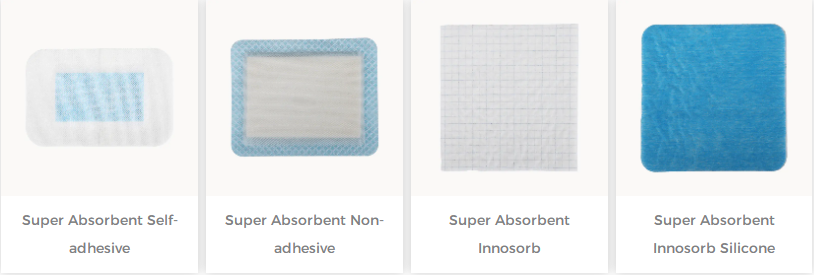
Treatment of white borders requires physical intervention. Small white borders can be gently wiped repeatedly with a sterile cotton swab dipped in saline solution. The keratinized epithelium will soften and gradually slough off after being soaked in water. For large or thick white borders, hydrogel can be applied overnight. The hydrogel softens the keratinized layer, and it can be easily wiped off the next day when changing the dressing. After removing the white border, fresh epithelial edges will be exposed at the wound edge. At this time, it is important to keep the environment moist, but avoid allowing exudate to soak the edge again. Foam dressings are more suitable than hydrocolloid dressings because foam dressings have stronger absorption capacity, and exudate is quickly absorbed and will not remain at the wound edge. Frequent dressing changes should also be avoided, as each tearing of the dressing will cause micro-trauma to the epithelium at the edge, making the white border prone to recurrence. In general, controlling exudate and protecting the surrounding skin, immersion for a few days can resolve the issue. Treatment of white borders requires more precise operation, but once removed and the wound base is smooth, epithelial creep will be significantly accelerated. Comparatively, the risk of infection from immersion is more urgent, while the stagnation of healing caused by white borders is more demanding and requires more patience. Neither is a good sign, but for acute risks, infection should be treated first, while chronic problems should be addressed gradually to improve the healing environment. For more information on Innomed® Silicone Foam Dressing, please refer to the Previous Articles. If you have customized needs, you are welcome to contact us; you wholeheartedly. At long-term medical, we transform this data by innovating and developing products that make life easier for those who need loving care.
Editor: kiki Jia


