
 English
 عربى
عربى Español
 русский
 中文简体
中文简体






For patients who are bedridden or wheelchair-bound, the most common care request their families hear is to turn them over every two hours. This statement has been prevalent in hospital and home care for a long time, seemingly becoming an unshakeable gold standard. However, the actual clinical situation is far more complex. Some patients who strictly adhere to the two-hour turning rule still develop pressure sores. Others turn them every three or four hours, yet their skin remains intact. This forces us to consider the origin of the two-hour figure, whether it applies to everyone, and what other methods besides turning can more effectively prevent pressure sores.
Why isn't simply turning over at regular intervals enough?
Many people equate turning over in bed with all the measures to prevent pressure ulcers, believing that doing so thoroughly solves the problem. However, pressure ulcers form through two core mechanisms: one is vertical pressure causing capillary compression, leading to tissue ischemia and hypoxia; the other is shear force and friction, which are particularly pronounced when the patient is semi-reclining or being dragged. Shear force occurs when the body's weight is not perpendicular to the supporting surface. For example, when the head of the bed is raised, the patient slides down, but the skin of the sacrum and coccyx is held in place by the friction of the sheets. Subcutaneous tissue shifts downward with the skeleton, while the skin remains fixed in place. This misalignment can directly rupture small blood vessels. Even if the patient is turned over every two hours, if they spend a significant amount of time each day in a semi-reclining position, shear force remains at work, and the risk of pressure ulcers remains high. Another situation is when the patient's position is not properly secured after turning over, and they quickly return to their original position due to discomfort or muscle spasms. The truly effective pressure relief time may only be one hour.
Besides turning over, what other ways can relieve stress?
Preventing pressure ulcers requires more than just turning the patient over; a combination of pressure-relief measures is necessary. Choosing the right support surface is the first line of defense. For patients who can adjust their posture themselves, ordinary alternating air mattresses or memory foam mattresses can provide good pressure relief. For completely immobile patients, it's best to use a pressure ulcer prevention mattress with alternating inflation. This type of mattress uses the regular inflation and deflation of air chambers to continuously shift the pressure points on the body, essentially performing part of the turning function automatically. It's important to note that some family members worry that air mattresses are too soft and will cause the patient to sink in, so they inflate them excessively. This negates the pressure-relief effect. The correct method is to inflate according to the instructions until there is about a fist's width of space between the patient's sacrum and coccyx and the bottom of the mattress when they lie down. For wheelchair users, the pressure on the ischial tuberosities is more concentrated than when lying down, making the choice of seat cushion crucial. Gel or foam seat cushions are more effective than ordinary wheelchair cushions, and patients should be reminded to perform hip lifts every 20 to 30 minutes to relieve pressure. Simply lift your buttocks for a few seconds while supporting yourself with your hands on the armrests.
Turning a patient over requires attention to detail. Many family members pull the patient up by the arm or waistband, creating friction that can severely damage the skin. The correct method is to use a turning sheet or a medium sheet to lift the patient's body when shifting or turning them to one side, preventing slippage between the skin and the sheet. Posture after turning is also important. When lying on their side, avoid placing the greater trochanter of the femur directly on a hard surface. Place a soft pillow between the legs to elevate the knee and ankle of the upper leg. Support the back with a long pillow or triangular cushion, maintaining this position for 20-30 minutes to prevent easy repositioning. When lying on their back, place a special heel support pad under the heels or use a soft pillow to elevate the lower legs, ensuring the heels are completely off the bed. The heels are a common site for pressure sores, but are easily overlooked due to their small size.
What role do functional wound dressings play in prevention?
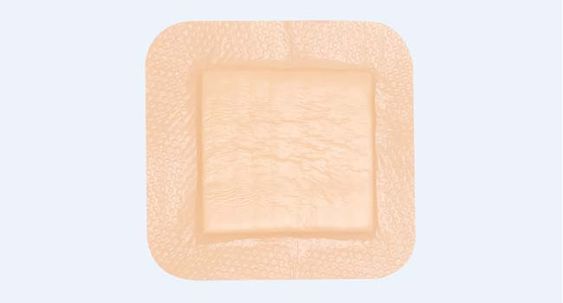
For areas with persistent pressure sores or superficial ulcers, some functional wound dressings can serve as a supplementary means of pressure relief. Polyurethane foam dressings, cut to a suitable shape, can be applied to bony prominences such as the sacrum, coccyx, or heels. They provide two benefits: firstly, their thickness disperses pressure, and secondly, they reduce friction between the skin and the bed sheet. Studies show that prophylactic use of foam dressings in high-risk areas, combined with regular turning, can reduce the incidence of pressure ulcers by about 40%. However, it's crucial to understand that dressings are supplementary and cannot replace pressure relief. If the patient remains in bed for an extended period after applying a dressing, pressure will still be transmitted through the dressing to the underlying tissues. Hydrocolloid dressings can also be used on areas with intact skin but pressure sores. They are relatively thin and can be applied to the heels or elbows without restricting movement, while providing a layer of physical protection. Transparent film dressings are unsuitable for pressure ulcer prevention; they are too thin to provide cushioning and are completely non-breathable, potentially damaging the skin barrier in a moist environment. Before applying any dressing, ensure the skin is clean and dry. Do not apply foam dressings directly to open, oozing wounds without first cleaning the wound. If blisters or ulcers have already formed, it is no longer a matter of prevention and requires standard treatment according to the pressure ulcer classification.
For more information on Innomed®Silicone Foam Dressing, refer to the Previous Articles. If you have customized needs, you are welcome to contact us; You Wholeheartedly. At long-term medical, we transform this data by innovating and developing products that make life easier for those who need loving care.
Editor: kiki Jia


