
 English
 عربى
عربى Español
 русский
 中文简体
中文简体






In home wound care, rinsing is the most easily omitted or neglected step. Many people simply remove the old dressing, apply iodine solution to the wound with a cotton swab, or wipe it a few times with saline solution, considering the cleaning complete, and then immediately cover it with a new dressing. This practice allows a large amount of bacteria, necrotic tissue fragments, and residual ointment to accumulate on the wound surface, each layer of residue weakening the basic conditions necessary for healing. The core value of wound rinsing is not disinfection, but the physical flushing force of the flowing liquid to remove loose but not yet detached contaminants and bacterial clumps from the wound surface, providing a relatively clean base for subsequent dressings to function effectively.
What is the difference between rinsing and wiping?
Wiping a wound with cotton swabs or gauze has several inherent drawbacks. The friction generated during wiping causes lateral movement across the wound, repeatedly tearing at newly attached granulation tissue and epithelial cells, resulting in microscopic damage invisible to the naked eye. Wiping is often done from the outside in, pushing bacteria and dirt from the surrounding skin towards the center of the wound, increasing bacterial inoculation within the wound. Wiping's cleaning range is limited to the surface it touches, rendering it ineffective against bacteria in wound depressions, folds, and crevices. Irrigation, on the other hand, utilizes the fluidity and penetrating properties of liquids. Irrigating fluid enters irregular depressions in the wound, carrying contaminants out from lower levels. Cleaning is three-dimensional, not planar, and exerts no mechanical shearing force on granulation tissue. Irrigation is typically done unidirectionally from the clean area to the contaminated area, carrying bacteria and necrotic debris away from the wound rather than redistributing them. In routine care, using a syringe or irrigation bulb to generate a gentle stream of water is sufficient to achieve the cleaning effect that wiping cannot.
Is it okay to rinse with tap water?
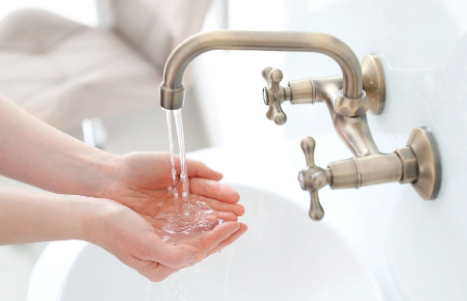
The choice of irrigation fluid depends on the wound type and available resources. For acutely contaminated wounds, such as those resulting from falls or abrasions that are heavily soiled with mud and road debris, running tap water is the most readily available and suitable irrigation fluid on-site. Continuous rinsing for five to ten minutes can wash away most foreign objects and bacteria. The safe upper limit for water pressure is that the water flow should not produce splashing or cause the wound tissue to agitate. The controversy surrounding tap water irrigation lies in the microbial content of the water, but in clinical practice, the debridement benefits of rinsing acutely contaminated wounds far outweigh the potential increased risk of infection from trace bacteria in the water. International emergency care guidelines still recommend running tap water as the recommended option for on-site irrigation of acute wounds. For postoperative incisions, chronic ulcers, and clean wounds that have entered the proliferative phase, saline is the preferred irrigation fluid. Its osmotic pressure and pH are consistent with human tissue fluid, and it will not cause permeable damage to granulation cells, nor will it cause wound pain or burning sensation. When using povidone-iodine solution in infected wounds, the concentration must be carefully controlled. A 10% concentration of undiluted povidone-iodine solution applied directly to the wound can be cytotoxic. It should be diluted to 1% or lower according to the instructions before use. After rinsing with povidone-iodine, it is necessary to rinse thoroughly with physiological saline to remove any residual iodine to prevent iodine ions from continuously inhibiting fibroblast activity. Homemade saline solution, prepared with table salt and tap water, is problematic because the concentration is difficult to control precisely. Too high or too low osmotic pressure can damage wound cells, and aseptic technique cannot be guaranteed under home conditions. Therefore, it is not recommended as a routine rinsing solution.
What is the appropriate flushing pressure?
Irrigation pressure is an operational parameter with a clearly defined safe range. Too low a pressure only moistens the wound and fails to remove tightly attached fibrin fragments and bacterial biofilms. Too high a pressure may push bacteria from the wound surface into deeper tissue spaces, causing the infection to spread deeper and potentially damaging healthy granulation tissue and new blood vessels. Internationally, the recommended effective wound irrigation pressure range is 4 to 15 pounds per square inch. In a home-use setting, this translates to approximately the safe irrigation pressure achieved when using a 35 ml syringe with an 18 or 19 gauge needle, bent at a 90-degree angle. If a syringe is unavailable, a squeeze-type saline bottle can be used directly to irrigate the wound. Hold the bottle nozzle 5 to 10 centimeters away from the wound, applying pressure with your index finger and thumb such that the water flow does not cause stinging on the back of your hand. This simple calibration method can be used to determine on-site whether the irrigation pressure is too high. Flushing deep cavities and sinuses requires inserting the flushing hose into the bottom of the cavity before starting the injection, so that the water flows from the deep to the shallow. It is not possible to only flush the surface of the external opening while the water does not reach the inside of the cavity.
Should the wound be dried before applying a dressing after rinsing?
The wound surface does not need to be dried. A small amount of residual saline solution will not affect the adhesion of the dressing or the efficacy of the medication. In fact, keeping the wound moist is more conducive to subsequent dressing application. The core of moist healing is to prevent the wound from dehydrating. After rinsing, the wound is in an ideal moist state and can be directly covered with a dressing. However, the skin around the wound must be carefully patted dry. Continuous dampness in the surrounding skin can lead to maceration, whitening, and erosion of the stratum corneum, and the wound area will expand due to maceration. Patting should be done unidirectionally from the edge of the wound outwards; do not rub back and forth, as this will transfer fluid and bacteria from the wound to the surrounding clean skin. This wound rinsing step only takes a minute or two in the entire dressing change process, but it creates the foundation for all subsequent nursing care measures. Proper rinsing ensures that the dressing change starts at a level with a lower bacterial load and a cleaner surface. For more information on Innomed®Super Absorbent Dressing, refer to the Previous Articles. If you have customized needs, you are welcome to contact us; You Wholeheartedly. At long-term medical, we transform this data by innovating and developing products that make life easier for those who need loving care.
Editor: kiki Jia


