
 English
 عربى
عربى Español
 русский
 中文简体
中文简体






Anyone who has undergone surgery or had large wounds treated should be familiar with tension-reducing tape. After suturing, doctors will apply a white sticker, or after removing the stitches, they'll give you a pack of tape-like material to wear, instructing you to keep it on to prevent the scar from widening. Many people follow this advice, but don't understand how it works or why it reduces tension. The core principle of tension-reducing tape is not complicated. It doesn't apply any special drugs or chemicals to the skin surface; rather, it uses purely physical methods to support the skin on both sides of the wound, reducing the tension.
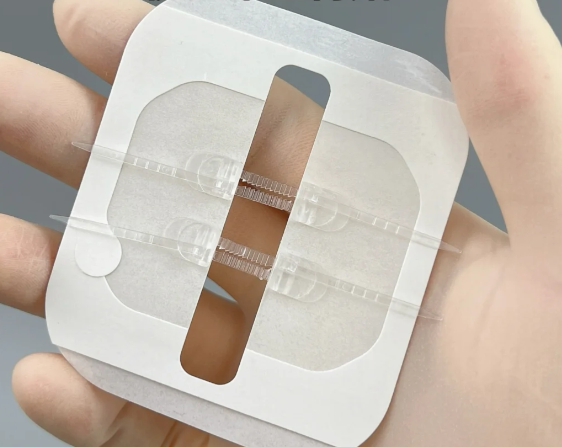
The working principle of reducing postings :
Tension-reducing dressings mainly consist of three layers. The bottom layer is a non-woven fabric or polyurethane film with adhesive, which must be strong enough to firmly grip the skin on both sides of the wound and not peel off within a day or two. The middle layer is the core layer that provides tension, usually made of high-strength polyester or elastic fibers. This material generates a retracting force when stretched, actively pulling the skin on both sides inward, rather than simply passively preventing the skin from moving outward. The outermost layer is a breathable non-woven fabric that serves a protective and aesthetic purpose. When using it, first push the skin on both sides of the wound inward, so that the skin is slightly relaxed or even slightly raised. Then, apply the tension-reducing dressing flat on the skin perpendicular to the wound, with the ends on top of healthy skin, not just covering the wound itself. After application, the fibers inside the tension-reducing dressing are in a stretched state, which generates a continuous, gentle retracting force, like two hands pushing the skin inward from both sides, counteracting the skin's own outward retraction force, allowing the wound to heal with almost no tension.
How to use the sticker?
The timing of using tension-reducing dressings depends on the stage of the wound. For sutured surgical incisions, they can be used after suture removal, generally seven to fourteen days post-surgery, when the wound has begun to heal, sutures have been removed or can be removed, and there is no exudate or infection. For unsutured lacerations or abrasions, tension-reducing dressings should only be used after the wound has completely epithelialized, meaning the wound surface is completely covered by new pink skin and there is no more exudate. Before using tension-reducing dressings, the wound must be completely dry, without exudate, scabs, or eczema. If there is exudate, the tension-reducing dressing will not adhere properly, and the moist environment underneath can easily breed bacteria. The specific procedure is as follows: First, clean the skin around the wound with neutral soap or saline solution and dry it. Then, gently push the skin on both sides of the wound towards the center to relax the skin. Take a tension-reducing dressing, peel off the protective film, and starting from one end of the wound, apply it to one side of the skin, gently stretching it flat before applying it to the other side, ensuring that the middle part of the tension-reducing dressing covers the wound without excessive stretching or wrinkles. Leave about one centimeter between each tension-reducing patch, and apply them one by one to cover the entire wound. After applying, do not move immediately. Gently press the patch with your palm for thirty seconds to allow your body heat to help the adhesive adhere better to the skin. Replace the patch every three to seven days, depending on its cleanliness and stickiness. Replace it earlier if the edges peel up, if there is dirt underneath, or if there is excessive sweating.
How long should the stickers be kept in place?
The effectiveness of tension-reducing patches is directly proportional to the duration of use. Scar maturation takes six months to a year, or even longer. It is generally recommended to use tension-reducing patches continuously for at least three months. For areas with high tension, such as the chest, shoulders, back, and extensor surfaces of joints, it is recommended to use them for more than six months. The first three months are the peak period for scar hyperplasia; the continuous tension-reducing effect of the patches can effectively prevent the scar from widening and hyperplasia. After three months, the scar tends to stabilize, and the frequency of application can be reduced, for example, to applying it for twelve hours a day, or only applying it to the widest part of the scar. After stopping the use of tension-reducing patches, if the scar starts to turn red and widen again, it means the tension-reducing time was insufficient, and continued use is necessary. Some tension-reducing patches are reusable; after removal, they can be applied to a clean plastic sheet for reuse. However, the adhesive strength will generally decrease after about three uses, requiring replacement. You can shower normally while using tension-reducing patches, but after showering, gently pat dry with a towel; do not rub. If the edges lift, use a hairdryer on a cool setting to dry and reapply. In summary, tension-reducing dressings work by continuously reducing tension on the wound, providing a quiet and undisturbed healing environment. They do not alter the body's natural healing abilities; they simply create optimal healing conditions. The root cause of widening scars is tension, and tension-reducing dressings address this root cause. For more information on Innomed® Wound Skin Closure, please refer to the previous articles. If you have customized needs, you are welcome to contact us wholeheartedly. At long-term medical, we transform this data by innovating and developing products that make life easier for those who need loving care.
Editor: kiki Jia


