
 English
 عربى
عربى Español
 русский
 中文简体
中文简体





Many people feel that scars are beyond saving after they've been there for a long time, and simply give up on them. This is understandable, since it's generally believed that scars should be treated as early as possible, otherwise, any further treatment will be futile. However, whether dressings like silicone gel are still effective for old scars needs to be considered separately.
What's the difference between old and fresh scars?
Fresh scars refer to scars formed within six months of wound healing. During this stage, the scar is still in its active proliferative phase, with fibroblasts proliferating rapidly and collagen fibers accumulating. The scar will become red, hard, and may even protrude from the skin's surface. Silicone gel is used during this period primarily to prevent and control proliferation by inhibiting excessive fibroblast activity through hydration. Old scars refer to scars formed more than a year ago. At this stage, the scar has entered a relatively stable state; the proliferative phase is essentially over. The scar's color gradually changes from red to light red or close to skin tone, and its texture softens, ceasing further growth. However, the problem lies in the fact that if the proliferative phase is not well controlled, it may ultimately leave behind a raised, hard, and dark-colored mature scar. Although this type of scar is no longer active, the cosmetic issues remain.
What are the effects of silicone gel on old scars?
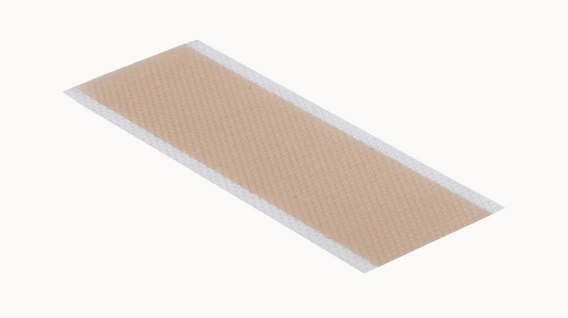
Silicone gel works differently on old scars than on new scars. For new scars, the effect is suppression, while for old scars, it's improvement. When silicone gel is applied to the scar surface, it forms a sealed, moisturizing film, reducing moisture evaporation from the skin's surface and increasing the water content of the stratum corneum within the scar tissue, causing hydration. This hydration reduces water-soluble products in the interstitial tissue, lowers fluid pressure, and gradually softens the scar tissue. Simultaneously, the continuous sealed and hydrated environment regulates collagen metabolism, promoting the gradual rearrangement and degradation of accumulated collagen fibers. This is why many users report that after a few months of use, old scars feel less hard and their color has lightened.
What do you say about the data from clinical studies?
Evidence-based medicine suggests that silicone gel dressings are indeed effective for old scars, but the effects take time to materialize. A Cochrane systematic review indicates that silicone sheets can reduce scar thickness and improve color, but the quality of cases included in the study was limited, posing a risk of bias. Another prospective study included 50 patients with scars of varying ages. After 90 days of silicone gel treatment, the Vancouver Score for the scar decreased from 5.4 to 0.86, a reduction of 84%, a visible improvement. It's important to note that this study involved scars of varying ages, ranging from several months to several years; the significant improvement observed after 90 days demonstrates its effectiveness for old scars. Authoritative scar treatment guidelines also clearly state that silicone gel and silicone sheets are first-line options for treating hypertrophic and keloid scars, applicable to both early-stage and mature irregular scars.
How long does it take to see results on old scars?
The biggest difference between old and new scars is that the collagen fibers in old scars have accumulated over a long period, forming a dense structure. It takes much longer for them to soften, flatten, and lighten in color. The clinically recommended minimum treatment period is 60 to 90 days, but treating large-area scars and old scars may require even longer. If the scar shows improvement after 90 days of use, continued use is recommended. The instructions for silicone sheets approved by the US FDA also clearly state that for scar management, they should be applied for 8 to 12 hours daily for 12 to 24 months to achieve the best results. Many users give up halfway through, stopping after two or three months when they don't see much change, which is insufficient. For old scars, continuous use for six months to a year is needed to see noticeable results. Be prepared that you can't cure scars that are several years old in just one or two months.
Which type of old scar is more effective?
Silicone gel has varying effects on different types of old scars. For hypertrophic scars that have fully stabilized but are still raised, the hydration and pressure of silicone gel can gradually soften and flatten the raised areas, with relatively good results. For keloids that have formed obvious nodules and extend beyond the original wound, silicone gel alone may not be enough, and usually requires combination with local injections or laser treatment. For atrophic scars, such as acne pits or chickenpox scars, silicone gel is basically ineffective because its mechanism of action is to reduce collagen buildup rather than promote collagen regeneration. In terms of color, silicone gel helps to lighten red and black pigmentation, but it takes time; generally, continuous use for more than three months is needed to see a reduction in color difference. In summary, silicone gel works best on raised, hard, red or black old scars, and has limited effect on atrophic, white scars. If there is no significant improvement after more than six months of use, consider going to a hospital for fractional laser or microneedling treatments in combination, with topical silicone gel used as an adjunct maintenance.
For more information on Innomed® Silicone Scar Dressing, please refer to the Previous Articles. If you have customized needs, you are welcome to contact us; you wholeheartedly. At longterm medical, we transform this data by innovating and developing products that make life easier for those who need loving care.
Editor: kiki Jia


