
 English
 عربى
عربى Español
 русский
 中文简体
中文简体






When traveling, the worst thing isn't getting injured, but rather searching through your luggage and finding nothing usable afterward. Some people try to rub it with tissues, others use band-aids, but the wound doesn't heal and may even worsen. Actually, a small dressing kit can handle most situations; the key is knowing what to put inside.
What kinds of wounds might you encounter during your trip?
Common travel wounds fall into a few categories: superficial abrasions from branches or rocks; blisters or broken skin from hiking; small cuts from opening cans or cutting fruit; and small, infected wounds from insect bites. These types of wounds require different treatments, and the dressing kit should be tailored accordingly
Which cleaning and disinfecting items are essential to bring?
The first step in treating a wound is cleaning. Individually packaged saline wipes or small vials of saline solution are used to rinse the wound surface to remove dirt and sand. Iodine swabs are also useful; simply break off one end and the iodine flows to the other, eliminating the need to bring a separate iodine bottle. Bring a few alcohol wipes to disinfect tweezers or scissors, but avoid wiping the wound directly—it will be too painful. Don't bring hydrogen peroxide or alcohol; they are too irritating and unsuitable for open wounds.
Which types of overlay protection are sufficient?
Different types of wounds require different dressings; bring three types. Bring 5 to 10 regular adhesive bandages for small cuts on fingers and toes; choose breathable ones, not the kind sealed with plastic. Bring two or three hydrocolloid dressings, cut to the appropriate size, to apply to chafed areas on the heel or blisters; they absorb exudate and cushion friction, very useful for hiking. Bring one or two sheet-like foam dressings or silicone dressings for larger wounds with exudate; they absorb well, don't stick, and won't hurt when changing dressings.
For bandaging and immobilization, don't forget a roll of bandage.
Once the dressing is applied, additional support is needed if the wound is on a joint or the sole of the foot. Self-adhesive elastic bandages are very practical; they adhere to the skin only, are breathable, tearable, and require no tape. Wrapped around the knees, elbows, and ankles, the dressing won't slip off, and walking and movement won't be affected. A small roll is included, saving space.
Auxiliary tools :
A small pair of round-tipped scissors for cutting dressings. A small pair of tweezers for removing foreign objects from wounds; disinfect with alcohol wipes before use. Two or three individually packaged sterile gauze strips for covering larger wounds or applying pressure to stop bleeding. A small roll of medical tape for use with the gauze.
How should I store these things?
Find a small, airtight, waterproof bag and pack everything inside. Attach a red cross tag to the outside of the bag for easy identification. Place it on the outside of your suitcase or in your carry-on bag; do not place it at the bottom. Check the expiration dates before departure; expired iodine swabs and dressings are generally ineffective.
How should the wound be treated specifically?
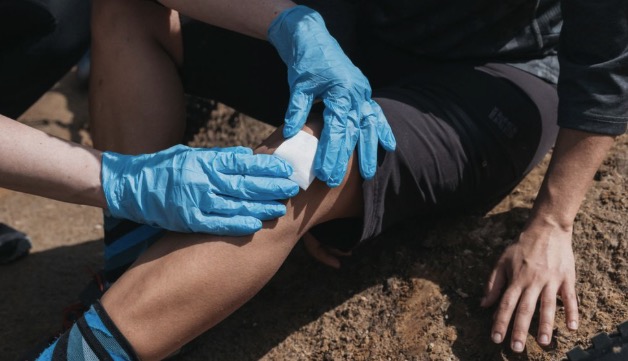
For small cuts on the finger, use a band-aid, but don't wrap it too tightly. For blisters on the heel, don't pop them; apply a hydrocolloid dressing directly. For a large red scrape on the knee, rinse with saline solution, cover with a foam dressing, and then wrap two layers of elastic bandage. For deeper cuts from rocks, apply pressure to stop the bleeding, disinfect with iodine, cover with sterile gauze, and secure with an elastic bandage. Seek medical attention at your destination.
What items do I not need to bring?
Large bottles of saline solution, rolls of gauze, dressings that need to be refrigerated, and various ointments—these things take up space, have expiration dates, and are completely unnecessary for a trip of a few days.
A travel dressing kit doesn't need to be large, but it should be comprehensive. Prepare several items in each of the four categories: cleaning and disinfection, covering and protection, bandaging and securing, and auxiliary tools. The total size should not exceed that of a cosmetic bag. Check it before departure and place it in an easily accessible location. Hopefully, you won't need it, but when you do, it will allow you to handle things with ease. For more information on Innomed® Elastic Bandage Self-Adhesive , refer to the Previous Articles. If you have customized needs, you are welcome to contact us; You Wholeheartedly. At long-term medical, we transform this data by Innovating and Developing Products that Make Life easier for those who need loving care.
Editor: kiki Jia


