
 English
 عربى
عربى Español
 русский
 中文简体
中文简体






What's the worst thing about changing dressings? It's not the pain, but not knowing what 's really going on inside the wound. It might look okay on the surface, but there could be an infection underneath; there might be too much seepage, so it needs changing, but no one tells you. Now, a new type of smart dressing is changing this situation, allowing the wound to speak for itself.
What exactly can smart dressings do?
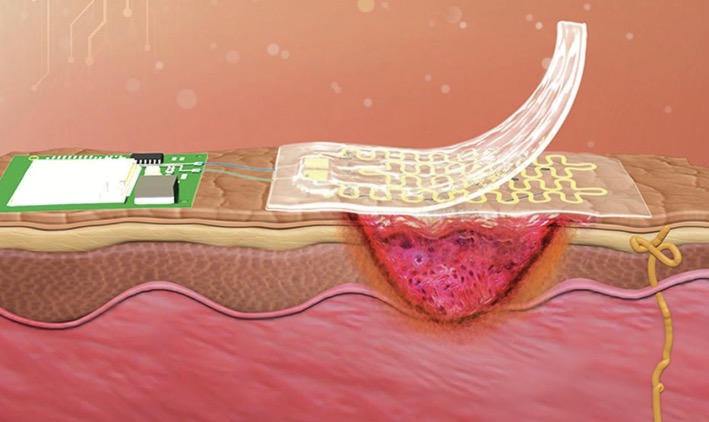
The core capability of smart dressings is sensing and feedback. By embedding miniature sensors within the dressing, they monitor the wound's temperature, pH level, humidity, and certain specific chemicals in real time. When these indicators become abnormal, the dressing will issue alerts through color changes, mobile phone notifications, or other means.
For example, a research team at RMIT University in Australia has developed a smart hydrogel dressing that changes color when the wound's pH level changes, and automatically releases therapeutic substances when an infection signal is detected. This means that patients or nurses don't need to tear off the dressing; they can simply look at the color to know if there's a problem with the wound.
What infection signals can be detected?
When a wound becomes infected, a series of changes occur in the local environment. The pH level rises, becoming more alkaline; the temperature increases; and certain bacterial metabolites appear. Smart dressings detect these signals to make informed decisions.
A smart dressing currently undergoing clinical trials at the University of Nottingham and Derby University Hospitals in the UK incorporates fiber optic sensors that can simultaneously monitor temperature, humidity, and gases associated with healing and infection. The research team hopes to use this technology to determine the optimal time for dressing changes and to issue alerts in the early stages of infection.
Researchers at Pennsylvania State University have developed a more sophisticated sensor that can simultaneously detect pH levels, uric acid, bacterial metabolites, and inflammatory factors. Looking at all four indicators together provides a much more accurate assessment than using a single indicator.
Can it dispense medication automatically?
This is the next problem that smart dressings need to solve. Several solutions are currently being explored.
The dressing developed by the Australian research team mentioned earlier automatically releases nanozymes to suppress inflammation and promote healing upon detecting infection signals. A Chinese research team has also developed a flexible electronic dressing that can distinguish between Gram-positive and Gram-negative bacteria, and then precisely release the corresponding antibiotics based on the bacterial type, enabling on-demand treatment.
This means that in the future, it may not be necessary to use broad-spectrum antibiotics on a large scale. Instead, specific drugs can be used for the specific bacteria causing the infection, and precise drug administration can reduce the development of drug resistance.
Is it available for purchase now?
Currently, most smart dressings are still in the laboratory or clinical trial stage. For example, a study at the University of Nottingham is conducting clinical trials on patients with diabetic foot ulcers, with enrolled patients being assessed every two weeks and observed for eight weeks. This means that it will still be some time before they are truly available for sale.
However, some products have already entered the market, such as POLTX_Fiber™ from the Swiss company Polaroid Therapeutics. This product uses antimicrobial polymer technology to inhibit bacterial colonization within the dressing without inducing drug resistance. It received CE certification in February 2026 and is permitted for use in the European market. While this product is not yet a fully-fledged smart detection dressing, it represents a direction towards proactive antimicrobial treatment.
What is the significance for ordinary patients?
Once smart dressings become widespread, their biggest benefit will be reducing unnecessary dressing changes. Currently, many wound dressings are changed on a schedule, regardless of the amount of exudate or whether there is an infection. With smart monitoring, dressings can be changed only when truly needed, saving materials and minimizing disturbance to the wound.
More importantly, early warning is crucial. If a diabetic foot ulcer infection is detected late, it can lead to amputation. If signs of infection are detected a few days earlier and intervention is timely, the outcome can be entirely different.
When can we use it?
Several issues need to be addressed before smart dressings can move from the laboratory to the clinic. Cost is one of them; dressings with built-in sensors are certainly more expensive than ordinary dressings. However, British researchers have calculated that even a 10% reduction in dressing changes and outpatient visits could save the NHS approximately £300 million annually. If a decrease in overall healthcare costs can be demonstrated, health insurance will be incentivized to cover it.
Smart dressings aren't just science fiction; they've entered clinical trials, and some products are already on the market. They transform wound care from passively waiting for examination to actively sending signals, from fixed-frequency dressing changes to on-demand changes, and from empirical medication to precision medication. While widespread adoption will take time, the direction is clear: future wound care will be smarter and easier than it is now. For more information on Innomed® Silver Ion Dressing Foam, refer to the previous articles. If you have customized needs, you are welcome to contact us; you wholeheartedly. At long-term medical, we transform this data by innovating and developing products that make life easier for those who need loving care.
Editor: kiki Jia


