
 English
 عربى
عربى Español
 русский
 中文简体
中文简体






When a wound becomes infected and suppurates, many people's first reaction is to wipe the pus clean and then cover it with a new dressing. Is this the right thing to do? The answer isn't a simple yes or no; it depends on the extent of the suppuration and the type of dressing used.
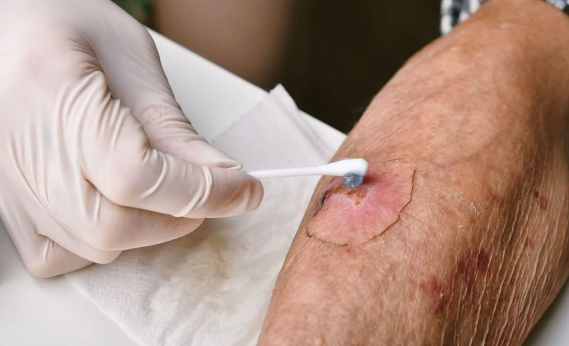
First, distinguish between true suppuration and normal exudate.
Many people mistake the yellow fluid in a wound for pus. Actually, during wound healing, the exudate is naturally pale yellow and clear; this is normal tissue fluid. True pus is cloudy and viscous, and its color may be yellowish-green, grayish-white, or streaked with blood, usually with a foul odor. If it's just a pale yellow, clear fluid, it's not pus, and normal dressing changes are sufficient. If it's cloudy, viscous, and has an odor, then it's infected.
Mild suppuration: You can apply a dressing, but choose an antibacterial one.
If the area of suppuration is small, with only a thin layer of pus on the surface of the wound and no spread to the surrounding area, you can continue to use the dressing, but you should switch to a type with antibacterial properties.
Silver-containing dressings are a commonly used clinical choice. Silver ions are continuously released, inhibiting bacterial growth and are effective against common wound pathogens such as Staphylococcus aureus, Escherichia coli, and Pseudomonas aeruginosa. Before applying the silver-containing dressing, rinse the wound surface with saline solution to remove pus. Do not vigorously rub with hydrogen peroxide or iodine, as this will damage newly formed tissue. After rinsing, apply the silver-containing dressing, which can generally last for two to three days. If pus quickly oozes out again, it indicates a more severe infection, requiring more frequent dressing changes or medical attention.
Moderate suppuration:
If there is a lot of pus in the wound, and pressing the surrounding skin will squeeze out pus, the dressing alone is not enough to absorb it. In this case, drainage needs to be addressed first. If an abscess has formed, the doctor may make a small incision to allow the pus to drain smoothly. If it is an open wound, alginate or silver-containing dressing strips can be packed into the wound to drain the deep pus through capillary action. A highly absorbent foam dressing is then applied as an outer layer. This combination of inner drainage and outer absorption is much more effective than using a single dressing layer.
Severe suppuration:
If the skin around the wound is noticeably red, swollen, and hot, and the pain intensifies, or if the patient develops systemic symptoms such as fever and chills, it indicates that the infection has spread to surrounding tissues or even entered the bloodstream. In this case, dressings can only be used as an adjunct, not as the primary treatment. Medical attention is necessary as soon as possible. The doctor may clean the wound, collect secretions for bacterial culture, and prescribe systemic antibiotics based on the results. Changing dressings at home is not possible in this situation.
Which dressings are unsuitable for use on suppurating wounds?
Ordinary hydrocolloid dressings are unsuitable. As occlusive dressings, they trap pus on suppurating wounds, allowing bacteria to multiply faster. Vaseline gauze is also unsuitable; it doesn't absorb exudate, causing pus to accumulate in the wound. Ordinary thin film dressings are similarly unsuitable, as they are airtight and prevent pus from draining. These dressings are fine for cleaning wounds, but they will do more harm than good for suppurating wounds.
The frequency of dressing changes needs to be adjusted.
Dressings for suppurating wounds need to be changed more frequently than for ordinary wounds. Silver-containing dressings are generally recommended to be changed once a day; if there is a lot of pus, it may need to be changed twice a day. Each time the dressing is changed, observe the color, amount, and odor of the pus for any changes. If the pus gradually decreases, the color lightens, and the odor becomes fainter, it indicates that the infection is under control. If the pus increases or the affected area expands, it indicates that the infection is worsening and medical attention is required.
Precautions when changing dressings
Wash your hands and put on sterile gloves before changing the dressing. After removing the old dressing, rinse the wound with saline solution to remove pus. Do not rub the wound with cotton swabs, as this will push bacteria deeper. After rinsing, gently pat the surrounding skin dry with sterile gauze. If there is necrotic tissue in the wound, you can gently remove it with sterile forceps, but do not tear it off. Apply a new antibacterial dressing and secure it with a self-adhesive elastic bandage.
In what situations is it necessary to go to the hospital?
If the redness and swelling around the wound exceeds 5 cm, or if the redness and swelling extend upwards along the lymphatic vessels; if the patient experiences fever, chills, headache, and fatigue; if there is a sudden increase in pus or a foul odor; or if the wound is extremely painful and affects sleep; or if the wound is suppurating in diabetic patients or patients with weakened immune systems. Do not attempt to treat these conditions yourself; seek medical attention immediately.
Whether or not a dressing can be applied to a wound that has become infected depends on the situation. Mild infections can be treated with silver-containing dressings, moderate to severe infections require drainage, and severe infections necessitate medical attention. Ordinary hydrocolloid or film dressings should not be used on infected wounds. Dressing changes need to be more frequent, and observation more careful. If unsure, take a photo and send it to your doctor for advice, or go directly to the hospital; this is much safer than trying to tough it out at home. For more information on Innomed® Silver Ion Dressing Foam, refer to the Previous Articles. If you have customized needs, you are welcome to contact us; You Wholeheartedly. At long-term medical, we transform this data by innovating and developing products that make life easier for those who need loving care.
Editor: kiki Jia


