
 English
 عربى
عربى Español
 русский
 中文简体
中文简体





After an appendectomy, the doctor will place a dressing on the incision. Many patients are concerned about how long this dressing will last, whether they can remove it sooner, and whether they need to reapply it after removing it. There isn't a fixed number of days; it depends on the wound healing process and the type of surgery performed.
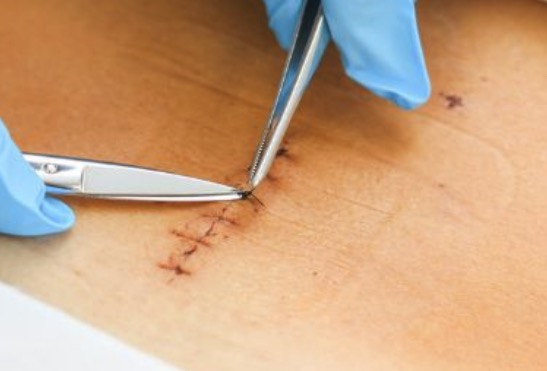
The dressing time differs between minimally invasive surgery and open surgery.
Most appendectomies are now performed laparoscopically, a minimally invasive procedure involving three small incisions in the abdomen, each about 0.5 to 1 centimeter. These small incisions heal much faster than open surgery. Generally, dressings for minimally invasive surgeries are only needed for 3 to 5 days. After removing the dressing, if the incision has closed, there is no drainage, and no redness or swelling, it is no longer necessary to reapply the dressing. Some patients have very small incisions, like pinpricks, and there is no drainage on the second day after surgery, so the dressing can even be removed earlier.
The incision for open abdominal surgery is relatively large, usually 5 to 8 centimeters, and takes longer to heal. Dressings are generally worn for 7 to 10 days, until two days after suture removal. Even after suture removal, the injection sites need another day or two to completely close, so dressings should continue to be worn for two more days after suture removal.
What exactly is the function of dressings?
Many people believe that dressings are used to disinfect wounds, but that's not the case. The main function of dressings is physical protection: preventing clothing from rubbing against the wound, preventing bacteria from entering from the outside, and absorbing small amounts of blood and exudate. They do not contain any medicinal ingredients, so the duration of application depends primarily on how long the wound needs protection, not on the dressing's expiration date.
The first three days after an appendectomy are the most vulnerable to infection. During this stage, the wound has not yet formed a complete epidermal barrier, so the dressing must be applied securely. After three days, if the incision is dry and there is no redness, swelling, or pain, the protective effect of the dressing is less critical, and it can even be removed to expose the wound to air.
How do you determine if a dressing needs to be changed?
It's not that you can only change the dressing after a certain number of days. The dressing needs to be changed earlier if the following situations occur: the surface of the dressing is soaked with exudate and you can see yellow marks; the edges of the dressing are curled up and it can't stick properly; it gets wet accidentally, such as when water seeps in while showering; or you feel itching or pain around the wound, so check if there is redness or swelling when you remove the dressing.
A normal dressing should be dry, with perhaps a few faint traces of blood on the surface, but not extensively damp. If the dressing needs to be changed several times a day, it indicates abnormal exudation, which may suggest infection or subcutaneous fluid accumulation, and you should inform your doctor.
Do I need to apply a dressing after the stitches are removed?
Minimally invasive surgery incisions typically do not require suture removal; instead, intradermal sutures and medical adhesive are used. This type of incision has a protective layer of adhesive on its surface. The dressing is removed after 3 to 5 days, and the adhesive itself remains on the skin for a few more days, providing waterproofing and antibacterial protection, eliminating the need for additional dressings.
Open abdominal surgery requires suture removal. On the day of suture removal, the doctor will disinfect the incision and then apply a new sterile dressing. This dressing will remain on for two days. After two days, remove it. If the injection site has closed and there is no drainage, it can be removed. If there is still a little blood crust or tiny gap at the injection site, it can be worn for another day.
What precautions should be taken after removing the dressing?
After the dressing is removed, the incision is directly exposed to the air, so you'll need to protect it yourself. Keep the incision dry. When showering, avoid direct sunlight on the incision; instead, use your hand to shield it. Do not pick at the scabs; let them fall off naturally. Wear loose-fitting cotton clothing to reduce friction. Observe the color of the incision. Normally, it should be a light pink or close to your skin tone. Be alert if it suddenly turns red, swells up, or feels hot to the touch.
In what situations should the dressing application time be extended?
Some patients heal more slowly and require dressings to be worn for longer. For example, obese patients have thicker subcutaneous fat, resulting in relatively poor blood supply and slower wound healing. Diabetic patients experience decreased healing ability when blood sugar is poorly controlled. Malnourished patients, lacking protein and vitamins, also experience delayed healing. In these cases, doctors may recommend wearing the dressing for a few more days or switching to a dressing that promotes healing, such as a silver-containing dressing or a foam dressing.
How many days should a dressing be worn after appendectomy? Generally 3 to 5 days for minimally invasive surgery, and 7 to 10 days for open surgery. Continue wearing the dressing for two more days after suture removal. It's not a fixed number of days; it depends on whether the incision is dry, whether there is any drainage, and whether there is any redness or swelling. Change the dressing if it becomes wet, dirty, or peeling. After removing the dressing, keep it dry and observe any changes. If unsure, consult your doctor; it's safer than relying on your own feelings. For more information on Innomed® Silver Ion Dressing Foam, refer to the Previous Articles. If you have customized needs, you are welcome to contact us; You Wholeheartedly. At long-term medical, we transform this data by innovating and developing products that make life easier for those who need loving care.
Editor: kiki Jia


