
 English
 عربى
عربى Español
 русский
 中文简体
中文简体






A scraped knee from a fall, a cut from a razor blade, or a large bruise under the skin after bumping into a table corner—these everyday minor injuries all fall under the category of soft tissue injuries. Many people think that a scraped knee is nothing serious and will heal on its own in a couple of days. However, the scope of soft tissue injuries is far broader than most people realize. It includes abrasions, cuts, contusions, lacerations, crush injuries, and even burns. Different types of injuries require very different treatments. Using the wrong method can not only slow healing but also potentially leave scars or cause infections. Understanding what kind of injury you have is far more important than blindly applying ointments.
What are the different types of soft tissue injuries of the skin?
Skin abrasions are the most common type, where the epidermis is worn away by a rough surface, exposing a red, raw wound. Abrasions typically only reach the superficial dermis, with small bleeding points or only oozing serum; the pain is intense because nerve endings are exposed. A laceration is a cut made by a sharp object, with clean edges and varying depths. Superficial lacerations only reach the epidermis, while deeper ones may sever tendons or blood vessels. A contusion is subcutaneous tissue damage caused by blunt force trauma; there is no visible break in the skin, but ruptured capillaries under the skin cause bleeding, forming a bruise that is painful and swollen to the touch. A laceration is a wound caused by blunt force tearing; the edges are irregular, and tissue flaps or skin pieces are often torn off. A crush injury is deep tissue damage caused by pressure from a heavy object; the skin surface may not show obvious damage, but subcutaneous muscles and even bones may be damaged.
How should different types of injuries be treated correctly?
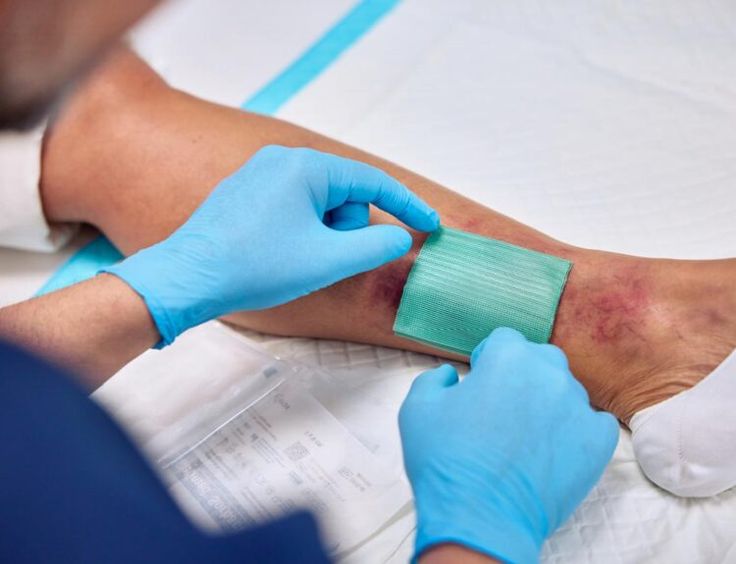
Treating abrasions is relatively simple, but the most common mistake is repeatedly scrubbing the wound with alcohol or iodine. Since abrasions are open and not covered by skin, directly applying iodine will damage the exposed dermal cells. The correct approach is to rinse away sand and dirt with saline solution. You can use a little force while rinsing; the water flow itself won't damage the tissue. After rinsing, if the wound is clean and there are no sand particles embedded in the skin, you can directly apply a hydrocolloid dressing or a thin foam dressing. Hydrocolloid dressings provide a moist healing environment for abrasions, preventing the formation of scabs, and healing much faster than leaving the wound dry, resulting in less scarring. If sand particles are embedded in the wound and cannot be washed away, you need to gently remove them with tweezers or seek medical attention. Sand particles left inside can cause permanent tattoo-like pigmentation.
The key to treating lacerations is determining the depth. If the wound edges are well-aligned, bleeding is minimal, and the length is less than one centimeter, it can be rinsed with saline solution, brought together, and secured with a butterfly-shaped sutureless tape or hydrocolloid dressing. If the wound is deeper, revealing yellowish-white subcutaneous fat tissue, or if pressure causes pulsating, spurting bleeding, it indicates a possible blood vessel injury. In this case, apply direct pressure with clean gauze to stop the bleeding and then go to the hospital for suturing. Do not cover lacerations with foam dressings or hydrocolloid dressings, as the wound may not be clean, and sealing it will trap bacteria. First, cover the wound with iodine-soaked gauze, then wrap it with dry gauze. The appropriate dressing will be determined after a doctor's evaluation.
How should functional dressings be selected for different types of injuries?
Functional dressings are not suitable for all injuries; choosing the right one can be very effective, while choosing the wrong one can be counterproductive. Hydrocolloid dressings are suitable for superficial abrasions and small cuts that have stopped bleeding. They form a moist gel on the wound surface, preventing drying and crusting. However, hydrocolloid dressings are not suitable for wounds with excessive exudate, as too much exudate can soak the dressing, causing it to lose its seal and potentially leading to maceration of the surrounding skin. Foam dressings are suitable for wounds with moderate exudate, such as abrasions that still have a significant amount of yellow exudate the day after the injury. They absorb exudate while keeping the wound moist and do not stick to the wound. When changing dressings, foam dressings are soft like a sponge, and removing them is generally painless. Alginate dressings are suitable for deep or sinus-like wounds, such as the nail bed after nail avulsion or subcutaneous cavities after skin lacerations. They can be inserted into cavities to absorb exudate and expand to maintain drainage. Alginate dressings need to be changed daily because once saturated, they lose their drainage capacity. Transparent film dressings are only suitable for superficial wounds with no exudate or as an outer fixation film. They are not suitable for direct application to fresh wounds with exudate, because the exudate will not drain and will accumulate underneath, soaking the skin.
For more information on Innomed®Hydrocolloid Dressing, refer to the Previous Articles. If you have customized needs, you are welcome to contact us; You Wholeheartedly. At long-term medical, we transform this data by innovating and developing products that make life easier for those who need loving care.
Editor: kiki Jia


