
 English
 عربى
عربى Español
 русский
 中文简体
中文简体






After surgery, once the sutures have been removed and the wound has healed, a small lump may appear a few days later at the puncture site. Pressing on it will cause fluid to ooze out, and probing with a cotton swab reveals a deep, long tunnel. This condition is not uncommon after general surgery, obstetrics and gynecology, and orthopedic surgery, and is clinically known as a postoperative sinus tract. Its formation indicates the presence of an uncontrolled infection focus deep under the skin, a suture rejection reaction, or an accumulation of exudate from liquefied fat. The surface healing is merely an illusion; the real battleground lies in the deep tissues invisible to the naked eye. Treating postoperative sinus tracts cannot be as simple as applying ointment to a regular surface wound; a targeted approach that delves deep into the tunnel is required.
What type of wound dressing should be used for a sinus tract wound?
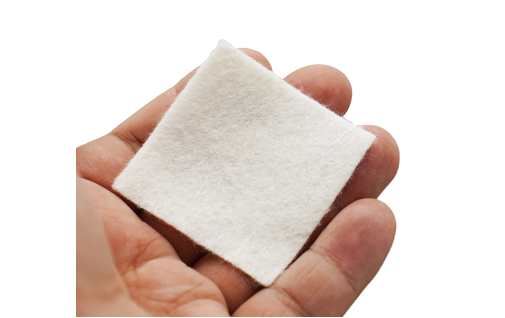
The advantages of alginate dressings in postoperative sinus tract management consist of three levels. The first level is the simultaneous physical filling and drainage. The strip-shaped alginate dressing can be inserted along the natural course of the sinus tract, conforming to the irregular inner wall. Capillary action between the fibers continuously drains deep exudate upwards to the external opening, where it is caught by the dressing. This process is gravity-independent, maintaining unobstructed drainage regardless of the tract's orientation. The second level is exudate locking to prevent maceration. Upon contact with exudate, the alginate fibers undergo ion exchange, forming a highly hydrated gel network that locks the liquid within the fiber structure, preventing leakage and diffusion to the surrounding skin along the external opening, thus protecting the integrity of the skin around the sinus opening. The third level is non-invasive replacement to reduce damage. During the next dressing change, a small amount of moistened filling is injected through the external opening with saline. The gelled alginate regains its softness, and the entire dressing can be removed by grasping the end remaining outside the sinus opening with forceps, leaving no fiber debris in the tract and preventing tearing interference with newly formed granulation tissue on the inner wall. These three levels work together to ensure that each dressing change of the postoperative sinus tract can maintain deep stability while clearing exudate, creating conditions for granulation tissue to gradually fill the sinus tract from the bottom upwards.
What are the essential technical details to pay attention to during postoperative sinus tract dressing changes?
The speed of sinus tract healing is directly affected by the attention to detail in the procedure. For the cleaning step, prepare a 10ml syringe connected to a section of tubing from an indwelling intravenous catheter (with the needle removed). Gently insert the tubing end into the external opening of the sinus tract and slowly inject warm saline solution to flush it. The flushing solution will carry away loose fibrous fragments and bacteria as it overflows from the sinus opening. Repeat flushing until the return fluid is no longer cloudy. After flushing, do not use cotton swabs to scrape deep into the sinus tract, as the fibers from the swab tip will also detach and remain. When packing with alginate dressing, use sterile forceps to hold one end of the dressing strip and gently insert it along the natural direction of the sinus tract. Stop when resistance is encountered and remove about two millimeters, leaving room for expansion. Packing should not be too tight; excessive tightness will compress newly formed blood vessels on the inner wall, hindering granulation tissue growth. The end of the dressing must remain about one centimeter outside the sinus opening; do not cut it flat, otherwise it will be difficult to find and remove completely during subsequent dressing changes. Cover with a foam dressing or highly absorbent pad and secure with tape. The edge of the dressing assembly should extend at least one centimeter beyond the red and swollen area around the sinus opening. Initially, the dressing should be changed once a day, and when the foam pad on the outer layer of the dressing has seeped close to the edge of the adhesive tape, it needs to be changed again. As the exudate decreases, the frequency can be extended to once every two days. When there is very little liquid adsorption on the alginate dressing after two consecutive changes, the depth can be retested with a probe. If the depth is less than one centimeter and the exudate is clear and minimal, the packing can be stopped, and a foam dressing can be used to directly cover the sinus opening to close the superficial layer.
For more information on Innomed®Alginate Dressing, refer to the Previous Articles. If you have customized needs, you are welcome to contact us; You Wholeheartedly. At long-term medical, we transform this data by innovating and developing products that make life easier for those who need loving care.
Editor: kiki Jia


