
 English
 عربى
عربى Español
 русский
 中文简体
中文简体





Acne patches are essentially hydrocolloid dressings composed of hydrophilic polymers such as sodium carboxymethyl cellulose, gelatin, and pectin, covered by an outer polyurethane film. When applied to the skin, the inner hydrophilic particles absorb wound exudate and swell to form a gel, creating a sealed, moist environment on the pimple's surface. This environment has three direct functions: first, it absorbs tissue fluid and purulent secretions flowing from the pimple's opening, reducing the entry points for external bacteria; second, it isolates the pimple from finger contact and friction from masks and clothing collars, physically blocking external stimuli; and third, the moist environment itself promotes epidermal cell migration and repair, accelerating wound closure. Understanding this mechanism allows us to deduce the applicability of acne patches: they are essentially wound dressings, treating superficial skin defects with open wounds, rather than closed lesions without open wounds.
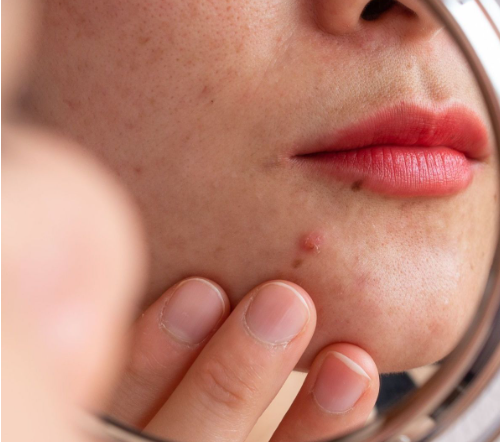
Why are patches only suitable for pimples that have developed whiteheads?
Whiteheaded pimples are medically termed pustular acne. Inflammation within the pilosebaceous unit causes the follicle wall to rupture. Neutrophils aggregate, engulfing bacteria and forming pus. This pus accumulates under the epidermis, pushing up the stratum corneum to form a thin-walled pustule, the top of which is the visible white pustule head. At this stage, a tiny opening for natural drainage has already appeared on the skin surface. When an acne patch is applied, its exudative function is utilized, drawing the pus into the inner layer of the dressing during gel formation, resulting in white dot-like gel spots on the patch. Closed comedones without whiteheads—whether microcomedones, whiteheads, inflammatory papules, or nodular cysts—have an intact epidermis without an opening connecting to the follicle contents. When an acne patch is applied, the hydrophilic particles cannot reach the source of exudate and cannot form a gel; the patch simply adheres dry to the skin surface. The occlusive effect of the dressing itself can actually clog the hair follicle opening, hindering the normal discharge of sebum, leading to increased pressure inside the hair follicle. The anaerobic environment exacerbates the proliferation of Propionibacterium acnes, which may compress inflammatory papules that should have subsided on their own into deeper nodules.
What are the possible consequences of applying a mask to an unsuitable pimple?
When applying acne patches to inflammatory papules that are red, swollen, and hard without pus, the most common reaction is that the pimples don't shrink the next day; instead, they become redder and more painful, and the skin feels warm to the touch. The inflammation has spread from the superficial hair follicles to the deeper dermis. This is because the inflammatory exudate cannot drain in the closed environment, and infectious materials and inflammatory mediators accumulate in the sealed cavities, spreading to deeper tissues with less resistance. Acne patches are completely ineffective on deep lesions that have already formed cysts or nodules. The contents of cysts are too deep for the patch's absorption capacity to reach the deep dermis; the surface may appear dry after application, but the deep purulent process continues. Another situation is when multiple stages of acne are present on the face simultaneously. Patients often apply acne patches to entire areas, covering immature whiteheads as well. This artificially creates a closed environment, accelerating the transformation of whiteheads into inflammatory papules.
How can you use acne patches to maximize their effectiveness?
The best time to use the patch is after the whitehead has fully matured and the pus is clearly visible. When you can feel a fluctuation when you press it, the patch will be most effective. Before applying the patch, cleanse your skin thoroughly with a gentle cleanser and pat it dry. There should be no skincare residue on the application area. Oils and silicones in creams and serums will form a protective film on the skin's surface, preventing exudate from entering the hydrocolloid layer. After applying the patch, gently press the surface with your fingertips for ten seconds to ensure a tight seal. Applying it before bed allows it to absorb for six to eight hours, which is sufficient for pus drainage and initial moist healing. If a white, opaque gel spot appears in the center of the patch when you remove it, it means the pus has been successfully absorbed. Gently rinse the open area with saline solution or water and dry it. No additional antibiotic ointment is needed. If the patch remains completely transparent when you remove it, it means the pimple is not open or has very little exudate. This type of lesion is not suitable for patch treatment and should not be reused. The same acne patch should not be used for more than twelve hours. After more than twelve hours, the hydrocolloid layer will become saturated with liquid and lose its absorbency. Continuing to apply the patch will only increase the local bacterial density.
Which types of acne require completely different treatment methods?
Cystic and nodular acne are types for which acne patches are clearly ineffective. These lesions are located deep in the dermis and even the subcutaneous fat layer, lacking drainage channels on the skin surface. Oral medications and topical retinoids are needed to control follicular keratosis and inflammation. In severe cases, intralesional injection of corticosteroids or incision and drainage may be required. Large, clustered acne lesions and fulminant acne with systemic symptoms require systemic treatment. Self-applying acne patches can delay effective treatment and may lead to irreversible atrophic scarring. Acne patches are also unsuitable for lesions that have already been squeezed open but have large openings with significant tissue loss, as acne patches have limited absorption capacity, and large openings require debridement and anti-infection treatment. Acne patches are a specific type of acne management tool for a particular stage and type of acne; they cannot be used as a universal treatment for all types of acne. Using the correct type and timing is crucial to achieving the intended effect of the product; using the wrong type may create new skin problems. For more information on Innomed® Acne Plaster, refer to the Previous Articles. If you have customized needs, you are welcome to contact us; You Wholeheartedly. At long-term medical, we transform this data by innovating and developing products that make life easier for those who need loving care.
Editor: kiki Jia


