
 English
 عربى
عربى Español
 русский
 中文简体
中文简体






Diabetic foot is an infection, ulcer, or deep tissue destruction of the foot caused by distal lower limb neuropathy and varying degrees of vascular disease in diabetic patients. Approximately 15% of diabetic patients worldwide will develop foot ulcers in their lifetime, resulting in an amputation rate 15 times higher than in non-diabetic patients. To standardize the assessment of disease progression, the Wagner classification system is widely used clinically, classifying diabetic foot into six grades, from high-risk foot to total foot gangrene. Grades 0 to 5 correspond to five progressive stages from the presence of risk to irreversible damage.
Grade 0 is the first stage ; at this stage, the skin of the foot is intact, without open ulcers or breaks, but risk factors for ulceration are present. These risk factors include decreased or lost sensation due to peripheral neuropathy, insufficient blood supply due to peripheral vascular disease, a history of foot ulcers, foot deformities such as claw foot or Charcot joints, calluses or corns, and comorbidities such as diabetic nephropathy or severe vision loss. Patients at this stage may experience no pain or discomfort at all, but their feet are dry, have low skin temperature, weak or absent dorsalis pedis pulse, and feel like walking on cotton. The intervention goal at this stage is prevention rather than treatment, including daily foot checks, choosing appropriate pressure-relieving footwear, avoiding walking barefoot, and washing feet with excessively hot water.
Stage 1 is the second phase : characterized by superficial ulcers on the foot, involving only the epidermis and superficial dermis, not penetrating the subcutaneous tissue, and without signs of infection. Ulcers commonly occur on weight-bearing and friction-prone areas of the foot, such as the heel, below the metatarsal heads, or on the dorsal side of the toes, and are usually surrounded by calluses. Due to neuropathy, patients may not feel significant pain, making this early warning sign easy to overlook. The core of treatment at this stage is decompression and local wound care, including removing calluses to expose the true wound boundaries, using pressure-relieving insoles or full-contact braces to relieve weight-bearing on the ulcerated area, and maintaining a moist environment by cleaning with saline solution and covering with a moist dressing.
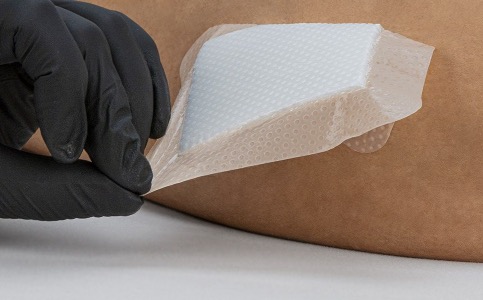
Grade 2 is the third stage : the ulcer has penetrated the full thickness of the skin, reaching the subcutaneous tissue, fascia, or muscle layer, but has not yet involved the bones and joints, and is often accompanied by soft tissue infection. The wound usually has significant exudate, with an expanded area of surrounding redness and swelling, and may be accompanied by an odor, but imaging examinations show no evidence of osteomyelitis. Patients may experience intermittent claudication or rest pain, indicating that vascular lesions have worsened. Treatment at this stage requires systemic antibiotics covering common pathogens, along with thorough wound debridement to remove necrotic tissue and foreign bodies. For wounds with large exudates, silicone gel foam dressings can be used as a covering material. Their highly absorbent foam layer can contain and lock in exudate, preventing maceration of the surrounding healthy skin. At the same time, the silicone gel contact layer does not adhere to the moist wound bed, and does not damage newly formed granulation tissue during dressing changes, reducing the frequency of dressing changes and pain. Studies show that silicone gel foam dressings are comparable to traditional filling dressings plus secondary dressings in terms of wound shrinkage rate when used for chronic exudative wounds such as diabetic foot ulcers, but the total treatment cost is significantly reduced and the dressing change procedure is also simpler.
Stage 3 is the fourth stage : the deep ulcer worsens further, the infection has penetrated the muscle layer, and involved the bone and joints, forming a deep abscess or osteomyelitis. Tendons or bone tissue are exposed at the base of the wound, and a rough bone surface may be felt upon exploration. Discharge is increased and purulent, and patients often experience systemic inflammatory reactions such as fever or elevated white blood cell count. At this stage, simple local dressing changes are insufficient to control the infection, requiring hospitalization for intravenous antibiotic treatment and surgical debridement in conjunction with orthopedic surgery, including removal of infected bone tissue and drainage of deep abscess cavities. If this stage is not treated promptly, the infection can spread along the interfascial spaces, leading to extensive necrosis of the foot and entering the next irreversible stage.
Grades 4 and 5 represent the fifth stage : ischemic gangrene of the foot. Grade 4 is localized gangrene, affecting a localized area such as the toes, heel, or dorsum of the forefoot, while Grade 5 is total foot gangrene, with lesions extending beyond two-thirds of the foot or affecting the entire foot. Gangrene is classified into three types: dry, wet, and mixed. Dry gangrene presents as black, shrunken, and dry tissue with a clear boundary from healthy tissue, while wet gangrene is accompanied by significant infection and liquefactive necrosis, with swollen tissue, abundant exudate, and a foul odor. Neuropathy can prevent patients from experiencing severe pain even with severe gangrene, thus delaying medical attention. The treatment goal at this stage is to control the spread of infection and save life, usually requiring amputation to remove necrotic tissue, followed by systemic antibiotics and intensive blood glucose management. According to the Wagner classification, Grade 4 amputation typically extends to the level of the toes or forefoot, while Grade 5 requires amputation of the lower leg or thigh.
From grade 0 to grade 5, the progression of diabetic foot reflects the combined effects of neuropathy, ischemia, and infection. Early identification of high-risk feet and implementation of preventative measures are the most critical points in halting progression. Once it reaches a deep ulcer stage of grade 2 or higher, the healing period is prolonged and the risk of amputation increases significantly. At this point, proper wound care, appropriate dressing selection, timely infection control, and blood glucose management are all indispensable. Silicone gel foam dressings have clear application value in the management of exudate in grades 2 and 3, but their role is to assist wound healing and cannot replace decompression, debridement, and anti-infection treatment. Patients who discover foot abnormalities at any stage should seek medical attention as soon as possible; self-treatment will only delay the optimal intervention window. For more information on Innomed® Silicone Foam Dressing, refer to the Previous Articles. If you have customized needs, you are welcome to contact us; You Wholeheartedly. At long-term medical, we transform this data by innovating and developing products that make life easier for those who need loving care.
Editor: kiki Jia


