
 English
 عربى
 Español
 русский
 中文简体





After wearing new shoes for half a day, a shiny blister appears on the heel. Most people's first reaction is that the shoes are strange, and their second reaction is that their foot shape is strange. But the third suspect, which is often overlooked, is often the culprit—the socks.
How exactly do blisters form?
Many people think blisters are caused by "thinning of the skin," but that's actually the case. Blisters are caused by shear force: when the foot slides back and forth slightly inside the shoe, the superficial and deep layers of skin are repeatedly rubbed in opposite directions, layer by layer, causing tissue fluid to seep out and accumulate in the middle, forming a bump.
So the key isn't how hard you rub, but how many times you "rub." The stiffness of the shoes is one thing, but as long as there's repeated relative sliding between the foot and sock, and between the sock and shoe, blisters will form.
Why are socks the key item?
Cotton absorbs sweat, which is both its advantage and its disadvantage. When cotton fibers are wet with sweat, they lose their elasticity and stick to the skin, actually increasing the coefficient of friction—wet cotton socks on your heels are like rubbing a layer of sandpaper back and forth.
The solution in the sports field is clear: wick sweat away from the skin. Synthetic fiber sports socks or merino wool socks can wick sweat to the outer layer, keeping the feet dry and significantly reducing friction. The "two-sock method" popular in the mountaineering community (a thin inner synthetic sock + a thick outer sock, allowing slippage to occur between the two socks) and five-toe socks all utilize the same principle—controlling slippage and preventing it from occurring on the skin.
For people who suffer from chronic blisters, changing to two pairs of professional sports socks is often more effective than changing shoes.
I've developed blisters, what's the right way to treat them?
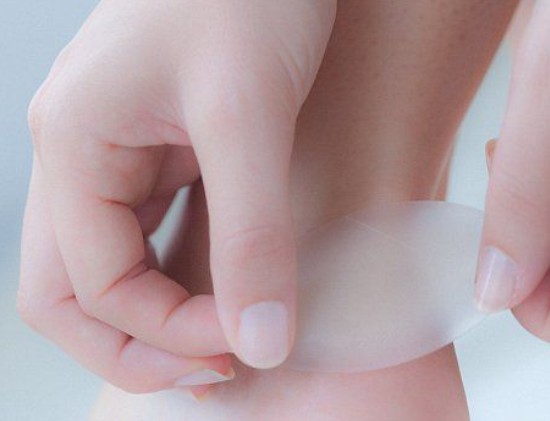
For small, unbroken blisters, leave them on—they are the best "biological dressing"—sterile, adherent, and self-protective. Don't pop them; instead, apply a heel patch or hydrocolloid dressing for protection and to prevent further friction. They will be absorbed on their own after a few days.
For large blisters that affect walking, drainage can be performed: After disinfection, use a sterile needle to puncture the blister from the edge, gently squeeze out the fluid, and leave the outer skin on to cover it—this skin acts as a natural dressing—then cover it with a dressing. Remember not to tear off the skin; tearing it off will expose the wound directly, causing pain, increasing the risk of infection, and slowing healing.
When should heel patches be used?
Two uses: prevention is more important than remediation.
Prevention: Before wearing new shoes, hiking, or walking for long periods, apply heel pads to the heels and areas below the Achilles tendon that are prone to chafing, preventing friction from reaching the skin. Using them at this time will prevent blisters from forming.
Remedy: Apply the patch immediately when your heel is already red and hot but not yet broken – this is the golden time for intervention, and it's much more effective than applying it after the skin has broken. Hydrocolloid heel patches can also maintain a moist environment through their seepage, allowing damaged skin to heal faster.
When should blisters not be treated by yourself?
For diabetic patients, any blisters on the feet should be treated with caution and it is recommended to have them treated by a doctor. If the fluid in the blisters is cloudy or yellowish, the surrounding redness and swelling are spreading, or there is an odor, it indicates an infection, so don't delay. In addition, if blisters repeatedly appear in the same spot and cannot be resolved by changing shoes and socks, there may be a problem with the foot structure, and it is worth seeing a foot and ankle specialist.
For more information on Innomed®Hydrocolloid Blister Plaster, Refer to the Previous Articles. If you have customized needs, you are welcome to contact us; You Wholeheartedly. At longterm medical, we transform this data by Innovating and Developing Products that Make Life easier for those who need loving care.
Editor: kiki Jia


