
 English
 عربى
عربى Español
 русский
 中文简体
中文简体






Silver-containing dressings are widely used as an important functional wound dressing for treating chronic wounds or wounds at risk of infection. Many people might intuitively believe that the higher the silver content of a dressing, the stronger its antibacterial properties. However, the reality is not so simple. While silver content is indeed a fundamental factor affecting performance, it is not the only, or even the most critical, determining factor.
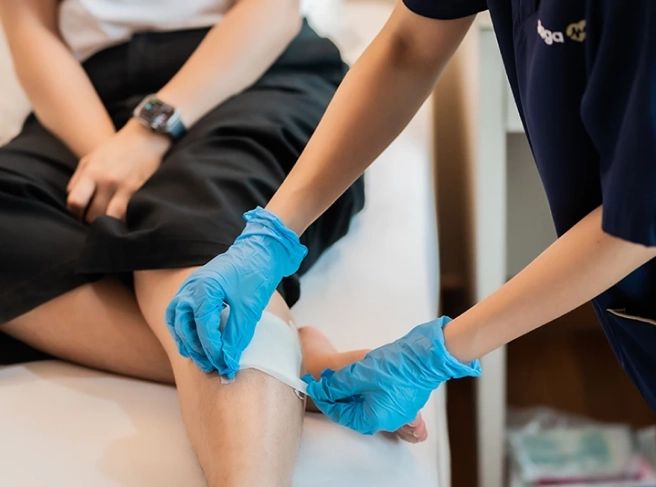
Silver ions are the main active form in which silver exerts its antibacterial effect. The antibacterial mechanism lies in the fact that silver ions can penetrate the bacterial cell wall, bind to enzymes and proteins inside the bacteria, interfere with their metabolic and replication processes, and ultimately lead to bacterial death. Therefore, the antibacterial efficacy of silver-containing dressings fundamentally depends on their ability to continuously and stably release sufficient amounts of biologically active silver ions at the wound site.
This leads to two key concepts: the release kinetics of silver and the forms in which silver exists. Release kinetics refers to the rate and total amount of silver ions released from the dressing. A well-designed silver-containing dressing does not aim to release all silver ions instantaneously, but rather to maintain a stable and effective silver ion concentration range over several days or even longer during wound healing. Too low a concentration is insufficient to inhibit bacteria, while too high a concentration may be toxic to human cells essential for wound healing, thus hindering granulation tissue growth and epithelialization.
The form in which silver is present is equally crucial. Different dressing carriers, such as foam, alginate, and hydrocolloids, bind to silver in different ways. For example, silver ion foam dressings integrate silver ions into a hydrophilic foam polymer matrix. This structural design allows the foam to intelligently release silver ions through mechanisms such as ion exchange while absorbing wound exudate. Its antibacterial effect is not only related to the initial silver loading but also closely related to the foam's absorption capacity and the efficiency of silver ion release upon contact with exudate. High-quality silver ion foam dressings can effectively control the slow release of silver ions while absorbing large amounts of exudate, thus controlling infection and managing exudate, creating a suitable moist healing environment for the wound.
Therefore, simply comparing the silver content values listed on the packaging of different silver-containing dressings is not very meaningful. A dressing with a high silver content but a rapid release and short duration of action may be far less clinically effective than a dressing with a moderate silver content that can release silver ions steadily and continuously. More importantly, the overall structure of the dressing, such as its absorbency, breathability, adherence to the wound, and ability to maintain a suitable moist environment, collectively determines its ultimate efficacy as a wound dressing.
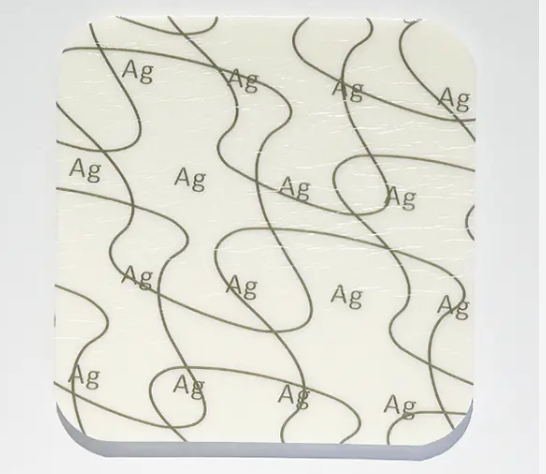
When choosing silver-containing dressings, the actual condition of the wound should be considered. For wounds with significant exudate and infection or colonization, such as some pressure injuries or lower extremity venous ulcers, silver ion foam dressings are a common choice because they address both exudate and infection simultaneously. The key is to choose the most suitable product under the guidance of a medical professional, based on factors such as wound type, degree of infection, and amount of exudate, rather than blindly pursuing the highest silver content. For more information on Innomed® Silver Ion Dressing Foam , please refer to the previous articles. If you have customized needs, you are welcome to contact us; you wholeheartedly. At long-term medical, we transform this data by innovating and developing products that make life easier for those who need loving care.
Editor: kiki Jia


