
 English
 عربى
عربى Español
 русский
 中文简体
中文简体






Hello everyone, today I'll share two commonly used auxiliary methods for dressing changes: soaking and wet compresses. Although they sound simple, using them correctly can greatly help with wound cleaning and healing, while using them incorrectly can actually cause more problems.
When would you use soaking and wet compresses?
Wet compresses can be used in the following two situations: First, when the wound surface has dry, hardened, firmly adhered scabs or necrotic tissue that is difficult to remove with regular cotton swabs, and forcibly tearing them off will cause bleeding and pain. Second, when there is redness, swelling, inflammation, or a risk of infection around the wound, and some medicated liquids are needed to help reduce inflammation and swelling.
soak :
Let's talk about soaking first. This refers to completely immersing the entire wound area, such as a finger, heel, or the entire palm, in a prepared medicated solution or saline solution. This method covers a large area and is gentle, making it suitable for treating some superficial but large wounds, or for situations where the skin around the wound needs to be cleaned as well.
For example, if you have stubborn old stains or dried ointment on your fingers, fill a clean cup or small bowl with warm water or diluted disinfectant and soak your fingers in it for 5 to 10 minutes. Once the scabs or dirt have softened, you can gently wipe them off with sterile gauze without damaging the newly grown granulation tissue underneath. The soaking liquid should generally be close to body temperature, not too hot, and the soaking time should not exceed 15 minutes. Soaking for too long will cause the skin to turn white and wrinkled, and it is more likely to break.
Wet compress:
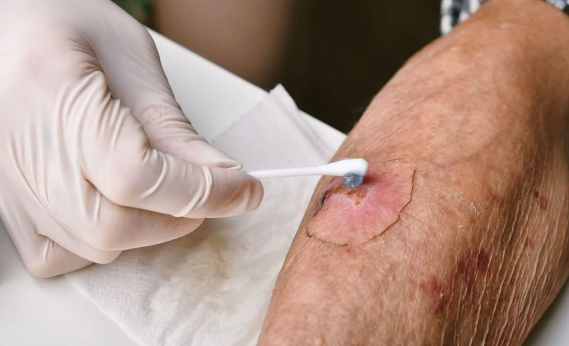
Next, let's talk about wet compresses. This is more like localized, targeted wound care. Use 4 to 6 layers of sterile gauze, soak it in the medication, wring it out until it's no longer dripping, and then apply it evenly to the wound. Its effect is more concentrated and its penetration is stronger; it's often used to treat wounds with clear infections, excessive discharge, or abscesses requiring drainage.
For example, if the wound is red, swollen, hot, and painful, the doctor may recommend using diluted iodine solution or a specific antibiotic solution for wet dressing. The wet dressing allows the medication to continuously work on the wound, while the absorbent properties of the gauze also draw out some of the wound's secretions. Each wet dressing session typically lasts 15 to 20 minutes and can be done 2 to 3 times a day. The dressing should be changed promptly when it dries out to prevent it from absorbing moisture from the wound.
Whether soaking or applying wet dressings, there are several key points to keep in mind. First is the choice of liquid. The safest and most commonly used is physiological saline, which does not irritate tissues. If you want to use a disinfectant, such as povidone-iodine, be sure to dilute it according to the instructions; high concentrations of disinfectant can affect cell growth. Second is strict aseptic technique. Containers for the liquid, basins for soaking, and gauze for wet dressings must all be sterilized. It's best to use disposable items to prevent cross-infection. Third is timing. Both methods are mostly used during the inflammatory or infected phase of the wound. Once the wound enters the clean, red granulation tissue growth phase, it should be stopped, and other dressings that keep the wound moist, such as hydrocolloid or foam dressings, should be used to promote faster skin healing.
In short, soaking is like a gentle full-body bath, suitable for large-area, superficial cleaning; wet compresses are like precise localized masks, suitable for deeper treatment of inflammation and discharge. The key is to choose the appropriate liquid for the appropriate stage of the wound and ensure a clean procedure. If you are unsure about your wound's condition, the safest approach is to consult a doctor or wound care specialist. For more information on Innomed® Hydrocolloid Dressing Ultra-thin , please refer to the previous articles. If you have customized needs, you are welcome to contact us; you wholeheartedly. At long-term medical, we transform this data by innovating and developing products that make life easier for those who need loving care.
Editor: kiki Jia


