
 English
 عربى
عربى Español
 русский
 中文简体
中文简体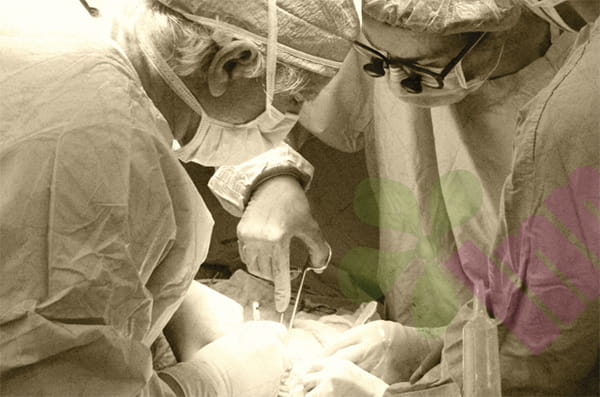





Many people believe that leaving sutures on a wound for a few more days is safer, and some even actively ask doctors to delay suture removal. This idea is understandable, but it doesn't align with the actual healing process. The purpose of skin sutures is to align the edges of a torn wound, giving the tissue time to heal itself. However, sutures are foreign objects; no matter how fine, as long as they remain in the skin, the body will continuously produce a mild inflammatory response. Delaying suture removal can lead to redness, swelling, hardening, and even suture pustules around the sutures. A more direct problem is that sutures restrict tissue remodeling in the later stages of healing. Epidermal cells crawl along the suture channels, and the needle holes left after suture removal become entry points for bacteria. Clinically, the most common scenario is that patients feel it's safer to leave the sutures on for a few more days, only to find the area around the needle holes red and oozing after a couple of days. This is especially noticeable in areas with high tension, such as the abdomen and back. The longer the sutures are left on, the more fragile the tissue around the knots becomes due to chronic irritation, causing them to tear easily when removed.
How should the correct time for suture removal be determined?
The timing of suture removal depends on two factors: the skin tension at the wound site and the healing speed. For the head and face, where blood supply is good and tension is low, sutures can be removed in five to seven days. For the neck and front of the torso, it's about seven days. For areas with high tension or frequent movement, such as the back and limbs, sutures are removed in ten to fourteen days. Wounds near joints usually require a few more days, but not indefinitely. A simple and practical way to determine the timeframe is to gently wipe the suture knots with an iodine swab the day before suture removal. If all the knots are clean and without redness, the inflammation is mild, and sutures can be removed on schedule. If a knot is noticeably red, it indicates that the stitch has begun to cause rejection and needs immediate removal. Removing sutures in stages is also a good strategy. For example, for abdominal wounds, you can remove half of the sutures at intervals to reduce the local foreign body load, and then remove the remaining sutures a couple of days later. After suture removal, do not get the wound wet immediately; the needle holes need 24 to 48 hours to completely close.
What benefits can functional wound dressings provide before and after suture removal?
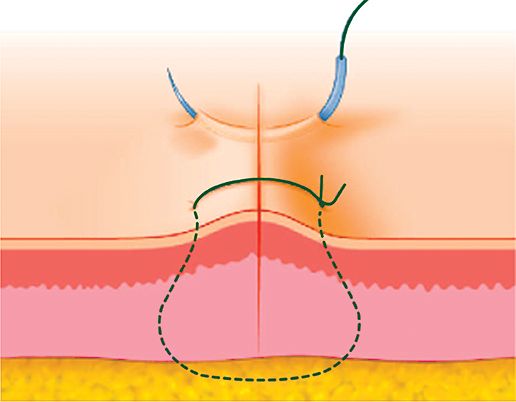
Using functional wound dressings appropriately before and after suture removal can significantly reduce suture-related complications. Before suture removal, if slight redness and swelling are observed at a needle puncture site, small pieces of silver ion-containing alginate dressing can be applied to the affected area. The silver ions help control local bacterial load, while the alginate absorbs small amounts of exudate. After suture removal, dozens of tiny needle punctures remain on the skin surface, requiring time to close. At this time, covering the wound area with silicone dressings is beneficial. Silicone forms a breathable film, maintaining appropriate humidity around the puncture sites and promoting epidermal closure. For wounds with high tension, tension-reducing dressings can be applied immediately after suture removal, perpendicular to the incision direction. These dressings distribute the mechanical tension during the initial healing phase, preventing the puncture sites from reopening due to skin traction. These dressings do not replace sutures but rather work in conjunction with them to help the wound smoothly navigate its most vulnerable period. It is important to note that you should not apply various ointments or powders immediately after suture removal; keeping the area dry and clean is often more effective than applying anything.
In what situations is it necessary to delay suture removal?
In some cases, it is indeed necessary to remove sutures later than usual. Patients who have been taking corticosteroids for a long time or have severe diabetes have decreased collagen synthesis, resulting in a much slower healing rate than normal. In these cases, it is necessary to appropriately extend the suture removal time. The same applies to malnourished or elderly patients. In addition, wounds that have been infected or reopened and re-sutured should also have sutures left in for a few more days than normal wounds. However, these are all special cases and should be judged by the doctor based on the appearance of the wound, not by the patient arbitrarily extending the time. Conversely, for most normally healing wounds, timely or appropriately early suture removal actually leads to a smoother healing process. This is because after suture removal, the skin can regain normal blood supply, and the epidermis can truly begin to form a complete epithelial cover. The suture time is not necessarily better the longer it is left in; the key is to leave it in the right place.
For more information on Innomed®Wound Skin Closure, refer to the Previous Articles. If you have customized needs, you are welcome to contact us; You Wholeheartedly. At long-term medical, we transform this data by innovating and developing products that make life easier for those who need loving care.
Editor: kiki Jia


