
 English
 عربى
عربى Español
 русский
 中文简体
中文简体






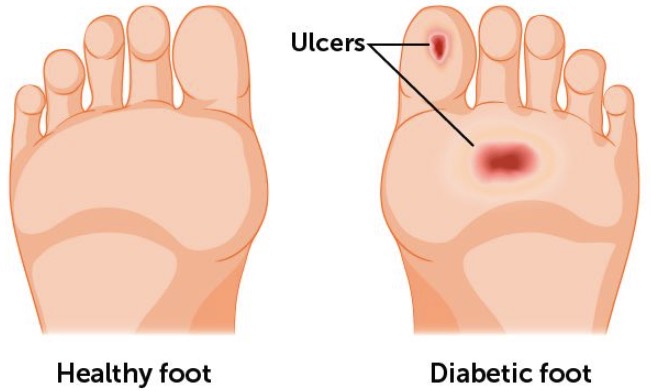
Many diabetic patients think washing their feet is a simple matter: pour hot water, stretch out their feet, rub them, and dry them. However, cases of problems arising from washing feet are not uncommon in clinical practice. The feet of diabetic patients are different from those of healthy individuals. Long-term high blood sugar damages peripheral nerves, reducing sensitivity to temperature and pain in the feet. Simultaneously, vascular disease leads to poor local blood circulation and weak wound healing. Diabetic patients may burn themselves without even realizing it. A blister can break, become infected, and if the infection is not controlled, it can develop into ulcers, ultimately even leading to amputation. Therefore, washing feet requires serious attention from diabetic patients.
Why do diabetic patients often experience problems when washing their feet?
An average person would immediately pull their foot back when burned, but patients with diabetic peripheral neuropathy are less sensitive to heat and may not feel the water is hot enough even after soaking their feet in 40-50 degree Celsius water for several minutes. These low-temperature burns don't blister immediately; redness or blisters often appear several hours or even the next day. Furthermore, the healing speed of broken skin in diabetic patients is much slower than in healthy individuals because the high blood sugar environment promotes bacterial growth, and insufficient blood supply to the lower limbs deprives wounds of adequate oxygen and nutrients. A small blister can develop into a difficult-to-heal ulcer. Another problem is the drying process after washing feet. Many people simply dry their feet quickly after washing, putting on socks while their toes are still damp. Prolonged dampness between the toes leads to maceration and whitening of the skin, weakening the epidermal barrier function and making it easier for fungi and bacteria to invade. Interdigital erosion is a common starting point for diabetic foot; patients often only experience slight itching and don't take it seriously until it has progressed to deeper layers.
How should I control the water temperature and time when washing my feet?
The water temperature for washing your feet is the first key point. Never test the water temperature with your hands or feet, as your hands may have nerve damage and your sense of temperature will be inaccurate. The most reliable method is to use a thermometer to measure the water temperature, keeping it around 37 degrees Celsius, which is close to or slightly higher than body temperature. If you don't have a thermometer, you can use the inside of your elbow or have a family member help you test the water temperature, as these areas are more sensitive than your palms. Five to ten minutes is enough for washing your feet; avoid prolonged soaking. Soaking for too long will cause the stratum corneum to become overhydrated, making it brittle and more prone to breakage. You don't need to wash your feet multiple times a day; once a day is sufficient unless the weather is particularly hot and you sweat a lot. The water used for washing your feet should ideally be running warm water; avoid prolonged soaking in a tub. Tub baths will unknowingly prolong the time your feet are in the water, and the water in the tub may be contaminated with bacteria from the skin's surface.
What cleaning products and tools should I use when washing my feet?
There are also considerations when choosing what to use to wash your feet. Regular soap or shower gel is fine, but choose a neutral or slightly acidic product, avoiding strongly alkaline soaps. Alkaline products will wash away the skin's protective oil layer, causing dryness and cracking. Diabetic patients are already prone to dry, cracked heels, and using alkaline soap will worsen this problem. When washing your feet, be gentle; do not scrub vigorously with a bath towel or brush. Some people habitually use pumice stones or foot file to remove dead skin, but this is dangerous for diabetic patients. The calluses and dry skin on the heels are not just for aesthetics; they serve a protective function. Forcibly removing dead skin can abrade the fresh skin tissue underneath, creating tiny wounds. These wounds are located in weight-bearing areas and are subject to friction from daily walking, making them difficult to heal. Pay attention to the skin around the toenails as well. Do not deliberately dig into the nail grooves while washing your feet, as this can damage the seal of the nail groove and lead to paronychia.
How to dry and check your feet after washing them?
The post-wash foot care is equally important. Dry your feet with a clean, soft towel, preferably a light-colored one, to easily spot any blood or oozing. Don't rub vigorously; instead, gently press to absorb the moisture. The spaces between the toes are often overlooked; separate each toe and dry them thoroughly. If the spaces between the toes are macerated, whitish, or have an odor, it may indicate a fungal infection or a damaged skin barrier, requiring extra care to keep them dry. After drying, don't put on socks immediately; let your feet air dry for five to ten minutes until completely dry. Before putting on socks, a crucial step is to carefully examine your feet. Many diabetic foot ulcers are caused by small threads in socks or grains of sand in shoes, which patients don't notice until the ulcer has broken open. The examination should include the soles, between the toes, heels, and insteps. You can use a handheld mirror to check the soles, or place your feet on your knees and take a close-up photo with your phone. Pay close attention to any redness, blisters, broken skin, cracks, color changes, or localized heat. If you find any abnormalities, even a small blister the size of a grain of rice, do not treat it yourself or break it; go to the hospital immediately for a doctor's assessment.
For more information on Innomed®Silver Ion Dressing Foam, refer to the Previous Articles. If you have customized needs, you are welcome to contact us; You Wholeheartedly. At long-term medical, we transform this data by innovating and developing products that make life easier for those who need loving care.
Editor: kiki Jia


