
 English
 عربى
عربى Español
 русский
 中文简体
中文简体






After a few days of applying hydrocolloid dressings to a wound, many people will see a clump of white or pale yellow, soft, gel-like substance bulging on the side of the dressing that was in contact with the wound. This substance feels moist and sticky, and sometimes has a slight odor. The first reaction is often that the wound has become infected, and the dressing has absorbed the pus, forming this clump. So, they immediately stop using the dressing and switch back to dry gauze. This misunderstanding leads many to abandon the moist healing environment provided by hydrocolloid dressings, allowing the wound to be exposed and scab over. In fact, this clump of white, soft gel is a hallmark of a properly functioning hydrocolloid dressing. Its professional name is gel residue, which is a gel layer formed by the hydrocolloid particles in the inner layer of the dressing absorbing wound exudate and swelling and hydrating. It is fundamentally different from pus. The key to distinguishing between the two is that gel residue has a uniform texture, is semi-transparent and jelly-like, has no odor or only a slight normal exudate odor, can be easily washed away when rinsing the wound with saline solution, and the wound base appears healthy red. The pus has an uneven texture and may be yellowish-green or gray, with a foul, pungent odor. After rinsing, yellow necrotic tissue or dark red edematous granulation tissue can be seen on the wound. Mastering this differentiation method can reduce a lot of unnecessary anxiety about changing dressings.
Why does this white bubble form in hydrocolloid dressings?
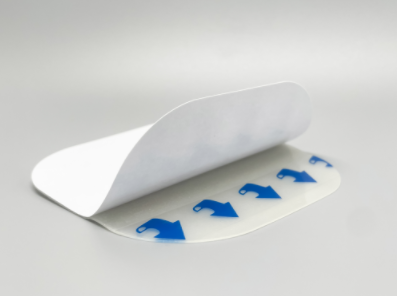
This phenomenon stems from the structure of hydrocolloid dressings. Hydrocolloid dressings consist of an outer polyurethane film or foam backing and an inner hydrocolloid viscous matrix. The key components of the inner layer are hydrophilic polymer particles such as sodium carboxymethyl cellulose, gelatin, and pectin, which are dispersed in a dry state within the viscoelastic matrix. When the dressing is applied to an exudative wound, the wound exudate seeps into the matrix through the micropores on the inner layer's surface. The sodium carboxymethyl cellulose particles rapidly absorb water and swell, increasing in volume several times or even ten times, transforming from solid particles into a hydrogel. As the absorption increases, these gels gradually float to the surface of the matrix, forming a white or pale yellow gel pad between the dressing and the wound. This gel pad is the core functional layer of moist healing; it maintains the wound at an appropriate moisture level, preventing dehydration and crusting, while simultaneously locking in exudate to prevent maceration of the surrounding skin. Therefore, the appearance of white blisters precisely indicates that the dressing was chosen correctly; the amount of wound exudate is well-matched to the dressing's absorption capacity, and the gel is performing its designed function.
Should the dressing be changed immediately after white blisters are seen?
This issue requires a comprehensive assessment of two indicators: the extent of the blister's spread and the overall integrity of the dressing. If the blister is confined to the central area of the dressing, significantly smaller than the wound size, and the outer ring still has at least one centimeter of unhydrated adhesive layer as a sealing edge, while the dressing backing remains intact without leakage or penetration, then the dressing can be retained without replacement. The design logic of hydrocolloid dressings allows for the transformation of part of the inner layer into gel during the absorption process without losing overall coverage. Frequent replacement can disrupt the stability of the moist environment and temperature constancy. The timing for dressing changes should be set when the blister expands to within about one centimeter of the dressing edge, or when exudate is observed leaking from the dressing edge, or when the dressing backing bulges, softens, and is about to rupture. At this point, it's not too late to replace the dressing. If the blister is almost touching the edge or even leaking within 24 hours of application, it indicates that the absorbency of this type of dressing is insufficient to handle the current amount of exudate. In this case, a thicker hydrocolloid dressing or a foam dressing with a larger absorbency capacity can be used next time.
In what situations should you be concerned about white foam?
While most white blisters are harmless gel residues, several accompanying signs should not be simply attributed to normal reactions. If, after removing the dressing, the gel is not uniformly translucent but contains yellowish-green streaks or gray necrotic tissue fragments, and the wound emits a strong putrid odor, it indicates a deep infection. Simple hydrocolloid dressings should not be used for closure; an antibacterial dressing should be used, or a medical professional should assess whether debridement is necessary. If the skin around the wound shows extensive maceration and whitening, and the whitening extends beyond the dressing-covered area into normal skin, it indicates that exudate management is out of control; continued use of hydrocolloid dressings will worsen the maceration. If wound pain increases instead of decreasing, and after removing the dressing, the area of redness and swelling around the wound is found to be more than one centimeter larger than before application, or if the patient experiences systemic reactions such as fever and chills, immediate medical attention is required. For diabetic patients with foot wounds or lower limb ischemic artery wounds, the occlusive nature of hydrocolloid dressings may mask the progression of deep infection. For these high-risk wounds, a vascular and infection assessment by a professional is recommended before using hydrocolloid dressings. White blistering itself is not the problem; the color, odor, and accompanying wound reaction are the key indicators. Learning to interpret these signals transforms hydrocolloid dressings from a source of panic into a visual window into their effectiveness. For more information on Innomed® Hydrocolloid Dressing Ultra-thin, refer to the Previous Articles. If you have customized needs, you are welcome to contact us; You Wholeheartedly. At long-term medical, we transform this data by innovating and developing products that make life easier for those who need loving care.
Editor: kiki Jia


