
 English
 عربى
عربى Español
 русский
 中文简体
中文简体






The role of silver ion dressings in the treatment of infected wounds is well-established. Silver's bactericidal mechanism includes disrupting cell membrane integrity, interfering with respiratory chain enzyme activity, and binding to DNA to block replication. This multi-target attack makes it extremely difficult for bacteria to develop resistance. However, a core contradiction that has long plagued users and researchers persists: silver ions not only kill bacteria but also have toxic effects on human repair cells such as fibroblasts and keratinocytes. Early product development focused on continuously increasing the silver content to achieve stronger bactericidal effects, but this resulted in slower wound healing. This is because high concentrations of silver ions, while eliminating bacteria, also inhibited granulation tissue growth and epithelialization. This leads to a crucial question: the design challenge of silver ion dressings lies not in their ability to kill bacteria, but in whether they can kill bacteria without damaging the healing wound.
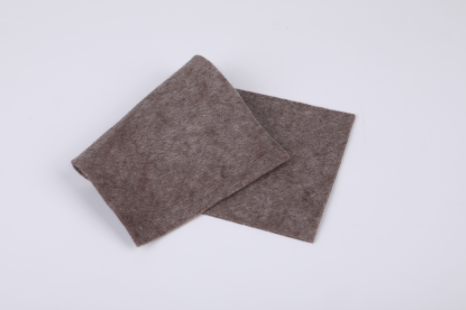
What are the differences between controlled-release technology and the release method of ordinary silver-containing dressings?
Silver release from conventional silver-containing dressings follows a passive diffusion pattern. Upon contact with exudate, silver ions on the dressing surface rapidly dissolve and enter the wound, causing a short-term peak in local silver concentration. This peak concentration then rapidly declines with exudate exchange and dressing consumption. This release curve results in peak concentrations far exceeding the minimum inhibitory concentration (MIC) required for sterilization, posing a clear threat to human cells, while trough concentrations may fall below the effective sterilization threshold, leaving a window for residual bacteria to proliferate. The core idea of controlled-release technology is to alter the form and release kinetics of silver in the dressing. Currently, there are three main controlled-release strategies. One is to embed silver in a fiber matrix or foam framework in the form of nanoparticles, silver-organic frameworks, or silver-polymer composites. After exudate infiltration, silver ions are slowly released from these reservoirs, rather than being adsorbed onto the fiber surface and eluted all at once. The second is through redox regulation, using silver oxides or silver salts to undergo gradual oxidative dissolution in the exudate environment. The release rate of silver ions is controlled by chemical reaction kinetics rather than simple diffusion. Third, an ion exchange mechanism is introduced, in which silver ions are preloaded into ion exchange resins or specific clay mineral layers. Sodium and potassium ions in wound exudate are exchanged layer by layer to release silver ions, achieving quantitative displacement release. Regardless of the approach, the goal is to maintain the concentration of silver ions in the wound within a narrow therapeutic window, above the minimum bactericidal concentration and below the cytotoxic threshold, and for a duration covering the entire dressing change cycle.
How can we reduce cytotoxicity while ensuring sterilization effectiveness?
Solving this problem requires a simultaneous approach from three levels: the chemical form of silver, the carrier material, and the controlled-release mechanism. The chemical form of silver directly determines its initial release rate. Ionic silver, such as silver nitrate and silver acetate, releases extremely rapidly, and its peak concentration is difficult to control. Elemental silver nanoparticles release relatively slowly, but are greatly affected by particle size and surface modification. Silver-carrier composites, such as silver-zeolite, silver-zirconium phosphate, and silver-activated carbon fibers, can achieve fairly precise release curves by adjusting the micropore size and surface hydrophilicity/hydrophobicity of the carrier. The pore size distribution and porosity of the carrier material control the specific surface area of the exudate in contact with silver after entering the dressing. Too high a porosity results in rapid release, while too low a porosity leads to insufficient effective silver concentration. Some research directions have also introduced intelligent responsive controlled-release, where the dressing accelerates silver release upon sensing changes in wound pH or increased activity of specific enzymes in the exudate, enhances bactericidal activity when infection worsens, and automatically slows down release to reduce cytotoxicity when infection subsides. This represents a higher stage of controlled-release technology. At the clinical selection level, evaluating the controlled-release performance of a silver ion dressing should not only look at the silver content label. It is necessary to pay attention to whether the product instructions include release curve test data, the duration of maintaining an effective concentration, and in vitro cytotoxicity test results against keratinocytes or fibroblasts. These technical parameters are more indicative of the actual balance between bactericidal and safety capabilities than a simple silver content number.
In which clinical situations should controlled-release silver ion dressings be given priority?
Not all infected wounds require controlled-release dressings, but their clinical value is particularly prominent in certain cases. Chronic wounds such as diabetic foot ulcers and lower extremity venous ulcers heal slowly, and granulation tissue is especially sensitive to cytotoxicity. Using high-concentration silver dressings with rapid release can easily lead to wound stagnation and failure to heal. Controlled-release dressings allow silver to maintain an effective yet gentle concentration over a longer period, balancing continuous antibacterial action with granulation tissue protection. For wounds with existing local granulation edema or fragile granulation tissue, ordinary silver dressings may worsen granulation tissue damage. Controlled-release dressings reduce damage to new blood vessels by lowering the peak silver concentration. For patients with large-area burns or large soft tissue defects requiring prolonged use of silver dressings, the cumulative silver absorption and potential systemic toxicity are also safety concerns. Controlled-release technology reduces the total amount of silver released per dose and peak absorption, which is more beneficial for systemic safety. Children and the elderly, whose skin barrier function is weakened and whose tissue repair reserves are limited, also require a more precise balance between antibacterial and protective effects. The core logic of clinical judgment is to dynamically select the dressing type based on the wound healing stage and granulation tissue condition. During the acute phase of infection with high exudate, a relatively fast-release silver dressing can be considered to quickly control the bacterial load. Once the proliferative phase begins, if antibacterial coverage is still needed, a controlled-release dressing should be switched promptly to avoid silver toxicity slowing down wound healing. The balance between the bactericidal and toxic effects of silver ions is essentially a function of concentration and time; controlled-release technology addresses the optimal solution to this function. For more information on Innomed® Silver Ion Dressing Textile Fiber, refer to the Previous Articles. If you have customized needs, you are welcome to contact us; you wholeheartedly. At long-term medical, we transform this data by innovating and developing products that make life easier for those who need loving care.
Editor: kiki Jia


